Overview
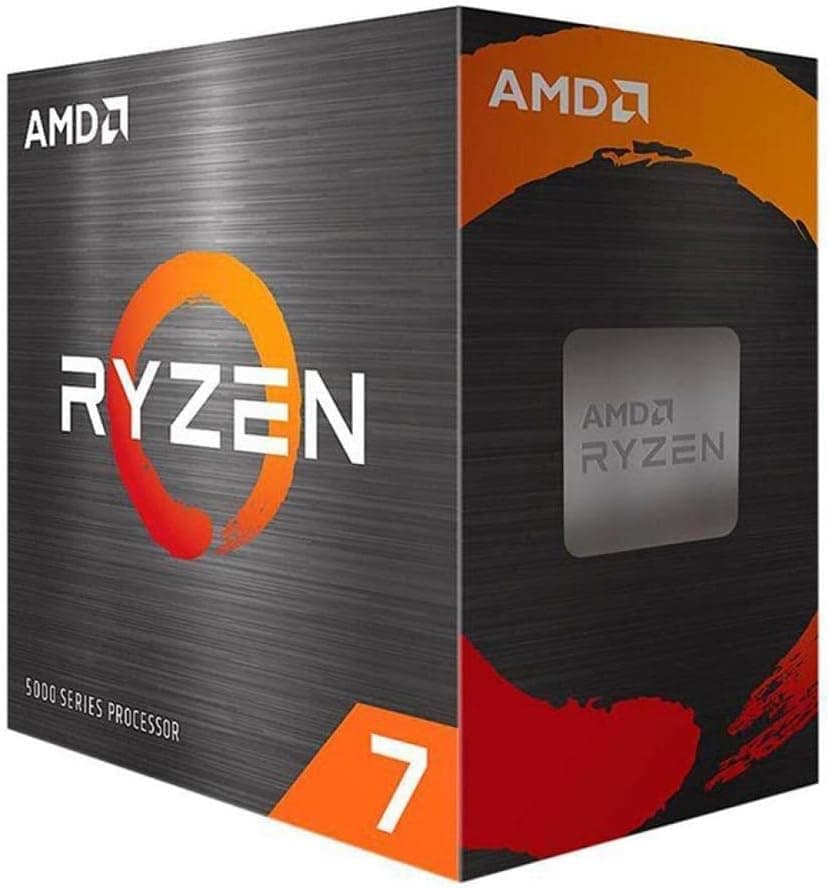
The AMD Ryzen 7 5700G is a Zen 3 APU: eight cores and sixteen threads with Radeon graphics built into the same package. It runs a 3.8GHz base clock inside a 65W envelope and ships with the Wraith Stealth cooler, so a single purchase covers both the processor and its cooling — and you do not need a discrete graphics card to get a picture on screen.
The short verdict: this chip makes sense for people who want a complete machine without buying a GPU, for small-form-factor and low-power builds, and for anyone upgrading an existing AM4 board to eight cores on the cheap. It is not the right foundation for a brand-new high-end gaming rig, and the compatibility and caveat sections below explain exactly why.
What Kind of Chip This Actually Is
The 5700G belongs to the "Cezanne" APU family. Even though it shares the Zen 3 core with CPU-only parts like the 5800X, two design differences matter.
It carries 16MB of L3 cache instead of 32MB, and its PCIe lanes top out at 3.0.
Games are sensitive to L3 cache size, so if you pair the 5700G with a discrete graphics card, expect slightly lower frame rates than a same-generation CPU-only model.
Where core count is what counts — video encoding, photo processing, compiling, virtual machines — the eight cores and sixteen threads deliver honestly, and they do it inside a modest 65W power budget that keeps cooling and PSU requirements light. Think of the 5700G as a productivity and light-gaming CPU that happens to need no GPU, not as the base of a high-end gaming build.
Compatibility Guide
The socket is AM4. In practice that means AMD 500-series chipsets (X570 / B550 / A520) and 400-series boards (X470 / B450) that have received a vendor BIOS update.
The single most common failure here is a missing BIOS update. The 5700G arrived late in the AM4 lifecycle, so a board sitting in retail stock with old firmware will simply refuse to post with this CPU.
Check the following before ordering:
- Confirm on the board's product page which BIOS version adds Ryzen 5000 G-series (Cezanne) support. Boards with CPU-less flashing (BIOS Flashback and similar) are the safe choice.
- 400-series boards may support the CPU but still have limitations around integrated-graphics output. For a fresh build, B550 or better is the safer pick.
- Video comes out of the motherboard's HDMI or DisplayPort connectors when you use the integrated GPU. Verify the board actually has the output you need — budget boards sometimes offer only one.
Memory is DDR4; a DDR5 board will not physically accept it. Because the integrated GPU borrows system memory as video memory, a single-stick configuration such as one 8GB DIMM will noticeably hurt integrated graphics performance. Run dual channel — 2×8GB or 2×16GB.
That choice affects real-world feel far more than the memory's rated clock speed.
Expansion slots run at PCIe 3.0.
A PCIe 4.0 SSD or graphics card will still work, just at 3.0 speeds.
Nothing breaks; you simply do not get the numbers on the box. The bundled Wraith Stealth handles the 65W rating adequately, though a tower cooler is a worthwhile upgrade if quiet operation matters to you.
AM4 coolers are plentiful, so options are not a problem.
Product Info
The listed Amazon.co.jp price was ¥38,980 as captured on August 30, 2026.
Prices change, so check the product page for the current figure before buying. This part targets AM4, a previous-generation platform, and prices in that category move with supply.
At the captured price, a newer-platform CPU may be within reach for a similar budget — read the caveats section before deciding.
Review data shows 9,918 ratings averaging 4.7 out of 5 (94% favorable).
A 4.7 across nearly ten thousand ratings indicates a product without widespread defect or lottery issues.
That said, many of those reviews were written when the chip was newer and cheaper, so do not transfer the "incredible value" verdict directly onto today's price.
Product Disclosure (Amazon)
- Manufacturer: AMD
- Seller: Happy & Happy (インボイス対応、国内発送)
- Fulfilled by: Happy & Happy (インボイス対応、国内発送)
- ASIN: B091J3NYVF
- Note: This article covers a manufacturer-made product based on Amazon listing details.
Rough Expectations by Workload
| Workload | Expectation on integrated graphics |
|---|---|
| Office, browsing, video playback | Comfortable; eight cores handle heavy tab loads |
| Photo editing, light video work | Practical; exports scale with core count |
| Older or lightweight games | Often playable at reduced settings and resolution |
| Modern heavy 3D titles | Hard on integrated graphics; plan for a GPU |
| Streaming and encoding | Eight cores help, but a discrete GPU is smoother |
Treat the table as a tendency, not a promise. Integrated GPU results swing widely with memory configuration and with what each title demands, so no single frame-rate figure applies.
If gaming is the goal, check the recommended specs for the titles you care about first, and budget for a graphics card up front if they exceed what integrated graphics can do.
Best Use Cases
Builders who want no discrete GPU. The integrated Radeon graphics remove any need to buy a cheap card just for display output.
For a family PC, an office machine, or a living-room box that should be reasonably fast, quiet, and small, the 5700G remains a sensible pick.
Owners of an existing AM4 motherboard. Reusing your board and memory and swapping in eight cores is where this chip earns its keep — clearly cheaper than replacing the whole platform.
Small-form-factor and low-power builds. A 65W rating with a bundled cooler fits tight cases and modest power supplies, which also suits an always-on home server.
Thread-hungry work. Encoding, compiling, virtual machines, and RAW processing all convert those sixteen threads into shorter wait times.
Before You Buy
First, be careful with the listing data itself. In the source data for this article, the title and ASIN point to the AMD Ryzen 7 5700G, yet the specification fields contained entries like "18 inches," "6Gbps," and "7-pin SATA" — clearly belonging to a SATA cable.
This kind of mix-up genuinely happens in retail listings. Before ordering, confirm the product image, title, and ASIN match the CPU you want, and disregard spec-table values that do not fit the product.
The same caution applies to the price field; glance at the amount once more before checkout.
AM4 is a closed platform. This is the main compromise.
Few if any new AM4 CPUs are coming, so the "drop in a faster chip later" upgrade path is largely gone. If you are building from scratch, compare a newer socket at the same budget before committing.
If you are upgrading an existing AM4 machine, this drawback barely applies.
PCIe 3.0 only. Fast M.2 SSDs and newer graphics cards will run below their rated interface speed.
Nothing fails, but the "my PCIe 4.0 SSD isn't hitting its numbers" disappointment is real.
Integrated graphics are not magic. "Games without a GPU" means reduced settings, lower resolution, and compromised frame rates on demanding titles.
Integrated graphics also consume system memory, so an 8GB build forces the OS and the game to compete. Use 16GB at minimum, ideally 2×16GB in dual channel.
The bundled cooler is adequate, not quiet. Wraith Stealth is sized for 65W, not for silence; it spins up audibly under load.
Budget for an aftermarket cooler if noise matters.
Check the seller. The listing shows a marketplace seller as both merchant and shipper.
Warranty handling on CPUs depends on whether the unit is a boxed retail part, so confirm warranty and return terms in advance.
FAQ
Q. Will I get video output without a graphics card? A.
Yes. The 5700G has integrated Radeon graphics, so connecting to the motherboard's video output works — provided the board has one.
Q. Can I use it on my existing B450 board? A.
Likely yes if the vendor has released a Ryzen 5000 G-series BIOS, but updating is mandatory; it will not boot on older firmware. Check whether CPU-less BIOS flashing is available first.
Q. Does it support DDR5?
A. No. AM4 is DDR4 only.
Q. Can I add a graphics card later? A.
Yes, and it will take over rendering. The slot runs at PCIe 3.0, and with 16MB of L3 cache the gaming gains are more modest than with a same-generation CPU-only model.
Q. Is the bundled cooler enough? A.
For stock operation, yes. For quiet running or sustained heavy load including overclocking, an aftermarket cooler is worth it.
Q. Is it still worth buying in 2026? A.
For an AM4 upgrade or an integrated-graphics compact build, yes. As the centerpiece of a new gaming rig, compare newer platforms and current prices first.