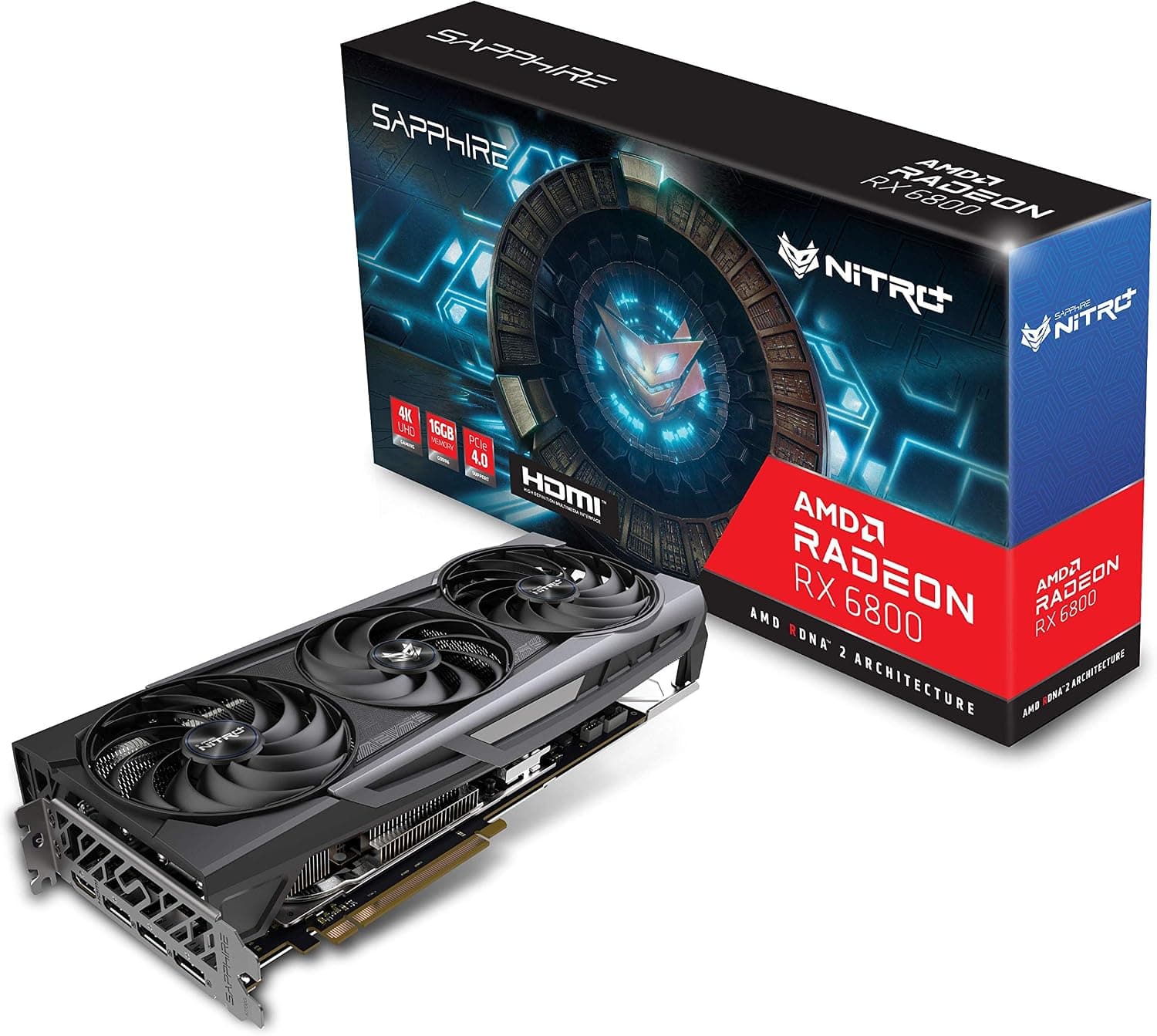
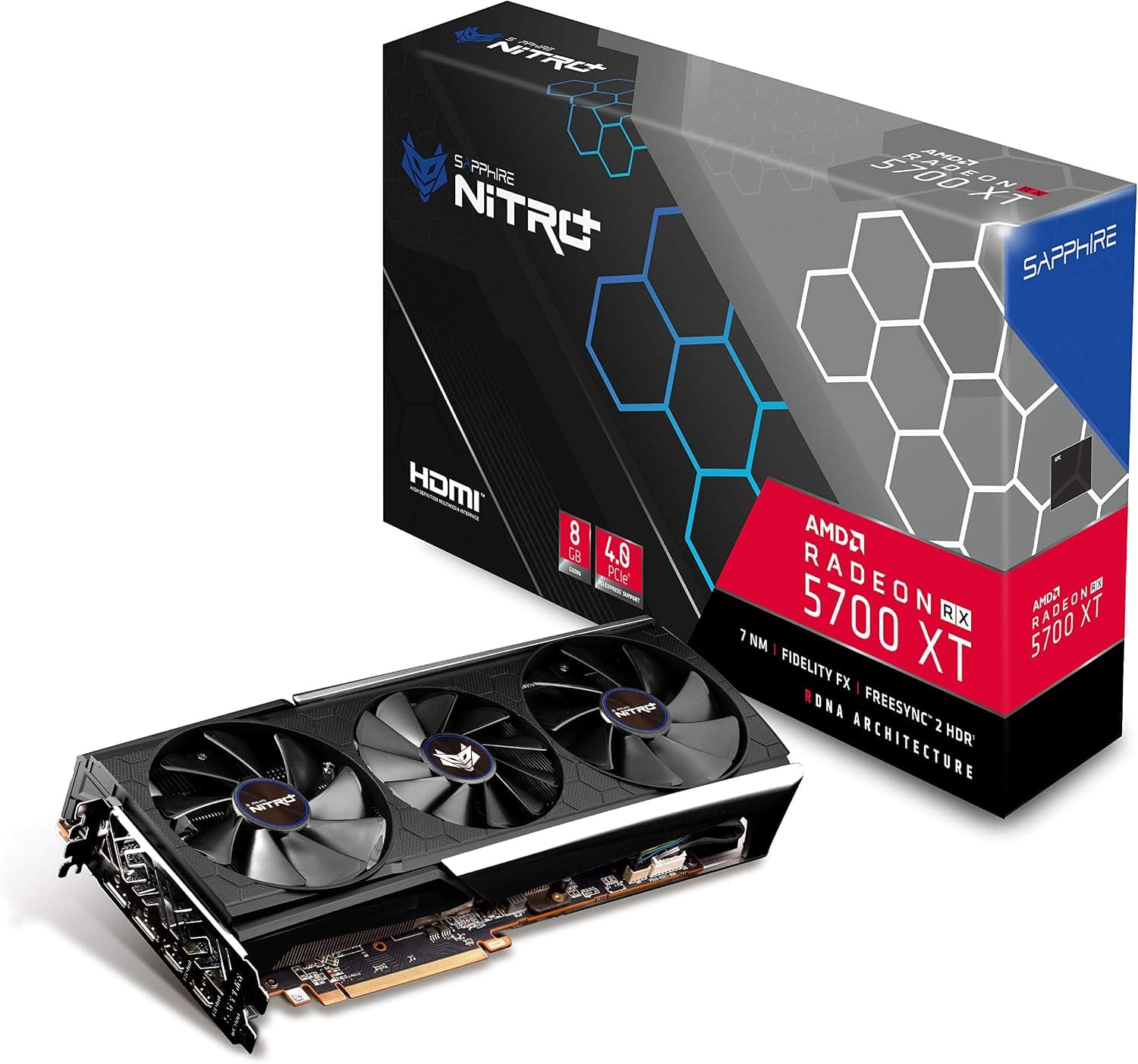
Overview
Manufactured on a 12nm FinFET process, this card delivers a boost clock of 1560MHz and features 2304 stream processors, making it a solid choice for 1080p gaming.
Equipped with 8GB of GDDR5 memory running at an effective 8400MHz across a 256-bit bus, the card offers ample bandwidth for modern titles at high settings. The Dual-X cooling solution with two fans keeps temperatures in check even during extended gaming sessions. Output options include one DVI-D, two HDMI, and two DisplayPort connectors, supporting multi-monitor setups.
Released in late 2018 as a refined successor to the RX 580, the RX 590 leverages a smaller process node to achieve higher clock speeds and better efficiency. Today, it remains a popular choice among budget-conscious gamers who prioritize value over cutting-edge features.
Compatibility Guide
The Sapphire Radeon Nitro+ RX 590 uses a PCI Express 3.0 x16 interface, ensuring broad compatibility with both older PCIe 3.0 motherboards and newer PCIe 4.0 platforms. It will run without issues in any standard desktop system.
Power requirements include one 8-pin and one 6-pin PCIe power connector. The manufacturer recommends a 500W power supply, but for real-world builds with a mid-range CPU and peripherals, a 550W to 600W unit provides a comfortable margin.
Physically, the card measures approximately 260mm in length, 135mm in width, and 43mm in thickness, occupying two expansion slots. It fits in most mid-tower ATX cases, but users with compact MicroATX or Mini-ITX enclosures should verify available clearance before purchasing.
Product Info
Launched in November 2018, the Sapphire Radeon Nitro+ RX 590 8GB Special Edition sits firmly in the mid-range segment. Its original MSRP was around $280–$320, though current pricing varies due to limited new stock and second-hand availability.
Key specifications include an AMD Radeon RX 590 GPU with a base clock of 1545MHz and boost clock of 1560MHz, 8GB GDDR5 memory at 8400MHz effective, a 256-bit memory bus, and a TDP of approximately 225W. The Dual-X cooler uses two fans and multiple heat pipes for efficient heat dissipation. A backplate adds structural rigidity, and dual UEFI BIOS lets users switch between silent and performance modes.
Best Use Cases
1080p Gaming Enthusiasts
If you play esports titles like Fortnite, Apex Legends, or VALORANT at 1080p, this card delivers high frame rates with ease. It also handles most AAA games at high settings above 60fps. However, for 4K gaming or ray tracing, you'll need a more powerful GPU.
Budget-Conscious PC Builders
The RX 590 offers excellent price-to-performance, especially on the used market. It's a great entry point for first-time builders who want reliable 1080p performance without spending a fortune. If you need ray tracing or DLSS, consider an RTX 3060 or newer.
Multi-Monitor Productivity Users
With five display outputs (DVI-D, dual HDMI, dual DisplayPort), this card easily supports triple or quad monitor setups. It's a practical choice for stock traders, content creators, or anyone who needs expansive screen real estate.
Things to Consider
Being a 2018 product, the RX 590 lacks hardware ray tracing support. Modern games that rely heavily on ray tracing will require you to lower settings or skip the feature entirely. If ray tracing is important, look at NVIDIA's RTX 20-series or newer.
The power draw of around 225W means you need a decent power supply with the correct PCIe connectors. Older or low-wattage PSUs may not have the required 8-pin and 6-pin cables, so check your existing unit before buying.
On the used market, the RX 580 often sells for significantly less while offering only 10–15% lower performance. If you're on a tight budget, a well-maintained RX 580 might be a better value. However, the Nitro+ RX 590's superior cooling and quieter operation justify the premium for many users.
FAQ
Q: Can this card handle 4K gaming?
A: It can run older or less demanding games at 4K, but modern AAA titles will struggle to maintain playable frame rates. Stick to 1080p or 1440p for the best experience.
Q: What power supply do I need?
A: Sapphire recommends 500W minimum. For a typical build with a mid-range CPU, a 550W to 600W 80 PLUS certified unit is a safe choice.
Q: Is it worth upgrading from an RX 580?
A: The performance gain is around 10–15%, which may not be noticeable in everyday use. However, if you value lower noise and better thermals, the Nitro+ RX 590's improved cooling makes it a worthwhile upgrade.
Product Disclosure (Amazon)
- Manufacturer: SAPPHIRE
- ASIN: B07K12KNHG
- Note: This article covers a manufacturer-made product based on Amazon listing details.