Overview
sahfsd sdfg Anatomia Artística 87970 is listed on Amazon.co.jp in the card reader category.
However, its title, ASIN and spec data appear to describe different products. Our conclusion: if you want a card reader, do not order from this listing as it stands.
Check the listing yourself first. If it does not add up, buy a product with a clear brand and model number instead.
An earlier version of this article described the item as a 7-slot Anker card reader. Neither the title nor the ASIN mentions Anker, and we could not find anything to support that description, so we removed it.
This version explains what conflicts, what to check before buying, and how to choose a multi-format reader if that is what you actually need.
The first part of the title, 'sahfsd sdfg', looks like someone ran a finger across the keyboard. It has no meaning as a product name.
'Anatomia Artística' is Portuguese for 'artistic anatomy', a common title for books aimed at painters and illustrators. The listing does not say whether the trailing '87970' is a model number or an internal code.
Where the Listing Conflicts
| Item | Listed value | What it suggests |
|---|---|---|
| Title | sahfsd sdfg Anatomia Artística 87970 | Random characters plus a phrase that resembles a book title |
| ASIN | 8580333350 | Ten digits only, with a valid ISBN-10 check digit |
| Category | Card reader | Does not match the title |
| Spec data | USB 3.2 Gen1, 7-slot card reader | Nothing in the title or ASIN supports it |
| Price | Far outside the range for a USB card reader | Probably scraped from the wrong item, so we do not quote it |
The ASIN is the strongest clue. Amazon normally uses the ISBN-10 as the ASIN for books.
'8580333350' passes the ISBN-10 checksum, and its '85' prefix matches the registration group for Brazil. That fits with the Portuguese title.
Our best guess is a Brazilian art-anatomy book that ended up in the card reader category, but we cannot confirm it.
The listing also has two price sources, one labeled for Japan and one for overseas, and both point to the same Japanese Amazon page. So even the automatically collected data disagrees with itself.
With a listing like this, the spec sheet alone is not enough to go on.
Compatibility Guide
Since we cannot confirm this is a card reader, we cannot promise it will work with your PC. Below are the usual pitfalls for a multi-format reader that matches the listed specs (USB 3.2 Gen1; SD, microSD, CompactFlash, CFast, XQD and Memory Stick).
If the item turns out to be a book, none of this applies.
- USB 2.0 ports are slower. USB 3.2 Gen1 is rated at 5Gbps, but a USB 2.0 port tops out at 480Mbps. Front-panel ports on older desktops are often USB 2.0, so look for a blue insert or an SS logo.
- UHS-II speed needs a UHS-II reader. UHS-II SD cards have a second row of pins. A UHS-I reader can still read them, but only at UHS-I speed.
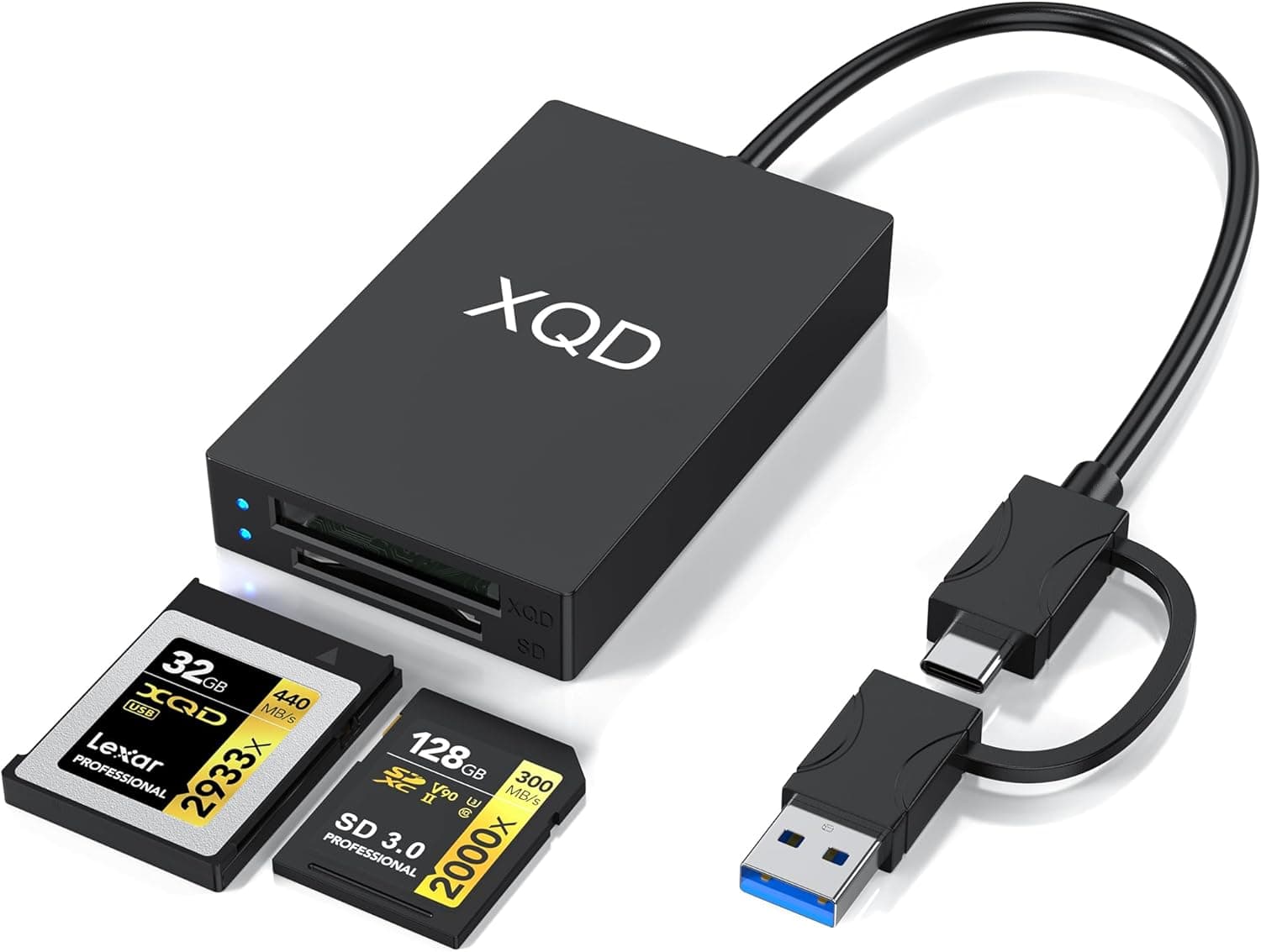
- XQD and CFexpress Type B are different standards in the same shape. The listed specs include XQD but not CFexpress. An XQD-only slot generally cannot read CFexpress cards, which matters if your camera uses CFexpress Type B.
- CompactFlash and CFast look alike but use different slots. CFast is SATA-based and will not fit a CF slot. Readers that support both have a separate slot for each.
- USB-C iPads and phones. Recent iPads can open external storage in the Files app. Bus power varies by device, though, so check whether the maker lists your device as supported.
- Cards share one connection. Seven slots still means one USB link. If you copy from several cards at once, each one gets a slice of the bandwidth.
Product Info
rmation
The listing carries the spec data below. As explained above, there is nothing to confirm these values belong to the titled item.
| Item | Listed value |
|---|---|
| Interface | USB 3.2 Gen1 (5Gbps) |
| Card slots | 7 (SD / microSD / CF / CFast / XQD / Memory Stick) |
| Supported standards | SD UHS-I/II, microSD UHS-I/II, CompactFlash, CFast, XQD, Memory Stick |
| Cable length | 15cm (USB-C) |
| Dimensions | 72×52×15mm |
| Weight | About 45g |
If those figures are accurate, a 72×52×15mm, 45g body fits easily in a camera bag, and a 15cm cable suits a reader sitting next to a laptop. But a reader that supports this many formats would normally show its brand and model number clearly.
The fact that the title shows neither is itself a red flag.
The listed price is far outside the range for a USB card reader, so we do not quote it here. Prices change often; check the product page for the current figure.
As of September 2026, the page showed 4.9 out of 5 stars from 207 reviews.
We cannot tell whether those reviews are for a card reader or a book. Read the review text rather than relying on the star rating.
Recommended Users
This listing makes sense only if you want the art-anatomy book the title suggests (apparently a Portuguese edition) and can confirm it is the right one from the ISBN and cover image. It could be worth considering if you read Portuguese or plan to use it mainly for the illustrations.
If you need a card reader for photo or video work, this listing is not for you. There is no reason to gamble on an item you cannot identify.
If you only use SD or microSD, a dual-slot reader is enough. If you also use CFexpress or CFast, pick a product whose model number clearly states which formats it supports.
Before You Buy
The title, ASIN, category and specs on this listing contradict one another. You will see the same contradictions when you open the product page.
Before ordering, check at least the following:
- Product images. Do they show a card reader or a book cover?
If there are no images, or they have nothing to do with the title, do not order. 2.
Description and product details. A book should list page count, publisher and language.
A device should list model number, manufacturer and supported operating systems. If neither is there, the listing itself is broken.
- Review text. Read what the reviews are actually about.
If they discuss a book, the item is not a card reader. 4.
Seller and return policy. Make sure you can return the item if it is not what you expected.
- Price. The listed price looks wrong for a card reader.
Do not pay many times what a reader normally costs.
The specs and prices on this site are collected automatically, and details from other products sometimes slip in. That is exactly why an earlier version of this article described a different product.
Always confirm the item from the product images and title before you decide.
Choosing a Multi-Format Card Reader
If you pass on this listing, here is how to choose a reader instead.
- Start from the cards you own. More slots is not always better. Every unused slot makes the reader bigger and makes it easier to insert a card in the wrong place.
- For SD-heavy work, get a dual-slot UHS-II reader. You can offload cards from two cameras side by side, which is all most people need.
- For CFexpress Type B, a dedicated reader is the safer choice. These cards are fast enough that a 5Gbps USB 3.2 Gen1 link can hold them back.
- Detachable or fixed cable. A detachable cable can be replaced if it breaks. A fixed one means less to carry, but a damaged cable means replacing the whole reader.
- A clear model number. Being able to compare the listing against the maker's own spec page is the surest way to avoid a mix-up like this one.
FAQ
Q. Is this item a card reader? A.
We cannot say for sure. The category and spec data say card reader, but the title and ASIN match a Brazilian art-anatomy book.
Check the images and description.
Q. Why is the ASIN all digits? A.
Amazon normally uses the ISBN-10 as the ASIN for books. This ASIN passes the ISBN-10 checksum, so the item was most likely listed as a book.
Q. Is the listed price correct? A.
It looks wrong for a USB card reader, so we have left it out. Prices change often; check the product page for the current figure.
Q. Can I trust the 4.9-star rating? A.
As of September 2026, the page showed 207 reviews averaging 4.9 stars, but we cannot tell what they are for.
Read the reviews to see whether they are about a reader or a book.
Q. Can one reader handle both XQD and CFexpress Type B? A.
They share a shape but are different standards. An XQD-only slot generally cannot read CFexpress.
If you use both, choose a reader that clearly says it supports both.