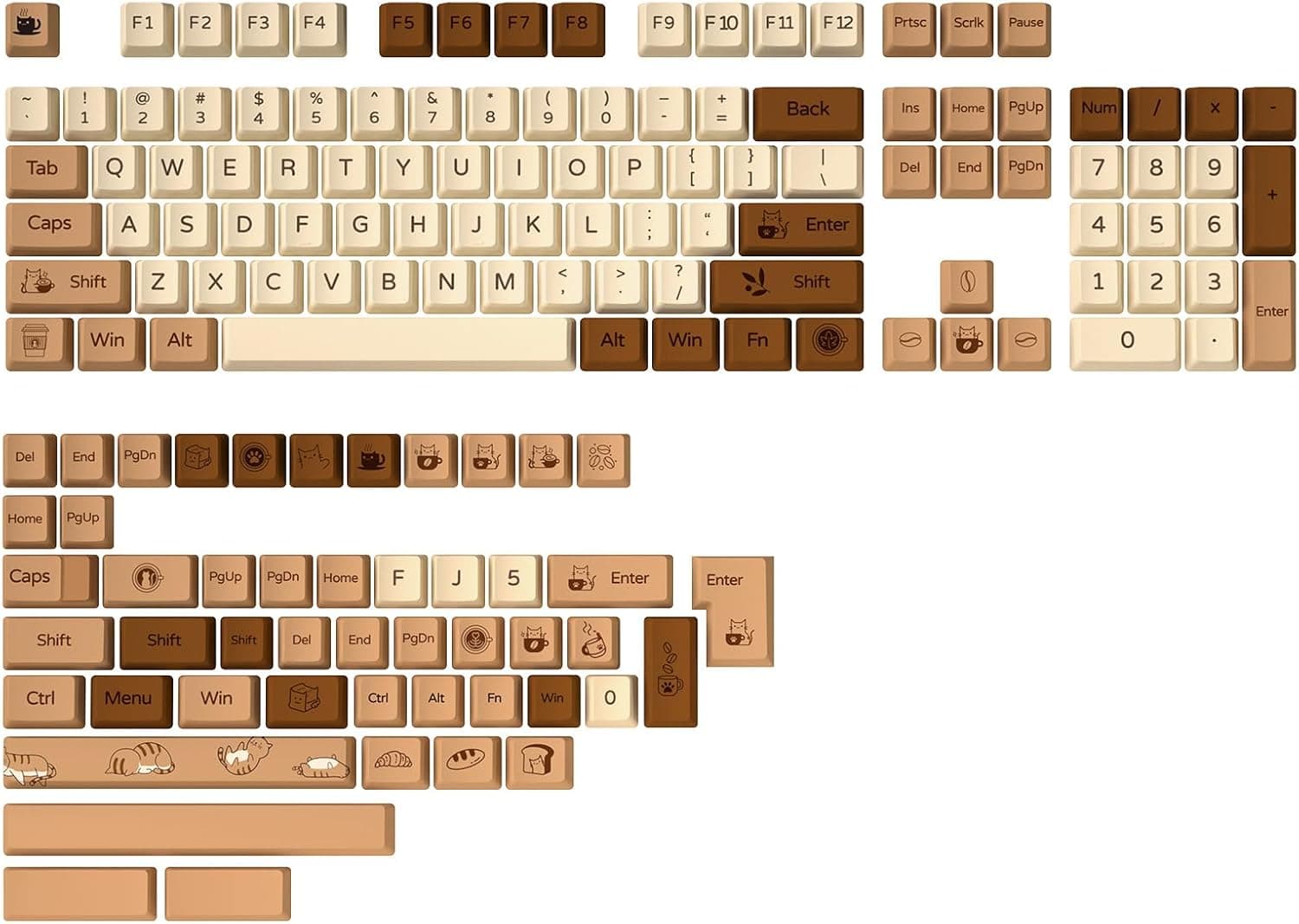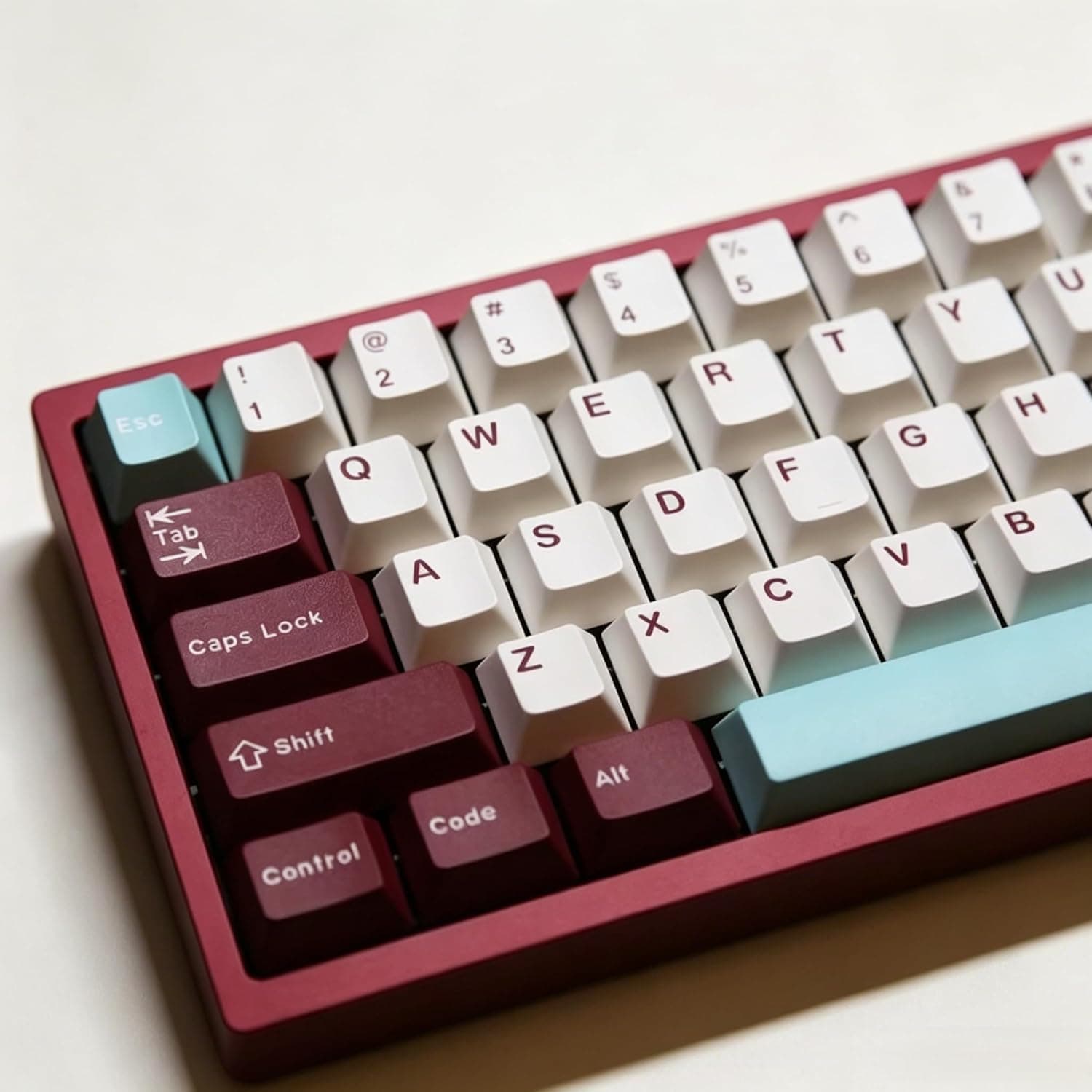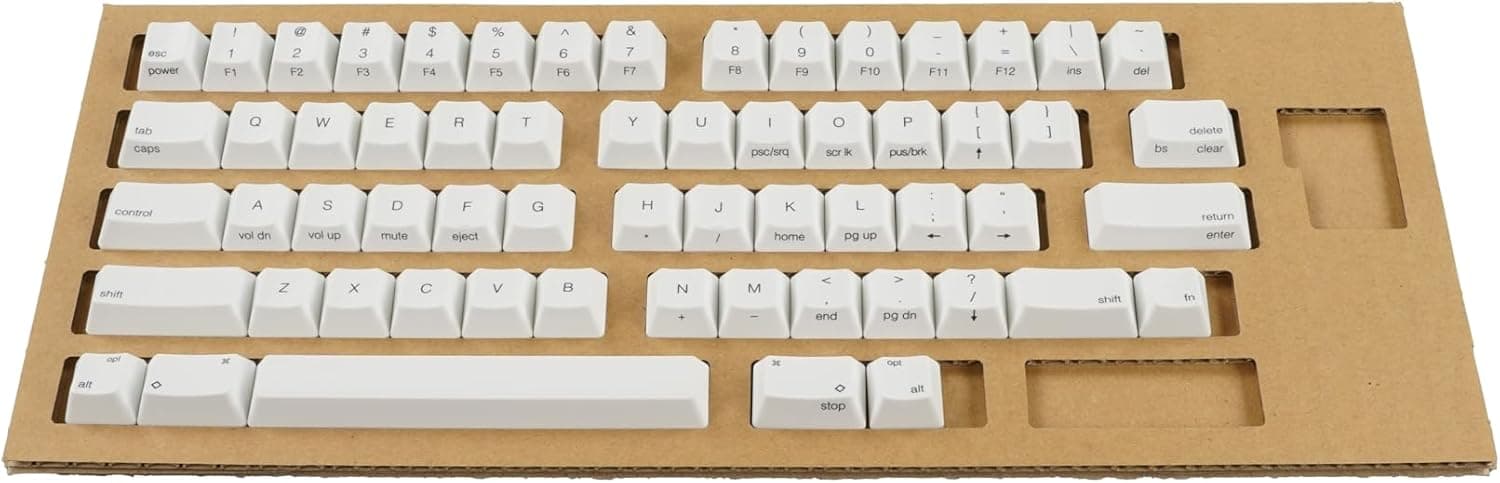
Overview
The Gliging 135-key — White PBT keycaps for mechanical keyboards is a replacement keycap set for mechanical keyboards with MX-style cross stems (Cherry MX compatible). No keyboard or switches are included: you get 135 keycaps and one keycap puller.
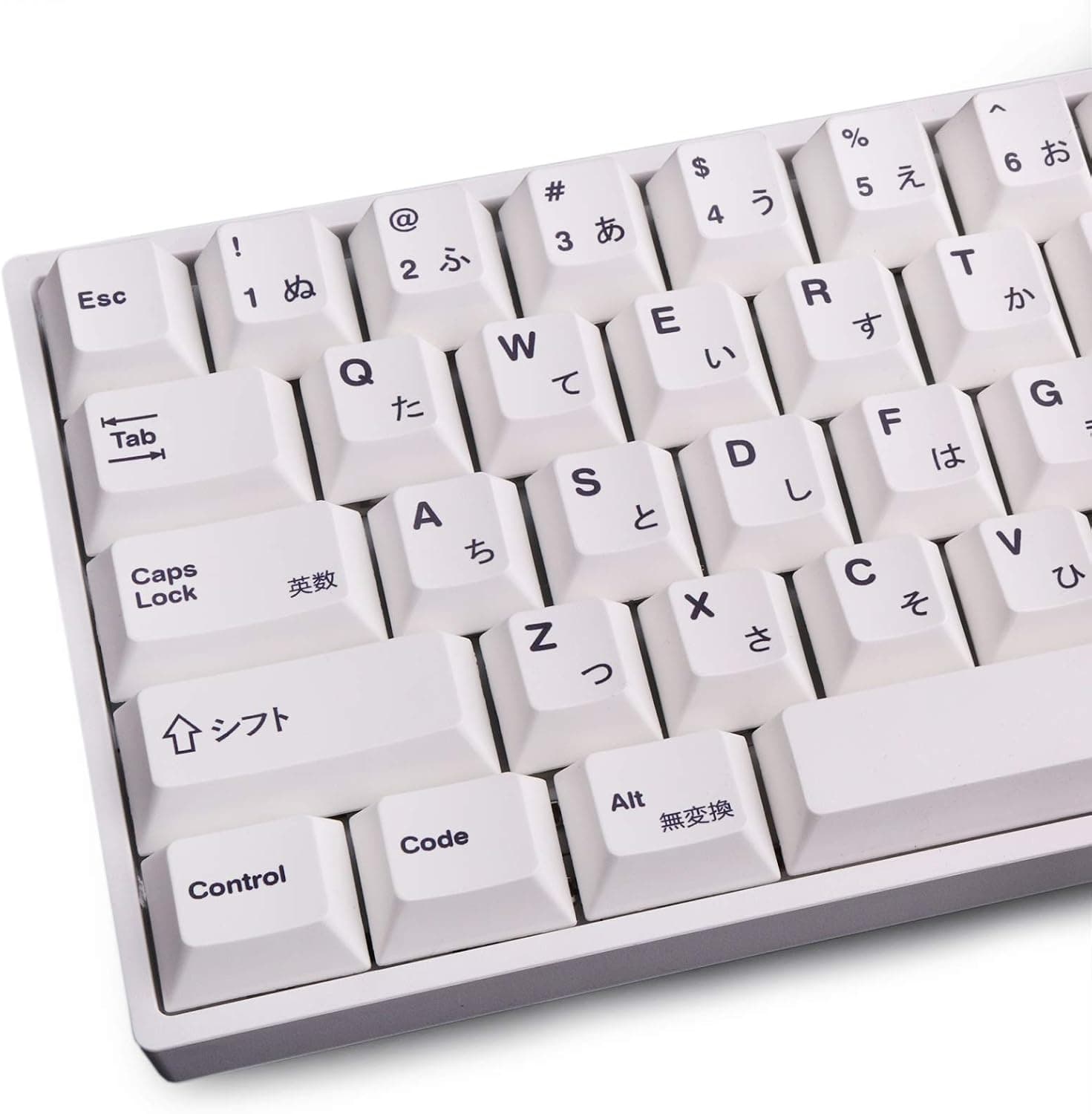
The caps are PBT with dye-sublimated legends, shaped in Cherry profile, and finished in a plain white minimalist theme.
The short verdict: if your board uses a Japanese (JIS) or similar layout and the thin stock ABS caps feel cheap or have started to shine, this is an affordable way to upgrade the feel. It is a poor fit if you want RGB lighting to shine through the legends, or if you use a Topre-style board such as a standard HHKB.
Whether it fits comes down to the switch stem and your bottom-row layout, so that is where this guide focuses.
What Cherry Profile Means (vs. OEM, SA and MOA)
A keycap "profile" describes key height and the angle of each row. Cherry profile is sculpted, with each row at a different height and angle, and it sits lower than the OEM profile used on most retail keyboards.
The slightly shorter travel to the key top is why many people who like a low typing position prefer it. Compared with tall profiles like SA or MT3, it is far more understated in both look and feel.
Rounded "cute" profiles such as MOA, MOG and MAO usually use one uniform shape for every key, so caps look fine in any row. Cherry profile does not work that way: moving a key to a different row leaves it at the wrong height.
Think of the large 135-key count as spare keys that help cover layout differences.
Compatibility Guide
The listed compatibility is mechanical keyboards with MX cross stems (Cherry MX compatible), in 60%, 65%, 75% and 100% form factors, including Japanese layout. Most Cherry MX-compatible switches, such as Gateron, will physically accept them.
However, the maker states that optical switches and low-profile switches are not supported. Some optical switches do have cross stems, but treat them as outside the supported range.
These caps will not fit laptop keyboards, membrane or scissor-switch keyboards, Topre-style electro-capacitive boards like a standard HHKB, or slim boards using low-profile switches such as Kailh Choc. A board being labeled "mechanical" is not enough: the stem has to be a cross.
The surest check is to pull one cap and look for a "+" shaped stem.
Layout is the next common failure point. Japanese layouts generally use key sizes not found on ANSI boards, including a tall Enter key, a shorter spacebar, Henkan/Muhenkan/Kana keys and a shorter right Shift.
On 60%, 65% and 75% boards, bottom-row and right-column sizes also vary between products even within JIS. Before buying, measure the widths (in units) of your bottom row and right edge and compare them with the product images.
| Check | Where to look | If it doesn't match |
|---|---|---|
| Stem shape | Is the stem under a cap a "+"? | The caps won't mount at all |
| Layout | JIS or ANSI, Enter key shape | Enter or spacebar won't fit, or keys go unused |
| Bottom row widths | Spacebar and modifier lengths | Gaps or overhanging keys |
| Backlighting | Do you want legends to glow? | Legends stay dark; light only leaks around edges |
Backlighting deserves a clear warning. These caps are not shine-through, so on an RGB board the legends will not light up and the light only leaks from the edges.
If you run your board with lighting off, this does not matter.
Product Info
Specs: 135 keys (108 standard plus 27 modifiers), PBT material, dye-sub legends, Cherry profile, about 1.5mm thick, with one keycap puller included.
As of August 2026 it was listed at ¥5,980 on Amazon Japan, which works out to roughly ¥44 per key. Prices change with sales and sellers, so check the product page for the current price before buying.
Check the retailer's page for the latest user reviews. Keycaps are a matter of taste, so when reading reviews, prioritize people using the same layout and board size as you.
PBT is known to resist shine and yellowing better than ABS. Dye-sub legends are absorbed into the plastic rather than printed on top, so they essentially cannot rub off.
The limitation of dye-sub is that it struggles to put light legends on dark keys, but dark legends on white caps, as in this set, play to its strengths. At about 1.5mm, these caps are thicker than the thin caps most boards ship with, and many users find the typing sound becomes more muted.
How to Swap the Keycaps
Use the included puller to lift each cap straight up, then press the new cap straight down. You are not removing switches, so this works even on boards without hot-swap sockets.
Pulling at an angle can stress the stem, so keep it vertical.
Long keys such as the spacebar, left Shift and Enter sit on stabilizers. Lift these slowly so the wire doesn't pop out, and when reinstalling, confirm the wire is seated on both sides.
Take a photo of the board before you start so you know which Cherry-profile row each key belongs to.
Compared With Alternatives
| Product | Material | Profile | Notes |
|---|---|---|---|
| Gliging 135-key (this set) | PBT | Cherry | Includes Japanese layout, white theme, dye-sub |
| EPOMAKER Sunflower 133-key | PBT | Cherry | Dye-sub, ISO noted, patterned design |
| Drop + Matt3o MT3 Susuwatari | ABS | Tall MT3 | Double-shot legends, retro look |
| TIMSEKER MOG 140-key | PBT | MOG | Rounded shape, ANSI layout, pastel colors |
For another PBT Cherry-profile set, EPOMAKER Sunflower is the closest rival. The difference is looks and layout: pick Sunflower for a pattern, or this set for plain white.
If you like a tall typing feel, MT3 is a different experience entirely, and MOG or MOA sets suit people who want a rounded, playful look. If Japanese-layout fit matters most, always confirm the layout listing.
Best Use Cases
This set suits people with a Japanese-layout mechanical keyboard who want better feel than the shiny, light-sounding stock caps. Japanese-layout keycap sets are less common than ANSI ones, and plain white PBT with dye-sub legends is a combination that is harder to find.
It also fits desks built around white peripherals like a white mouse or monitor arm. First-time modders get a puller in the box, so no extra tools are needed.
And if you dislike tall keys and prefer a lower typing posture, Cherry profile is a natural match.
Before You Buy
The biggest trap is assuming any mechanical keyboard will work. Only MX cross stems are supported, and optical and low-profile switches are excluded.
Topre-style boards such as a standard HHKB also use a different stem and will not fit.
It is not for people who want RGB on display. The caps are not shine-through, so legends stay dark and light only leaks around the edges.
If you just bought a lighting-focused board and want a white look, be ready to give up the lighting effect.
Small layout differences are another point to accept. On 60%, 65% and 75% boards, right Shift and bottom-row modifier lengths vary by product, and compact JIS boards are uncommon to begin with.
One or two keys may not match, so plan to keep the original caps for those positions. Because Cherry profile changes shape by row, filling gaps with keys from another row will leave uneven heights.
If you are used to taller SA or OEM profiles, these may feel low at first. If you already prefer low keys, that becomes a benefit.
One listing note: the Amazon details show the seller and shipper as "Amazon US" even though the product is listed on Amazon Japan. Sellers and shipping sources can change over time, so check the seller and delivery estimate at checkout, and use the images and title to confirm you are buying the right product.
FAQ
Q. Will every key fit a Japanese-layout keyboard? A.
Japanese layout is listed as supported, but compact boards vary in bottom-row and right-Shift sizes. Measure your key widths and compare them with the product images.
Q. Will the legends light up?
A. No. The caps are not shine-through, so light only leaks around the edges.
Q. Can I use them on an ANSI keyboard? A.
They will mount on MX cross stems, but the legends and long keys assume a Japanese layout. Check that the spacebar and other long keys match first.
Q. Will they get shiny over time? A.
PBT resists shine much better than ABS. Some change is possible after long use, but dye-sub legends will not wear off.
Q. Do they fit an HHKB?
A. A standard HHKB uses Topre electro-capacitive switches without MX cross stems, so they will not fit.
Product Disclosure (Amazon)
- Manufacturer: Gliging
- Seller: Amazon US
- Fulfilled by: Amazon US
- ASIN: B08L7YXQ43
- Note: This article covers a manufacturer-made product based on Amazon listing details.