Overview
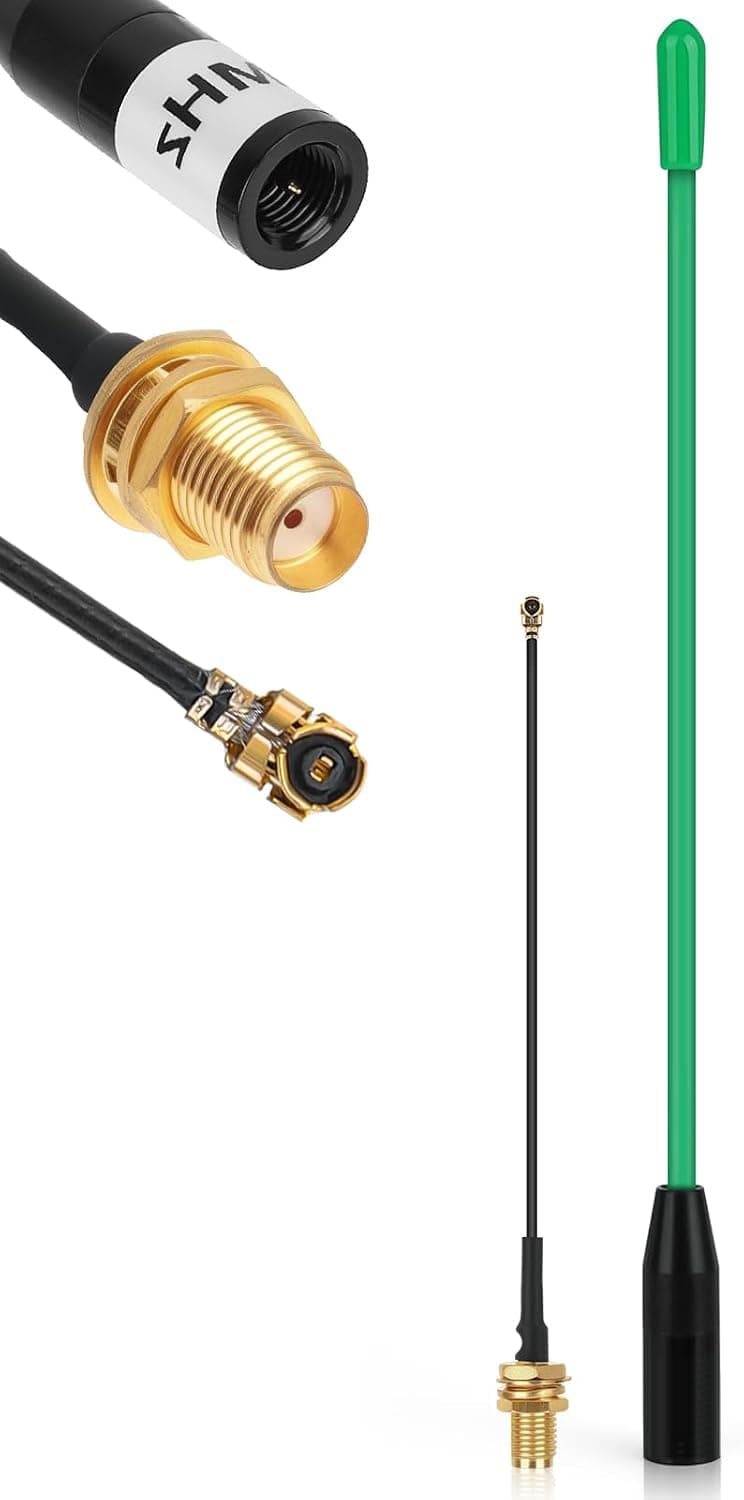
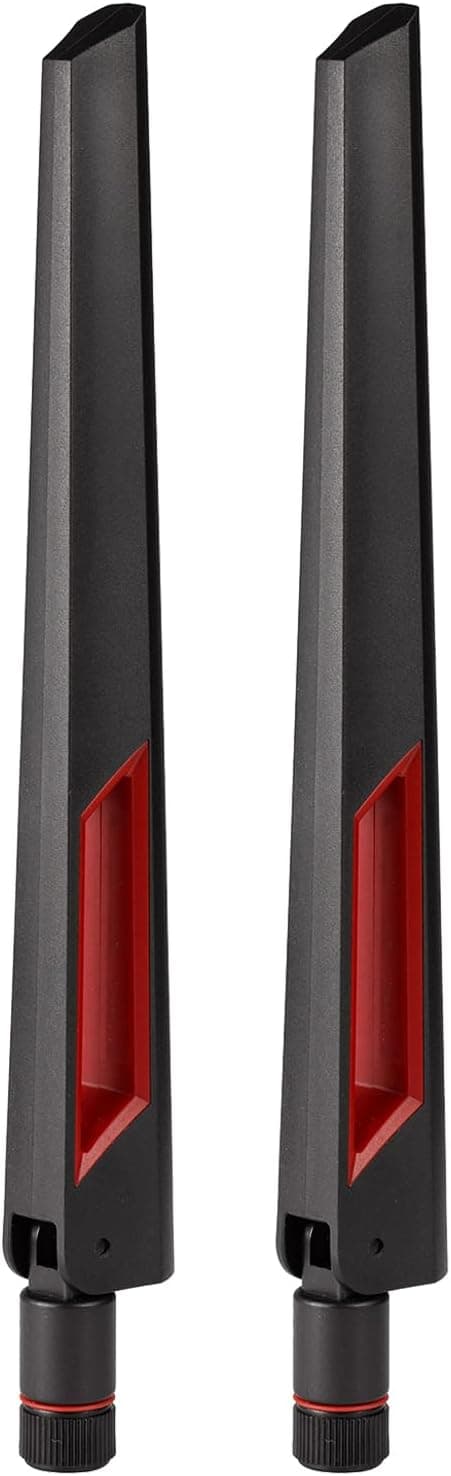
The 915MHzアンテナ 10dBiゲイン Meshtastic LoRa長距離ソフトホイップアンテナ用 20cm Omni SMA オスブラック GT-7702 (2パック) is a pair of soft whip antennas for the 915MHz band from the Meshnology brand. According to the listed specs, it has a rated gain of 10dBi, an omnidirectional pattern, an SMA male connector, a length of 20cm, and 50Ω impedance.
It is mainly meant to replace the small stock antennas that come with Meshtastic nodes and LoRa development boards.
The short version: it is a reasonably priced way to get two better-than-stock antennas for 915MHz LoRa gear that has SMA female ports. Still, do not expect the 10dBi figure to translate directly into range.
If you are in Japan, you also need to check the frequency band and radio regulations first. Both points are covered in detail below.
How to Read the 10dBi Figure
Antenna gain (dBi) does not mean amplification. It describes how the antenna concentrates radiation in certain directions.
A higher-gain omni antenna flattens its pattern toward the horizon and gives up coverage above and below. It does not create extra power.
At 915MHz, the wavelength is about 32.8cm, so a half wave is about 16.4cm.
That makes a 20cm whip roughly a half-wave-class antenna. Omni antennas in the 10dBi class are generally collinear designs that are a meter or more long.
For a 20cm whip, it is safer to assume a real-world gain of only a few dBi. Treat the rated figure as a product claim and do not use it to plan link distances.
The upgrade can still be worthwhile. Many LoRa boards ship with short spring antennas or antennas that are poorly tuned.
Switching to an antenna tuned for 915MHz often makes reception noticeably more stable. Expect it to fix weak stock hardware, not to multiply your range.
Compatibility Guide
SMA vs RP-SMA
This antenna uses an SMA male connector, which has a center pin. Your device needs an SMA female port, which has a center socket.
The most common mistake is confusing SMA with RP-SMA, which is widely used on Wi-Fi gear. The two look almost identical and even screw together, but the center contact does not connect.
The result is no link at all or a very weak one. Check your board's specs before you buy.
Supported Boards and U.FL Ports
The listing names Meshtastic nodes and Heltec, LilyGo, and TTGO boards as compatible. Depending on the board and revision, though, the antenna port may be a tiny U.FL (IPEX) connector.
In that case you need a separate U.FL-to-SMA-female pigtail.
In enclosure builds, a common setup is to use a pigtail that brings an SMA port out through the case.
Frequency and Impedance
The 50Ω impedance matches standard LoRa hardware. The antenna is rated for 915MHz, which sits near the middle of the 902-928MHz band used in North America; that band is the US region in Meshtastic.
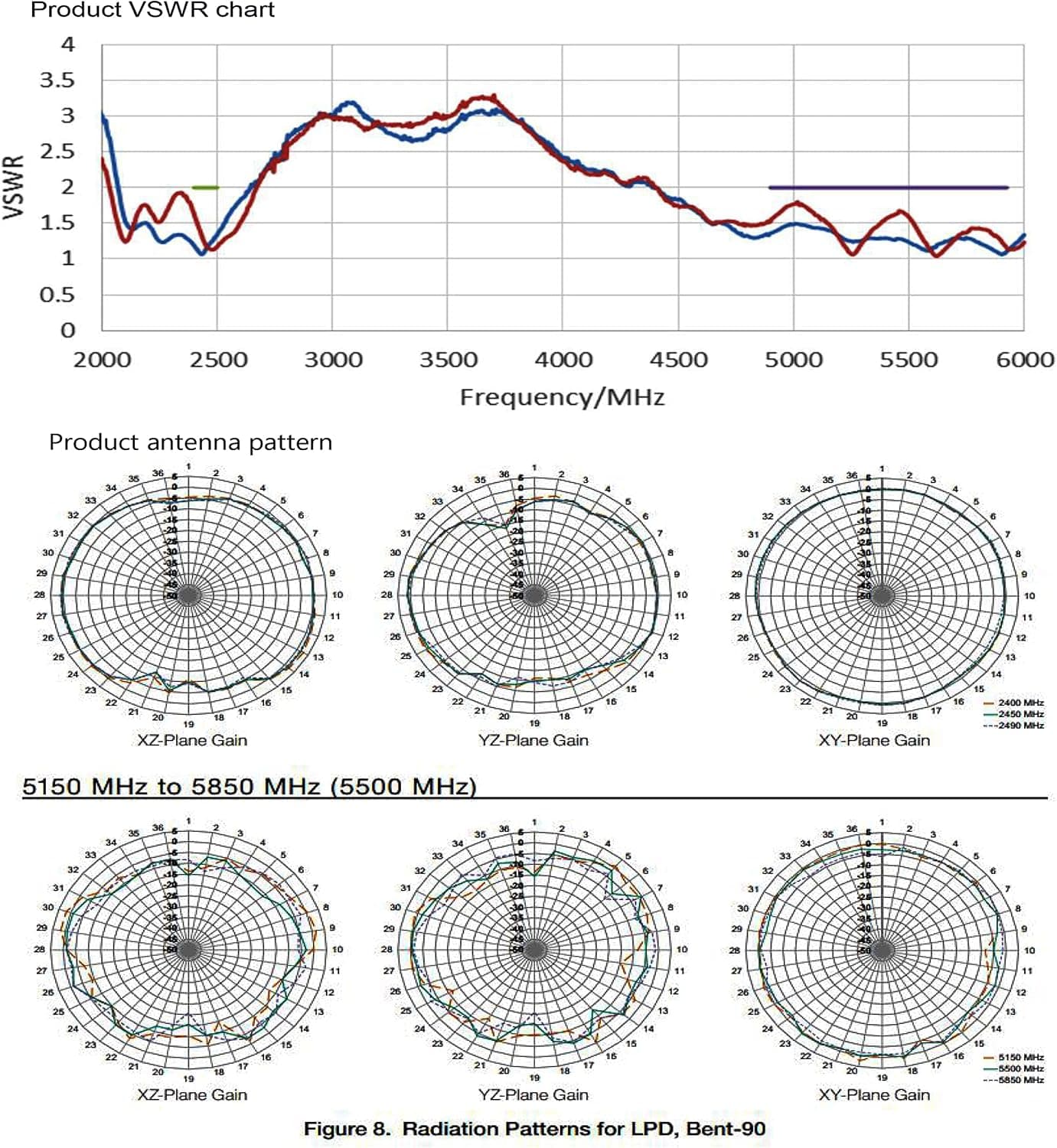
Japan uses the 920MHz band for LoRa (see Before You Buy). The provided data does not include the antenna's match (VSWR) at 920MHz.
Bandwidth varies by design and from unit to unit, so check the product page.
Not for 433MHz, 868MHz, or 2.4GHz
This antenna is built for 915MHz only. It is not suitable for 433MHz or 868MHz LoRa boards, and it will not work for Wi-Fi or Bluetooth.
Check your board's frequency variant before ordering.
Product Info
| Item | Value |
|---|---|
| Frequency | 915MHz |
| Gain (rated) | 10dBi |
| Pattern | Omnidirectional |
| Connector | SMA Male |
| Length | 20cm |
| Impedance | 50Ω |
| Quantity | 2 |
The brand is Meshnology and the model is GT-7702. When the price was captured in October 2026, it was ¥5,955 for the 2-pack on Amazon.co.jp, or about ¥3,000 per antenna.
Prices change with sales and stock, so check the product page for the current price.
At the same capture date, the product was rated 4.8 out of 5 from 13 reviews.
The rating is high, but 13 reviews is too few to judge long-term durability or unit-to-unit variation.
The original listing describes the antenna as built for outdoor use, but the provided specs give no IP rating. For a permanent outdoor install, seal the connector joint yourself, for example with self-amalgamating tape.
Check the product page for warranty terms.
Recommended Users
- Owners of 915MHz Meshtastic nodes with weak stock antennas: if you run several nodes, the 2-pack lets you fit the same antenna on, for example, a base node and a portable node.
- LoRa experimenters: having two identical antennas makes it easier to run fair RSSI and SNR comparisons.
- Anyone whose board or enclosure already has an SMA female port: the antenna screws straight on with no adapters.
It is less suited to links with large height differences, such as a hilltop to a valley. For fixed links over several kilometers, a directional antenna is usually a better fit.
Before You Buy
Japan: Check the Band and Radio Law
This is the most important point. In Japan, LoRa operates in the 920MHz band as a specified low-power radio under ARIB STD-T108, and Meshtastic uses the JP region setting there.
Transmitting on 915MHz (the US setting) in Japan does not follow the Japanese band allocation.
Devices that transmit in Japan also need Giteki certification. That certification often covers the device together with a specific antenna, so swapping in an antenna with a higher rated gain may put the device outside its certified conditions. Check which antennas your device's certification allows before installing this one.
Most overseas 915MHz boards are not Giteki-certified in the first place.
High-Gain Omnis Are Weak Above and Below
Raising the gain of an omni antenna flattens its pattern. If the other station is well above or below you, for example between an upper floor and the street or between a ridge and a valley, the link can actually get worse.
Because the rated gain may also be optimistic, do not plan an installation around the idea that 10dBi will carry the signal far.
Never Transmit Without an Antenna
If a LoRa module transmits without an antenna, the reflected power can damage the radio chip. Power the device off before swapping antennas.
Tighten the connector firmly by hand; a loose fit causes intermittent contact, and over-tightening with tools can damage the connector.
Watch Cable Loss
If you use a long coax run to mount the antenna higher, remember that thin cable loses a lot of signal at 915MHz. That loss can easily cancel out what you gained from the antenna upgrade.
Keep the cable short and use thicker, low-loss coax.
Verify the Listing
The listing shows the seller as Amazon US while the price is in yen on Amazon.co.jp, so the details are mixed.
Before ordering, use the product images and title to confirm that it is the 915MHz GT-7702 with an SMA male connector.
FAQ
Q. Can I use it with Meshtastic in Japan (JP region, 920MHz)? A.
It is sold as a 915MHz antenna, and the data does not show how well it matches at 920MHz. It will physically fit, but check the match on the product page.
You also need to confirm that it fits your device's certification conditions.
Q. Is it really 10dBi? A.
10dBi is high for a 20cm omni whip. Assume a few dBi in practice and treat it as an upgrade over a weak stock antenna.
Q. Can I attach it to a Wi-Fi router? A.
No. Most Wi-Fi gear uses RP-SMA connectors and the 2.4GHz or 5GHz bands, so neither the connector nor the frequency matches.
Q. What is the second antenna for?
A. You can fit two nodes with the same antenna, use the pair for A/B tests, or keep one as a spare.
Q. Can I leave it outdoors permanently? A.
It is described as built for outdoor use, but no IP rating is listed. Seal the connector yourself and choose the mounting location with lightning in mind.
Product Disclosure (Amazon)
- Manufacturer: Meshnology
- Seller: Amazon US
- Fulfilled by: Amazon US
- ASIN: B0FJLVVQZB
- Note: This article covers a manufacturer-made product based on Amazon listing details.