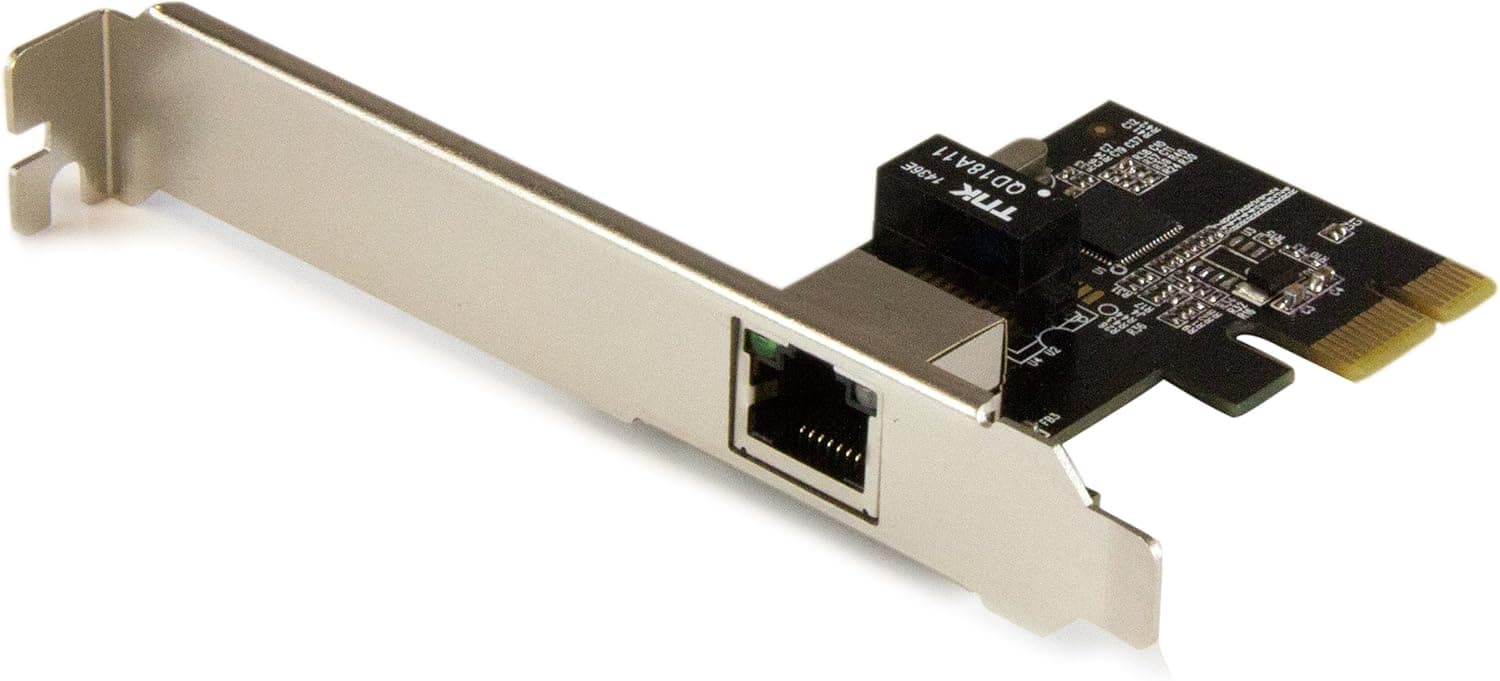
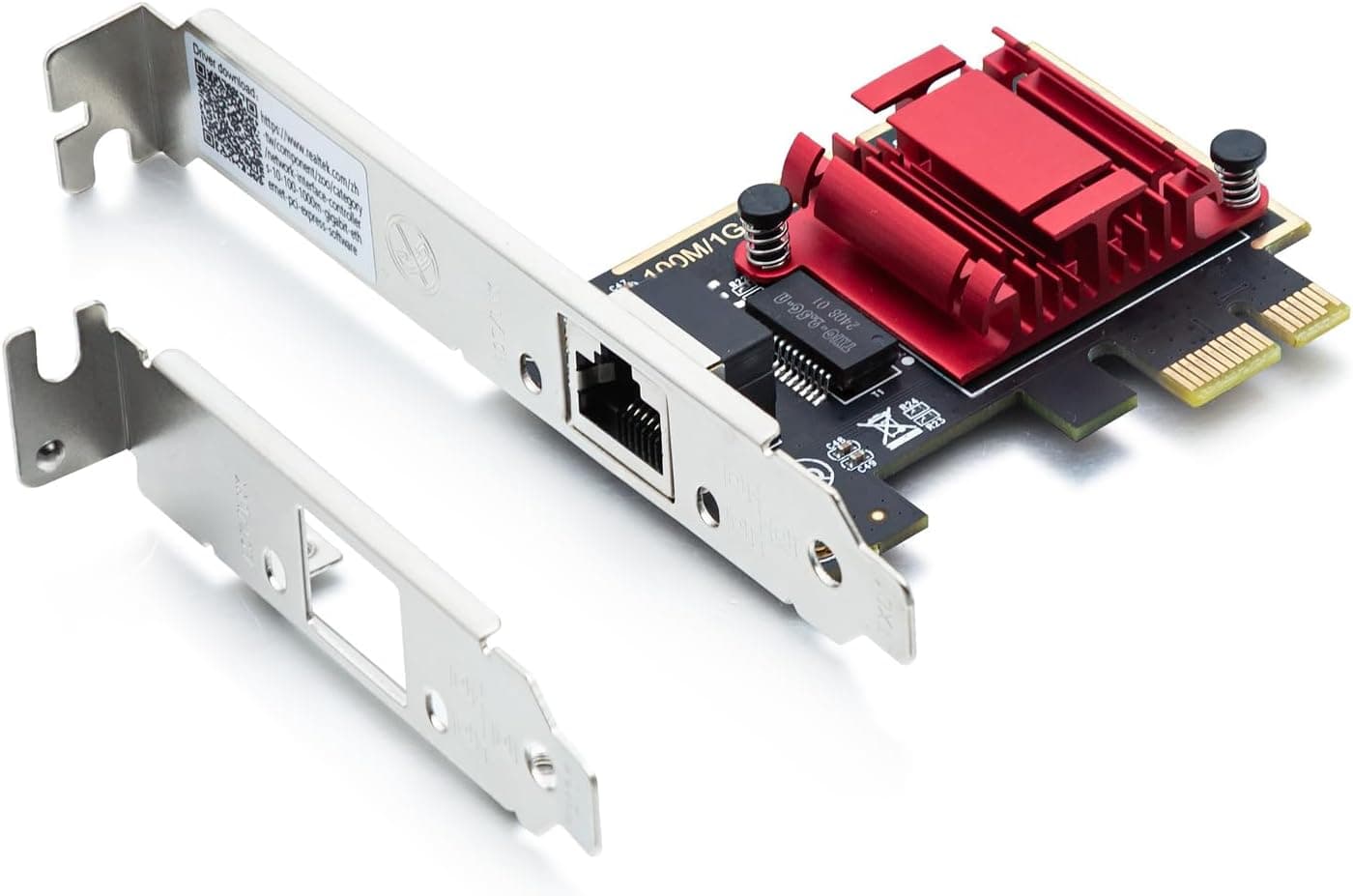
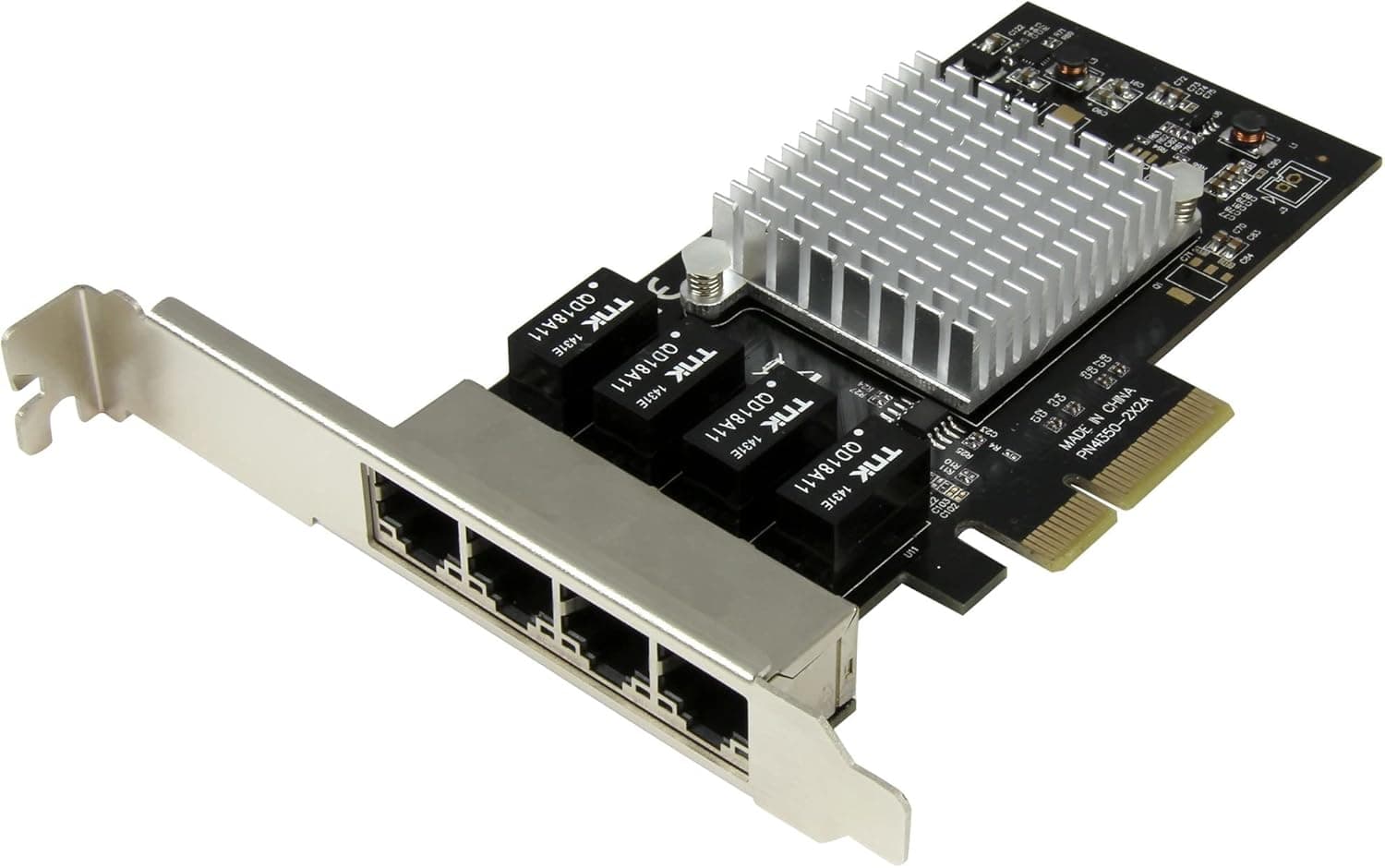
This article covers 10Gtek 100/1000Mbps Gigabit LAN カード.
Overview
The 10Gtek I350-T4 compatible LAN card is a 4-port Gigabit Ethernet adapter built around the Intel I350AM4 controller. It connects through a PCIe x4 interface, letting you add four separate 1000BASE-T connections from a single expansion slot. This makes it a practical choice for server builds, network testing rigs, and anyone who needs more wired ports than their motherboard provides.
As the name suggests, this card is designed as a compatible alternative to Intel's own I350-T4, using the genuine Intel I350AM4 chip. Driver support spans Windows 7 through 11, Windows Server 2008/2012/2016/2019, CentOS/RHEL 6/7/8, Ubuntu 16/18/19/20, Debian 9/10/11, FreeBSD 10/11/12, VMware ESXi 5/6, and SLES 11/12. That broad OS coverage makes it a versatile option for both homelab and professional environments.
Connectivity & Compatibility
The card uses a PCIe x4 interface and works in x4, x8, or x16 slots. It will not function in a PCIe x1 slot, so check your motherboard's layout before buying. All four ports are RJ45 and support 100Mbps and 1000Mbps speeds.
Operating system support is extensive, covering Windows, Linux, FreeBSD, and VMware ESXi. However, macOS is not supported. There is also a notable caveat: the card does not work with Supermicro motherboards. If you are building a server on a Supermicro board, you will need to look elsewhere.
The package includes both full-height and low-profile brackets, so the card can be installed in standard desktop towers as well as compact server chassis. That flexibility is a nice touch for a product aimed at mixed environments.
Product Info
Check the retailer's page for the latest price. For a four-port Gigabit NIC, that is an aggressive price point, especially when compared to Intel's own I350-T4 which typically costs significantly more.
In terms of market positioning, this sits in the entry-to-mid tier of server NICs. It offers the same Intel controller as the pricier original, but with a third-party board design that keeps costs down. If you need multiple Gigabit ports without spending a fortune, this is one of the most economical routes.
Warranty details and included accessories are listed on the product page, but the dual-bracket inclusion is worth highlighting again. It means the same card can move between a full-size workstation and a low-profile server without needing extra parts.
Best Use Cases
Home server builders who have run out of onboard LAN ports are the primary audience. With four ports, you can connect a router, a switch, and multiple PCs directly, giving you more flexibility in how you wire your network. The Intel chip also means solid driver support under Linux, which is a common choice for self-hosted services.
Network engineers and homelab tinkerers will appreciate the port density for testing and segmentation. If you want to isolate virtual machines on separate networks or experiment with multiple subnets from one host, having four physical ports makes the setup much easier. The SR-IOV and VMDq support further helps in virtualized environments.
That said, if you only need internet access on a desktop PC, a single-port card or the motherboard's built-in LAN is more than enough. Buying a quad-port NIC when you will never use more than one port is simply wasted money. Also, make sure you have a free PCIe x4 or wider slot, since x1 slots are not compatible.
Product Disclosure (Amazon)
- Manufacturer: 10Gtek
- Seller: 10Gtek-JP★適格請求書の発行対象
- Fulfilled by: Amazon
- ASIN: B01H6NE4X2
- Note: This article covers a manufacturer-made product based on Amazon listing details.