Overview
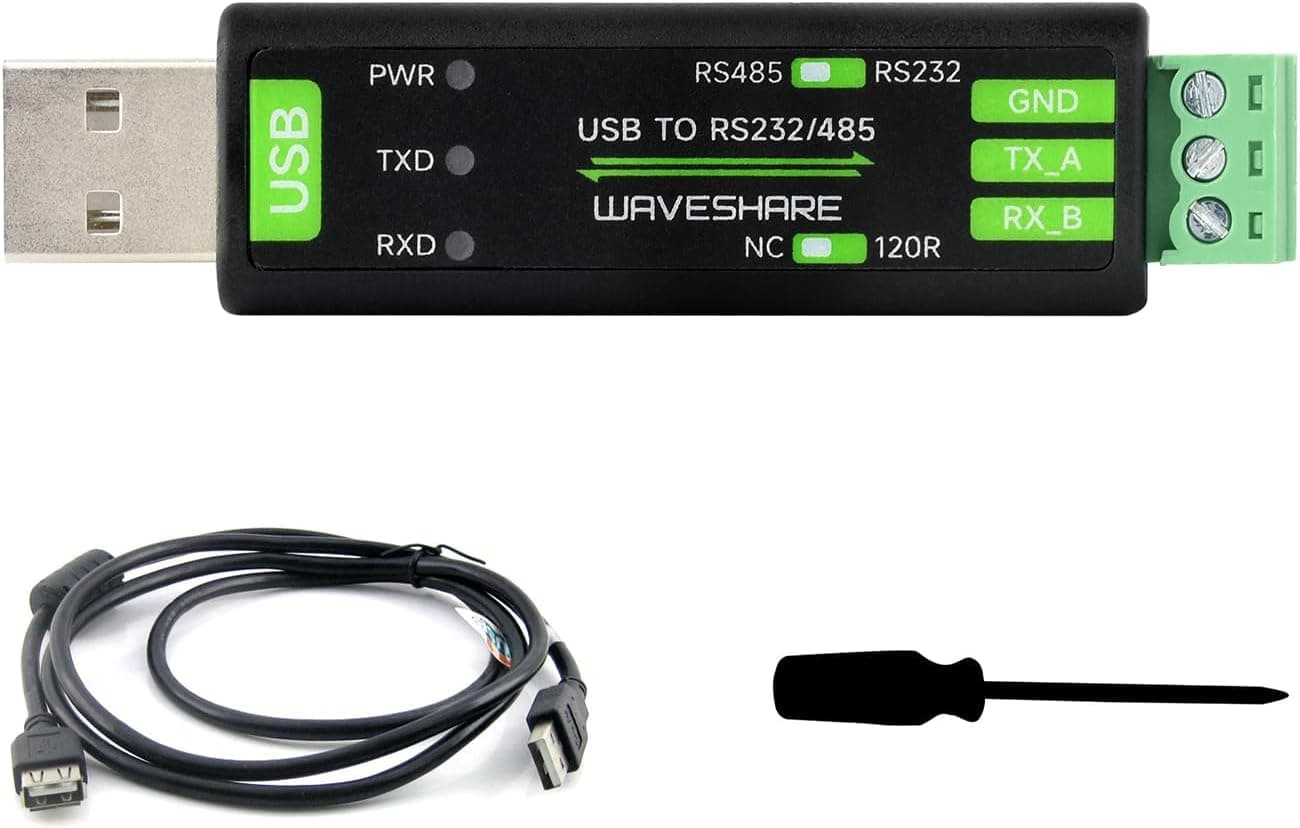
The Waveshare FT232RNL USB to RS232/RS485 Serial Converter bridges modern computers, which only have USB, and industrial or lab equipment that only speaks RS232 or RS485. The short verdict: this is for people who want the stability of a genuine FTDI driver stack, across both serial standards, for under 5,000 yen.
It is not for galvanically hostile environments or permanently installed production lines.
Three things define it. First, the onboard chip is a genuine FTDI FT232RNL, not a clone.
Second, an on-board switch toggles between RS232 and RS485, so one unit covers both standards. Third, a 120Ω termination resistor for RS485 is built in and switchable.
That third point sounds minor but removes the need to solder a resistor in the field, which matters more in practice than the spec sheet suggests.
The unit measures roughly 60 x 35 x 18 mm and weighs about 30 g in an ABS enclosure, small enough to live permanently in a laptop bag. Supported operating systems are Windows 11/10/8.1/8/7, macOS, Linux, and Android.
On Amazon.co.Check the retailer's page for the latest user reviews.
How to Read the Key Specs
| Item | Value | What it means in practice |
|---|---|---|
| Chipset | FTDI FT232RNL (genuine) | Drivers ship with the OS; no counterfeit-chip lockout risk |
| PC interface | USB 2.0 Type-A | USB-C-only laptops need an extra adapter |
| Serial standards | RS232 / RS485 (switchable) | One unit, two standards, but not simultaneously |
| RS232 connector | DB9 male | A male device port needs a gender changer |
| RS485 connector | Screw terminal block | Ferrules or crimp terminals make wiring far more reliable |
| Termination | 120Ω, switchable | Enable only at the two ends of the bus |
| Supported OS | Windows 11/10/8.1/8/7, macOS, Linux, Android | Android needs OTG plus an FTDI-aware terminal app |
| Size / weight | approx. 60 x 35 x 18 mm / 30 g | Toolbag-friendly; no mounting holes |
The rows worth dwelling on are the chipset, the USB connector, and termination. Genuine FTDI silicon means driver hunting disappears.
USB Type-A means a hidden extra cost on recent laptops. The termination switch is what moves an RS485 link from "it sort of works" to "it works consistently."
Compatibility Guide
On the host side, any Windows PC, Mac, or Linux machine with a USB Type-A port takes it directly. The vendor compatibility note is explicit: devices with only USB-C require an additional adapter.
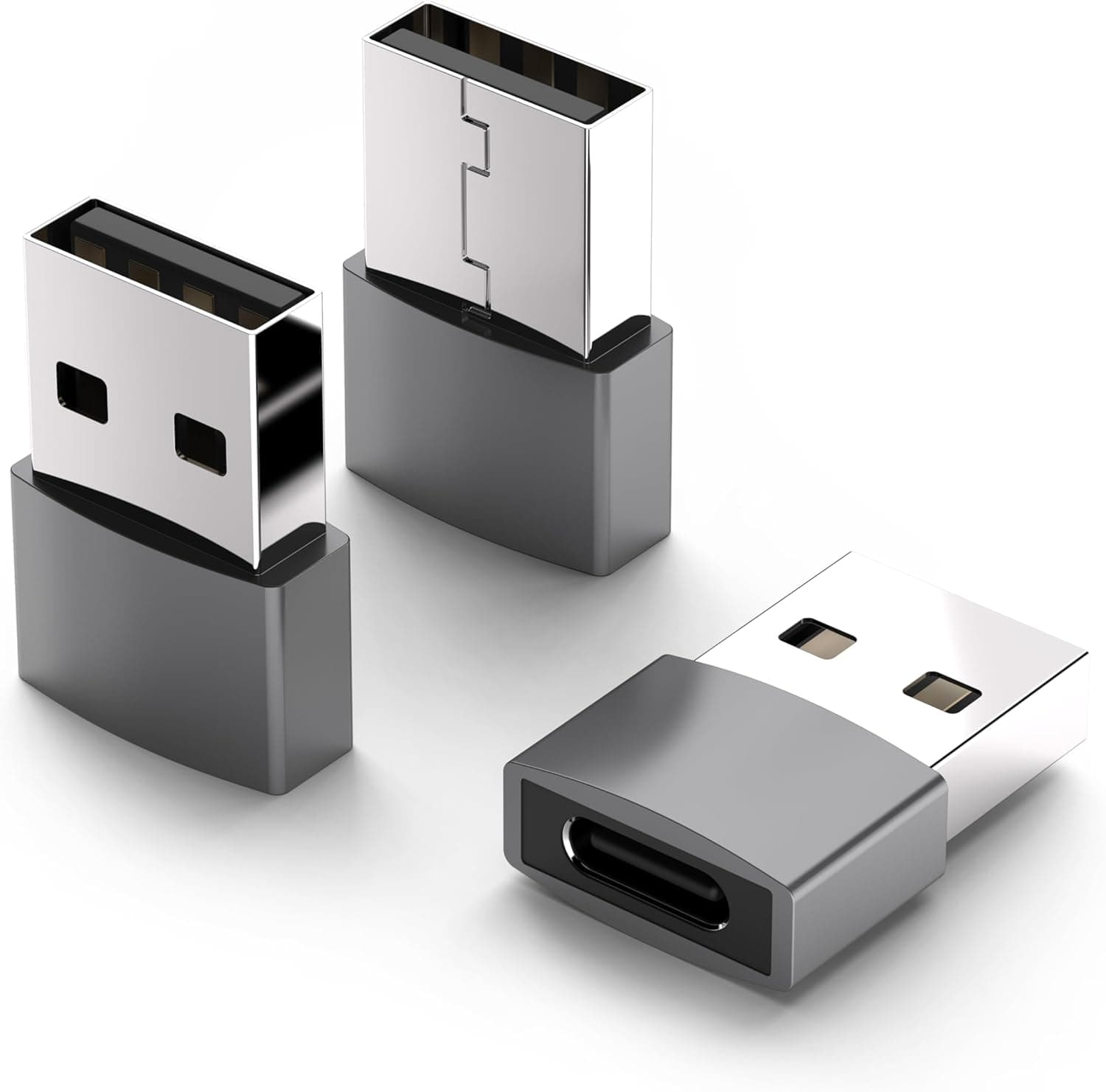
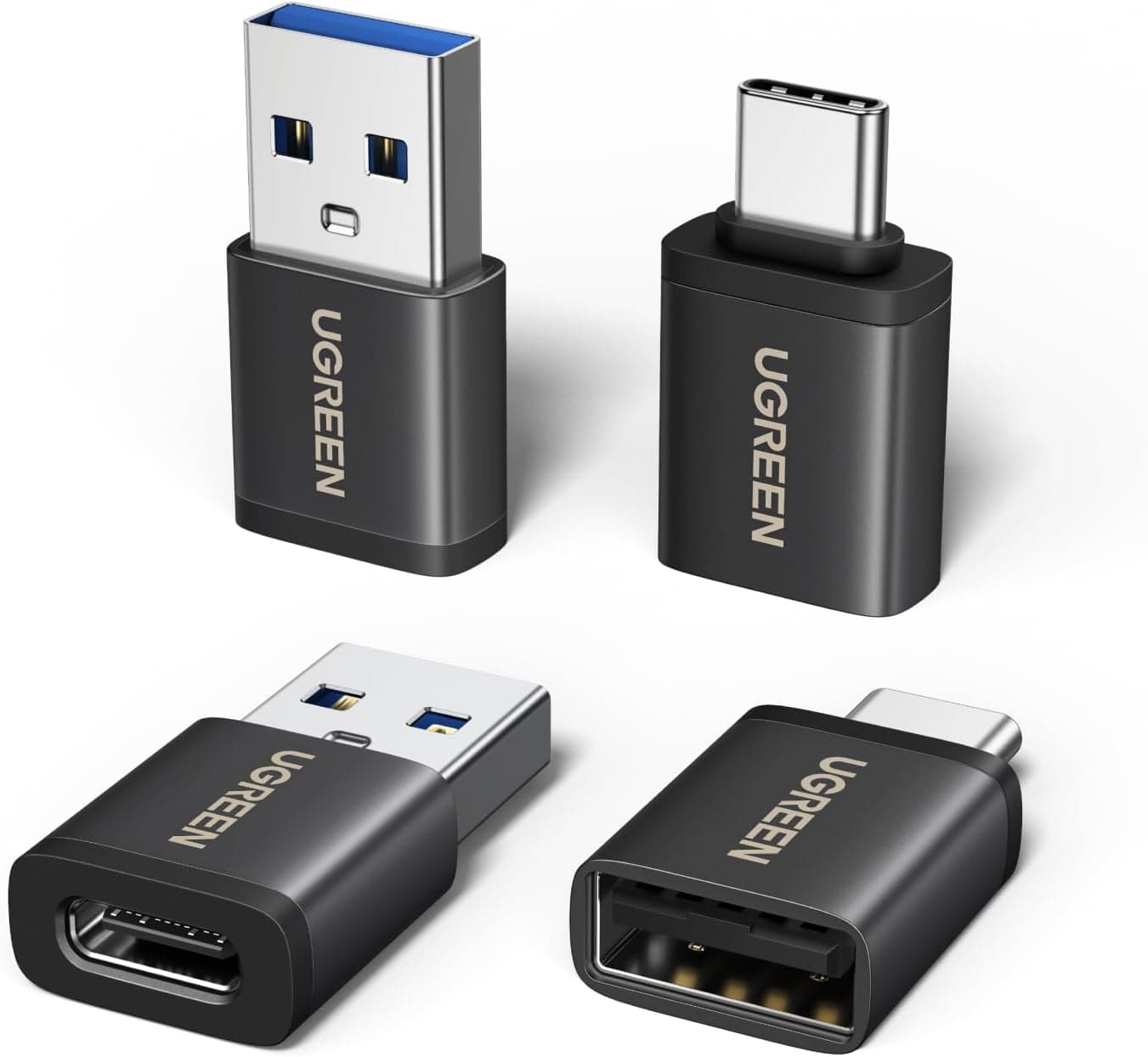
That is the first fork in the road. If your laptop is USB-C only, budget for a USB-A to USB-C adapter or a hub.
Hubs work, but on electrically noisy factory floors, plugging straight into the machine causes fewer mysteries.
The RS232 side uses a DB9 male connector. Two things get missed here: the gender of the target port, and straight-through versus null-modem wiring.
If the equipment also presents a male port you need a gender changer, and connecting two DTE devices requires a crossover cable. RS232 signalling relies on voltage swings of several volts, so overly long or thin homemade cables degrade edges and produce intermittent errors.
Keeping runs within roughly ten to fifteen metres at typical baud rates is a safe planning figure.
The RS485 side is a screw terminal block. Reversing A and B polarity kills communication entirely, so check that first when nothing works.
RS485 is a multi-drop bus, so only the two nodes at the physical ends of the trunk should have their 120Ω termination enabled. If this converter sits at an end, switch it on; if it taps in mid-bus, leave it off.
Long or noisy runs may additionally need bias resistors and proper shield grounding.
OS compatibility is the most reassuring part of this product. FTDI drivers usually arrive automatically through Windows Update, and macOS and mainstream Linux distributions recognise the chip natively, exposing it as a standard serial device.
Android requires both an OTG-capable handset and a terminal app that understands FTDI chips, so verify on your actual device.
Product Info
As captured on 30 August 2026, the Amazon.co.Check the retailer's page for the latest price.
An eBay listing captured 30 August 2026 shows $12.17.
That looks cheaper, but once shipping, duties, lead time, and the real risk of counterfeit FTDI silicon are factored in, domestic supply is often the better deal for work use. All of these prices move with sales and exchange rates, so confirm the current figure on the product page before buying.
The converter launched in early 2024 and sits in the entry-to-mid tier. The box contains the converter only.
No USB cable, no DB9 cable, no RS485 wiring is included. If you want to test it the day it arrives, order the cables at the same time.
Against the wildly variable quality of budget serial adapters, that consistency is itself a reason to choose it.
How It Compares
This category splits three ways. At the bottom are sub-1,500 yen adapters built on CH340, PL2303, or counterfeit FTDI parts.
Individual units often work, but driver signing changes and OS updates can break them without warning, and the lost time costs more than the savings. In the middle sits this class of genuine-chip working tool.
At the top are industrial units such as MOXA's, which add isolation, surge protection, long-term availability, and vendor driver support at several times the price.
The deciding question is who suffers when it fails. If the answer is "me, for half an hour," this converter is enough.
If the answer is "a production line" or "a customer site where it stays installed permanently," buy an isolated industrial unit. This model has no isolation, so any ground potential difference between the equipment and the PC lands directly on the USB port.
Against single-standard RS232 industrial adapters, the advantage here is covering RS485 too. For maintenance calls where you cannot predict what standard you will meet, one device instead of two is a real reduction in both luggage and decisions.
Setup and Real-World Use
Setup is simple, but order matters. Before plugging into the PC, set the on-board switch to RS232 or RS485.
Then connect, and on Windows confirm it appears under Ports (COM & LPT) as a USB Serial Port. Note the COM number so your terminal settings work first try.
On macOS and Linux, compare the device listing before and after connecting to identify it.
When nothing comes through, check in this order: baud rate, data bits, parity, and stop bits matching the device; RS485 A/B polarity; straight versus crossover on RS232; and termination on or off. In practice these four cover the large majority of failures.
Standard tools such as PuTTY, Tera Term, screen, and the Arduino IDE serial monitor all work as-is.
On baud rate, the FT232R family supports fast signalling, but effective throughput is constrained by cable quality, run length, and what the far-end device actually accepts. Do not design around a catalogue maximum.
Test at your intended rate over the real wiring before committing to a permanent install.
Best Use Cases
- Industrial maintenance technicians — configuring PLCs, CNC machines, UPS units, or drives from a single laptop. Switching between RS232 and RS485 means one item in the toolbag covers jobs where you cannot know the standard in advance.
- Embedded developers — viewing UART output from microcontrollers and single-board computers. Genuine FTDI driver stability pays off during long debugging sessions.
- People keeping legacy equipment alive — connecting RS232-only test instruments, lab power supplies, and industrial gear to modern PCs and Macs that have no serial port.
- RS485 newcomers — the switchable 120Ω termination lets you experiment with correct termination without sourcing or soldering resistors, which makes it a reasonable learning tool.
Things to Consider
The lack of isolation is the main compromise. There is no galvanic isolation here.
Near heavy machinery, across separate power systems, or on outdoor runs, ground loops and surges reach your USB port directly, and can take out the port or the motherboard, not just the adapter. In those environments buy an isolated converter even at several times the price; the potential damage far exceeds the price difference.
The USB Type-A connector catches people out. Thin modern laptops are frequently USB-C only, requiring an extra adapter or hub.
Discovering this on site wastes a day, so check your machine's ports before ordering.
Nothing but the converter is in the box. USB cable, DB9 cable, and RS485 wiring are all separate purchases.
This is a common source of disappointed reviews, so order the cables together.
RS485 is not plug-and-play. Polarity, termination placement, shield grounding, and biasing all matter, and some installations need extra tuning.
If you tap into the middle of an existing multi-drop bus, leave termination off; enabling it anywhere but the two ends weakens the signal and increases errors.
Do not take maximum baud figures at face value. The chip's theoretical ceiling and what your wiring and far-end device deliver are different numbers.
Check the product page for the stated RS485 limit and validate on real hardware.
Finally, about the listing data. Manufacturer names, model numbers, and compatibility text on Amazon product pages occasionally contain data belonging to a different product.
For this ASIN (B0CTK7YZQK) the WaveShare manufacturer entry matches the product, but before buying, confirm visually from the images and title that you are looking at the FT232RNL RS232/RS485 converter. Prices shown here are capture-time values; the page is authoritative for what you will actually pay.
FAQ
Q: Does Windows 11 install the driver automatically? A: Usually yes.
The FTDI driver arrives via Windows Update and the unit appears as a USB Serial Port in Device Manager. On corporate networks where Windows Update is restricted, fetch the FTDI VCP driver in advance.
Q: How far can RS485 run? A: The standard cites 1200 m, but that is a theoretical figure at low baud rates with good cabling.
Real distance shrinks with speed, cable quality, and noise. Treat it as a planning ceiling and test on the actual wiring.
Q: Can I use RS232 and RS485 at the same time? A: No.
The on-board switch selects one or the other. For simultaneous use, buy two units or a multi-port product.
Q: Does it work on macOS and Linux? A: Yes.
Both recognise FTDI chips natively and expose a standard serial device. Android works too on OTG-capable handsets paired with an FTDI-aware terminal app.
Q: Will it work with a Raspberry Pi or Arduino? A: Yes.
On a Raspberry Pi it appears as a standard serial port for talking to UART devices, and for Arduino it acts as a USB-to-serial bridge suitable for serial monitoring.
Q: How do I avoid counterfeit FTDI chips? A: Counterfeit FTDI parts exist and have been known to stop working after driver updates.
Buy products that explicitly state an original FT232RNL, from a reputable seller.co.jp are useful corroborating evidence that units in circulation actually work.
Product Disclosure (Amazon)
- Manufacturer: WaveShare
- Seller: Amazon US
- Fulfilled by: Amazon US
- ASIN: B0CTK7YZQK
- Note: This article covers a manufacturer-made product based on Amazon listing details.