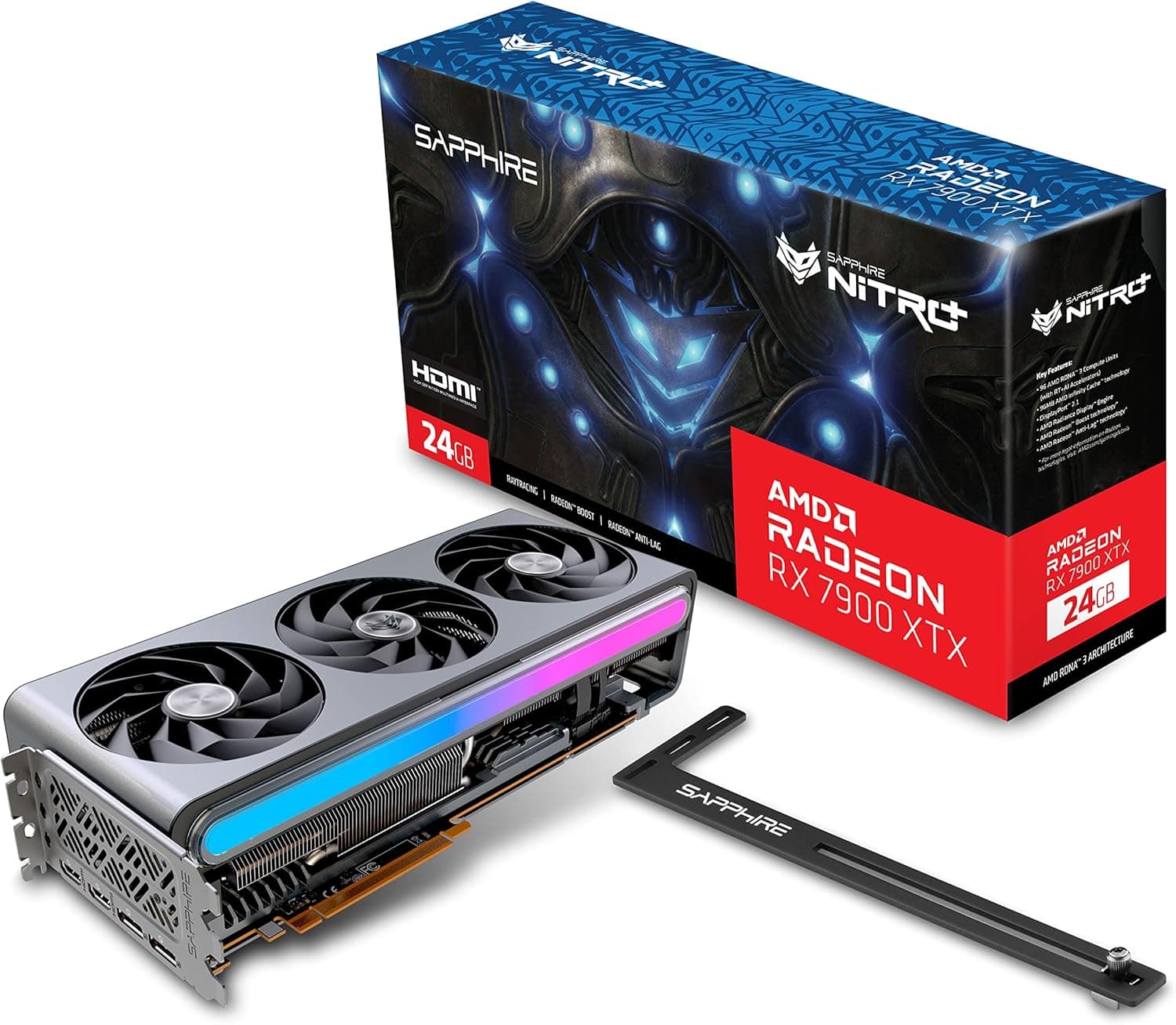
This article covers Sapphire RX 7900 XTX 24GB GDDR6 グラフィックカード.
Overview
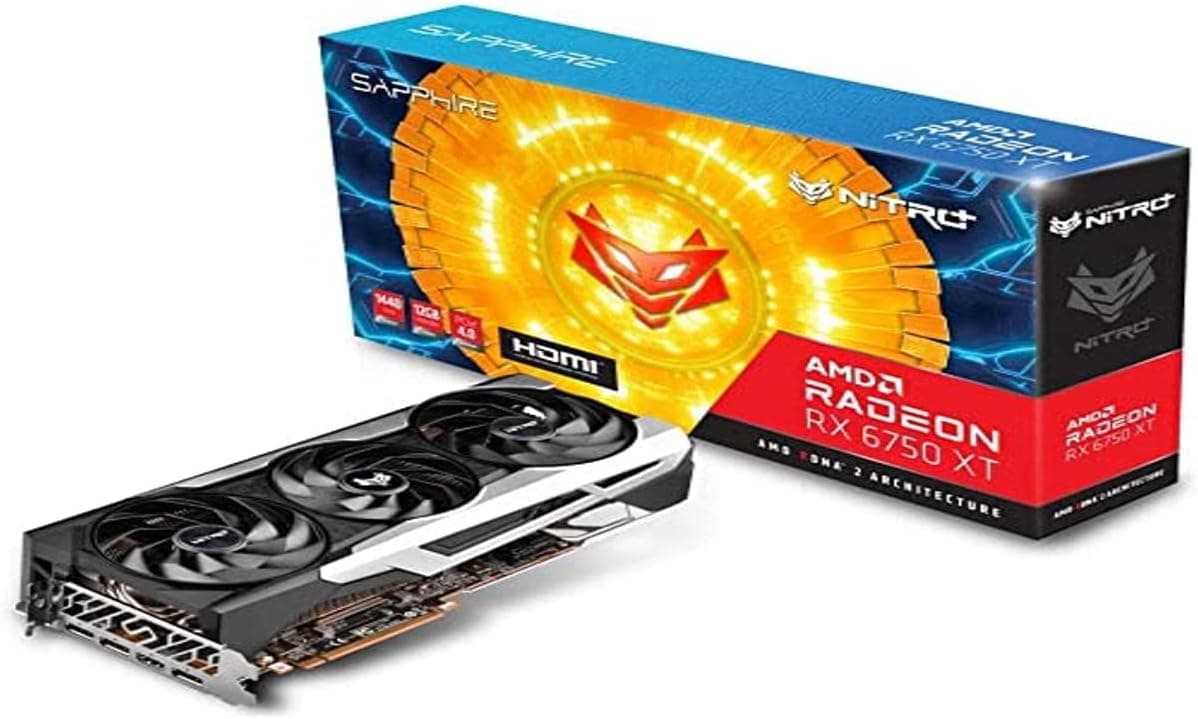
The Sapphire NITRO+ AMD Radeon RX 7900 XTX Vapor-X 24GB GDDR6 is a flagship graphics card built on AMD's RDNA 3 architecture. Powered by the Radeon RX 7900 XTX GPU, it packs 24GB of GDDR6 memory across a 384-bit bus, delivering exceptional bandwidth for 4K gaming and content creation. With boost clocks up to 2680 MHz and game clocks up to 2510 MHz, it competes directly with NVIDIA's GeForce RTX 4080 Super, often outperforming in pure rasterization workloads. The card features a massive 3.5-slot, triple-fan cooler with Vapor-X vapor-chamber technology, ensuring low temperatures and quiet operation even under sustained loads. Positioned firmly in the high-end segment, this card targets enthusiasts seeking uncompromising 4K performance, VR users, and professionals handling GPU-intensive tasks like video editing and 3D rendering.
Compatibility Guide
The card uses a PCI-Express 4.0 x16 interface, backward compatible with PCIe 3.0 motherboards (with slight bandwidth limitations). Physical dimensions are 320mm (length) x 135.75mm (width) x 71.6mm (height), occupying 3.5 expansion slots. Ensure your PC case has at least 320mm of GPU clearance and sufficient slot width. Power requirements are substantial: TBP of 355W, requiring an 800W or higher power supply with three 8-pin PCIe power connectors. The card supports HDMI 2.1 (2 ports) and DisplayPort 2.1 (2 ports, UHBR13.5), enabling high-refresh-rate 4K output on compatible monitors.
Product Info
Released in December 2022, the Sapphire NITRO+ 7900 XTX remains a top-tier contender in 2025. Pricing in Japan hovers around ¥295,000, placing it in the same bracket as the RTX 4080 Super. Sapphire backs this model with a standard 2-year warranty through authorized distributors. The NITRO+ series is renowned for premium build quality and advanced cooling; the Vapor-X vapor chamber effectively manages heat while keeping fan noise modest even under full load. Market positioning is clearly high-end, with advantages in VRAM capacity and raw shader throughput over its NVIDIA rival.
Best Use Cases
High-Resolution Gaming: Ideal for 4K@60fps+ gaming without ray tracing maxed out. The 24GB VRAM ensures future-proofing against texture-heavy titles, and the high memory bandwidth smooths out frame time spikes. Not ideal if ray tracing at maximum is a priority (consider RTX 4080 Super). Content Creation: Excellent for video editing (Premiere, DaVinci Resolve) and 3D rendering (Blender Cycles works but slower than CUDA). The large VRAM allows working with 8K footage and complex scenes. For CUDA-heavy workflows, an NVIDIA card would be a better fit. * VR Gaming: Handles demanding VR headsets with high resolutions and frame rates. However, some VR titles favor NVIDIA optimizations; check compatibility if you own a specific headset. Who should avoid: Gamers targeting high-refresh 1080p (bottlenecked by CPU), those with small-form-factor cases (card is very large), and users who prioritize ray tracing over raw performance. ## Alternatives
The primary competitor is the NVIDIA GeForce RTX 4080 Super (16GB GDDR6X). The RX 7900 XTX leads in VRAM capacity and rasterization performance, while the RTX 4080 Super excels in ray tracing and DLSS 3.5 (frame generation). For creative professionals reliant on CUDA (e.g., Adobe After Effects, OctaneRender), the NVIDIA card is preferable. Price-wise they are very close in Japan, so the decision hinges on software ecosystem and feature preferences. Another alternative is the reference AMD Radeon RX 7900 XTX, which is smaller and cheaper but runs hotter and louder. The Sapphire NITRO+ Vapor-X is clearly superior in cooling and noise, making the extra cost worthwhile for most buyers.
Things to Consider
Physical fit is the biggest hurdle: the card is 320mm long and 3.5 slots thick, which will not fit many mid-tower cases without careful measurement. Also, the three 8-pin power connectors may require a PSU with sufficient modular cables. The DisplayPort 2.1 output is future-oriented, but currently few monitors support UHBR13.5; if you need 4K 240Hz, you'll need an appropriate display. For 1080p or even 1440p gaming, this card is overkill; a cheaper RX 7800 XT or RTX 4070 Super would be more cost-effective. Pair it with a high-end CPU (Ryzen 7/9 or Core i7/i9) to avoid bottlenecking. Power supply recommendations should be taken seriously; an 850W unit is advised for headroom. ## FAQ Q: How does it compare to the RTX 4080 Super in real-world gaming? A: In rasterized games (like Cyberpunk 2077 without RT), the RX 7900 XTX often leads by 5-10%. With ray tracing enabled, the RTX 4080 Super pulls ahead by 15-20% depending on the title. DLSS vs FSR quality also influences the decision. Q: What power supply do I need? A: A minimum 800W ATX power supply is required. For high-end CPUs and overclocking, 850-1000W is recommended. Ensure your PSU has three separate 8-pin PCIe power cabl
Product Disclosure (Amazon)
- Manufacturer: SAPPHIRE
- Seller: XJHIDE
- Fulfilled by: XJHIDE
- ASIN: B0BR6JWP1Q
- Note: This article covers a manufacturer-made product based on Amazon listing details.