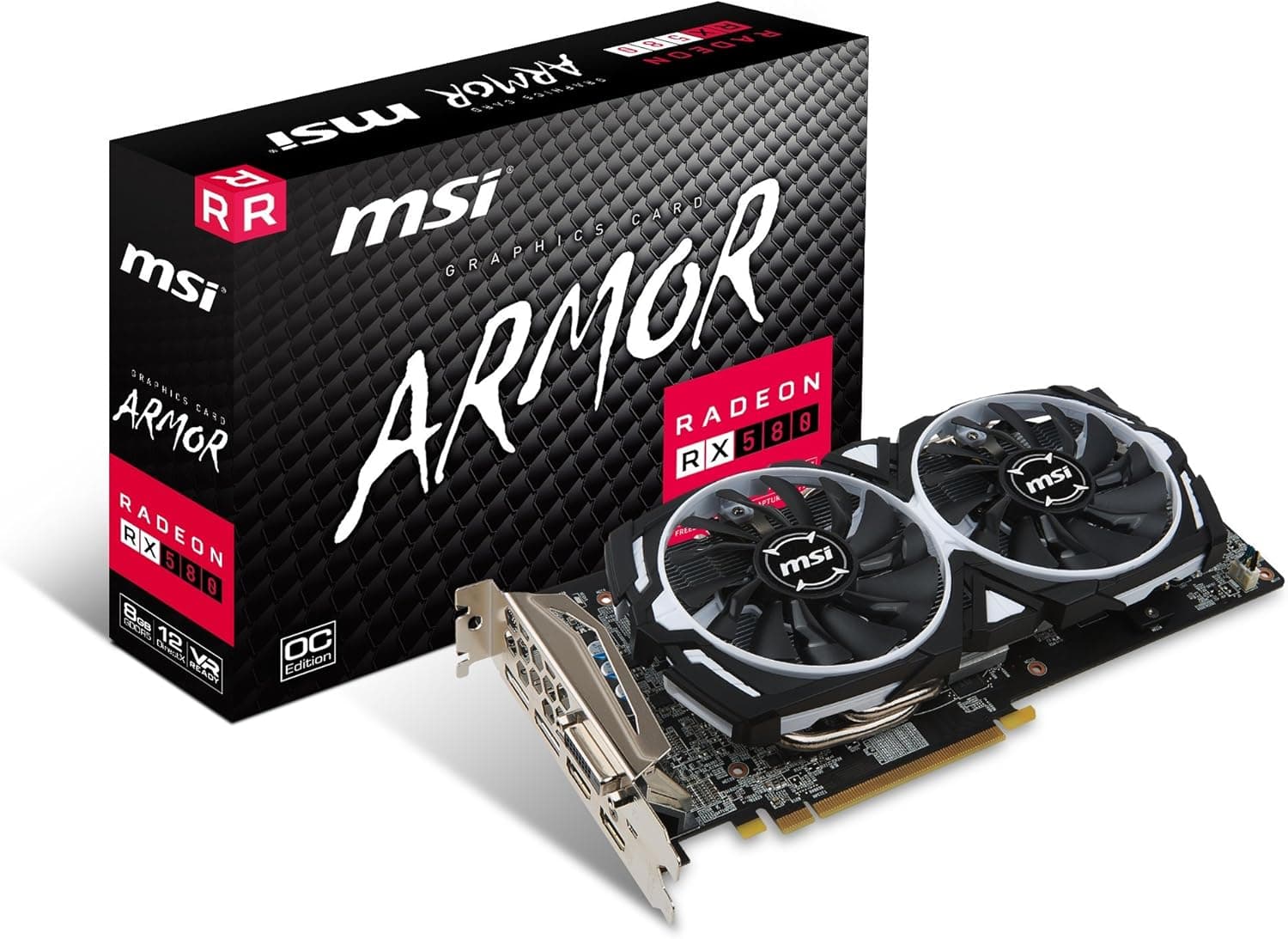
Overview
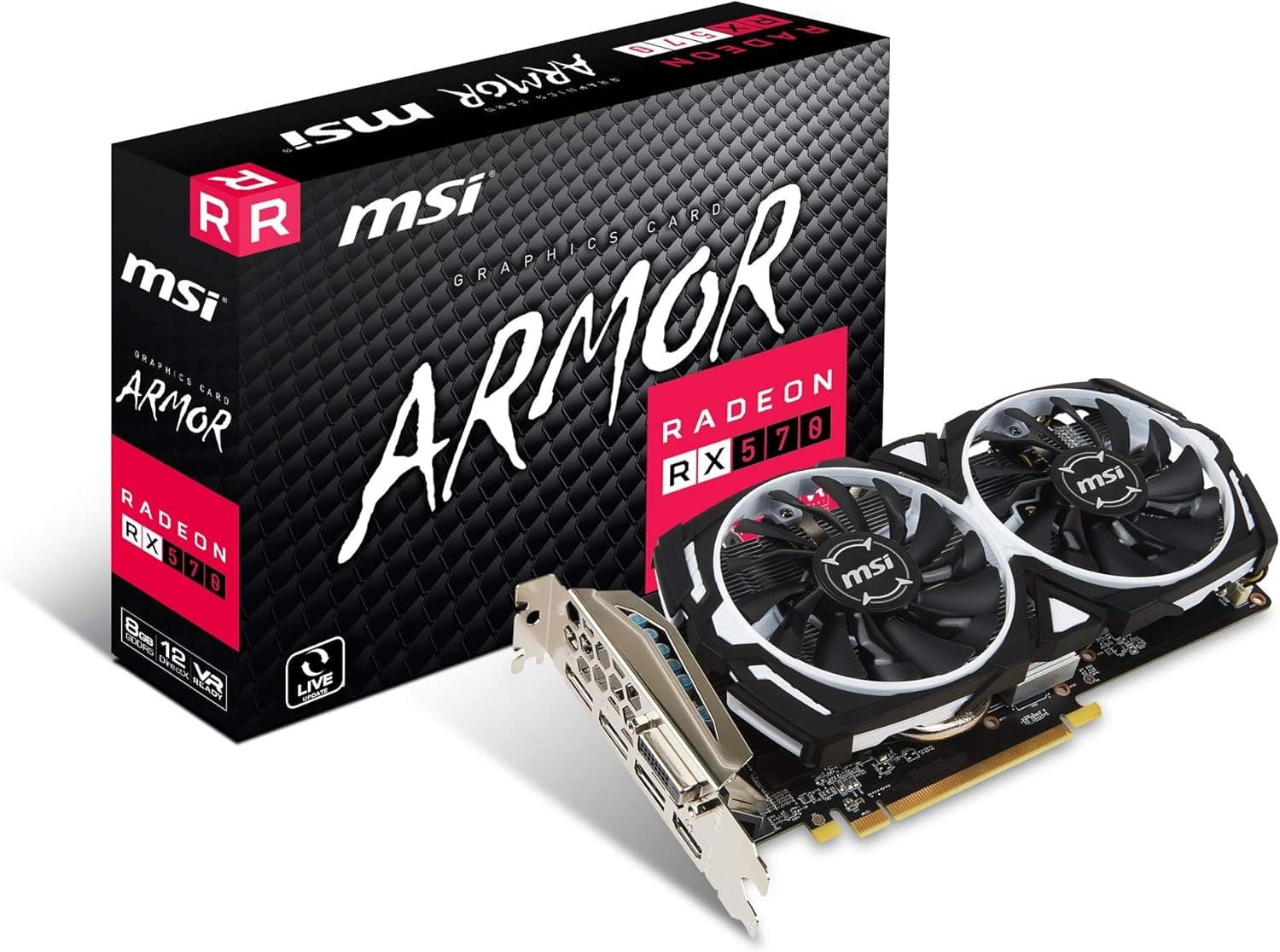
MSI's Radeon RX 580 ARMOR 8G OC is a mid-range graphics card built around AMD's Polaris architecture. It packs an RX 580 GPU with 8GB of GDDR5 memory over a 256-bit bus, a boost clock of 1340 MHz (base 1257 MHz), and a 185W TDP. This card is positioned as a cost-effective solution for 1080p gaming, offering solid performance in both traditional titles and VR experiences. Its long-standing presence in the market speaks to its reliability and value for budget-conscious gamers.
Compatibility Guide
The card uses a standard PCI-Express 3.0 x16 slot and fits most ATX/MicroATX motherboards without clearance issues. It requires a single 8-pin PCIe power connector and a minimum 500W power supply unit. Physical length is approximately 280mm, so verify your case interior space before purchase. Supports DirectX 12 and OpenGL 4.5, ensuring compatibility with modern game engines.
Product Info
Launched in April 2017, this model remains a popular choice on the used market. Market position: mid-range. The 8GB VRAM and 256-bit memory bus provide balanced performance for 1080p gaming. Warranty varies by seller; typical manufacturer warranty is 2–3 years (check listing details). With 6.17 TFLOPS FP32 performance and 256 GB/s memory bandwidth, it handles most AAA titles at high settings in Full HD.
Best Use Cases
Budget 1080p gamers: You can expect 60+ fps in most modern games at medium-to-high settings. Esports titles easily reach high refresh rates. VR newcomers: Polaris architecture natively supports VR headsets like Oculus Rift and HTC Vive, making it an affordable entry point. * Media center or secondary PC: The low power draw and 8GB VRAM are great for 4K video playback, photo editing, or multi-monitor setups. ## Alternatives
Direct competitors include the NVIDIA GeForce GTX 1060 6GB. The RX 580 has a VRAM advantage (8GB vs 6GB) and wider memory bandwidth, which benefits texture-heavy games. However, the GTX 1060 runs cooler and draws less power, making it a better fit for systems with limited PSU headroom. AMD's FreeSync support is another plus for the RX 580, reducing screen tearing without the premium of G-Sync monitors.
Things to Consider
The RX 580 is now primarily sold used, so inspect condition (fan noise, thermals) before buying. Ray tracing and hardware-accelerated upscaling (DLSS/FSR) are not supported; if you need these features, consider a newer GPU. While the 185W TDP is modest, ensure your PSU delivers at least 500W, especially if upgrading from an older system. Under sustained load, the ARMOR cooler can become audible—plan for good case airflow or a quieter fan curve if noise sensitivity is a concern.