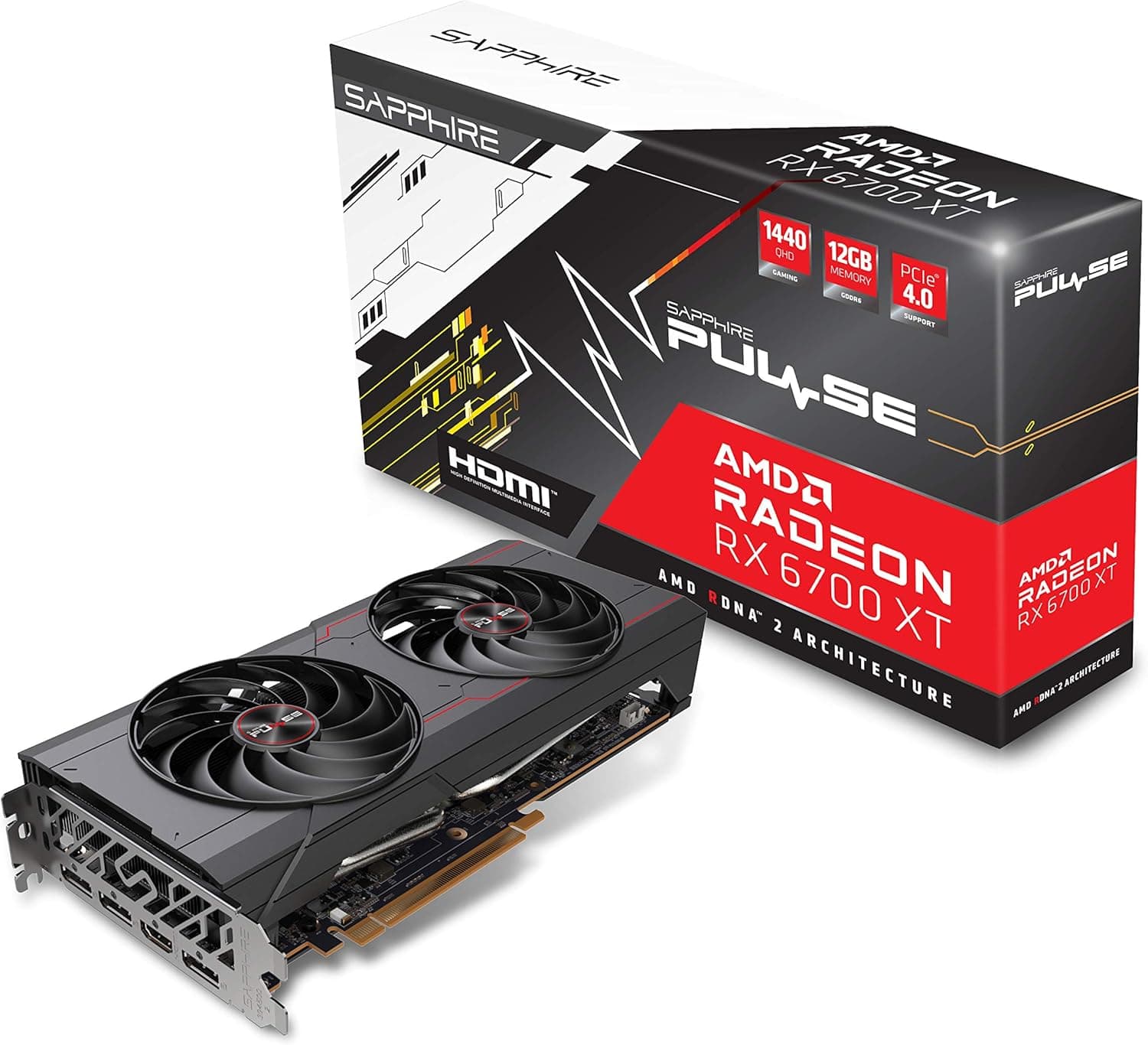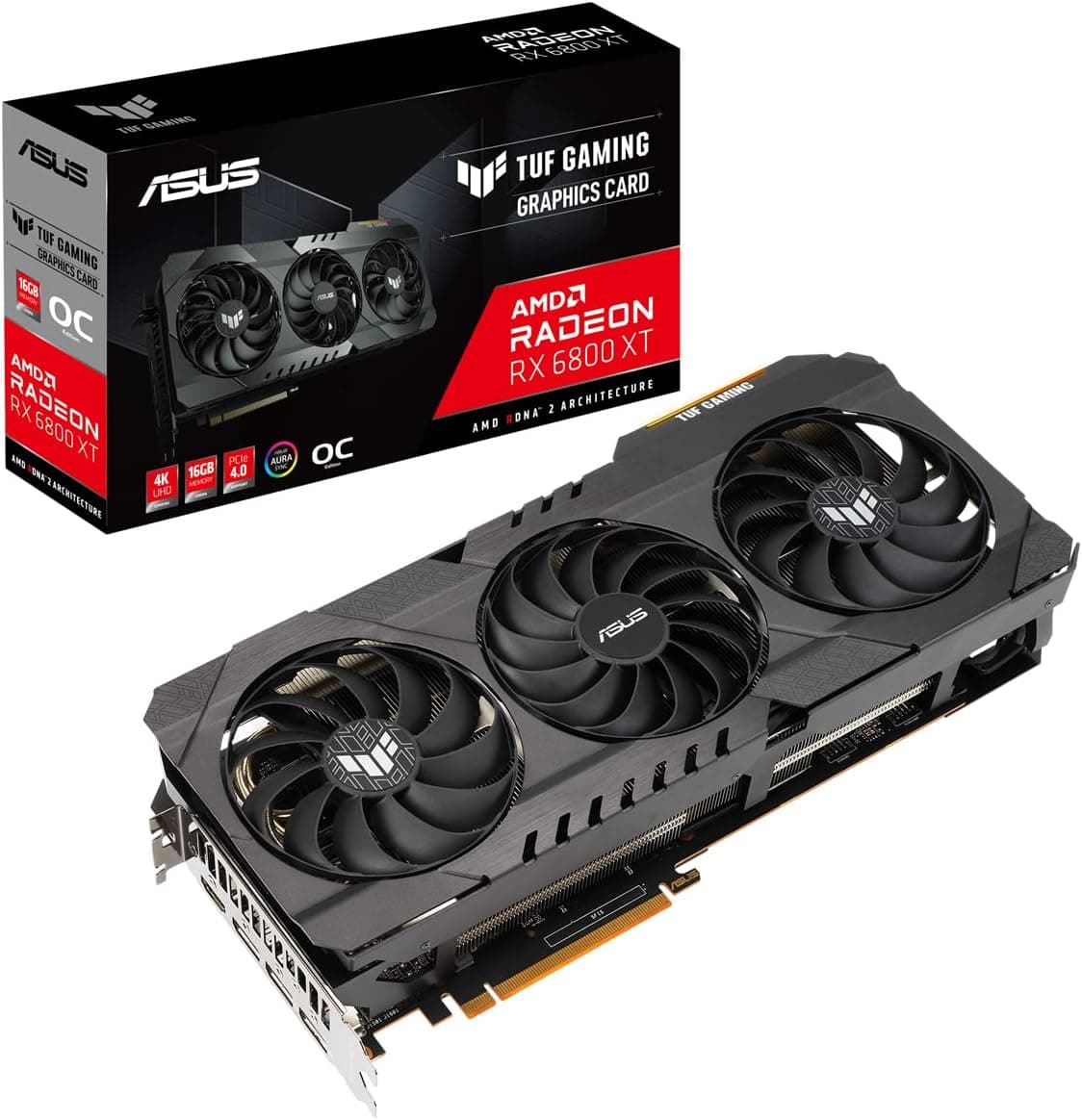
This article covers MSI Radeon RX 6800 GAMING X TRIO 16G グラフィックスボード VD7459.
Overview
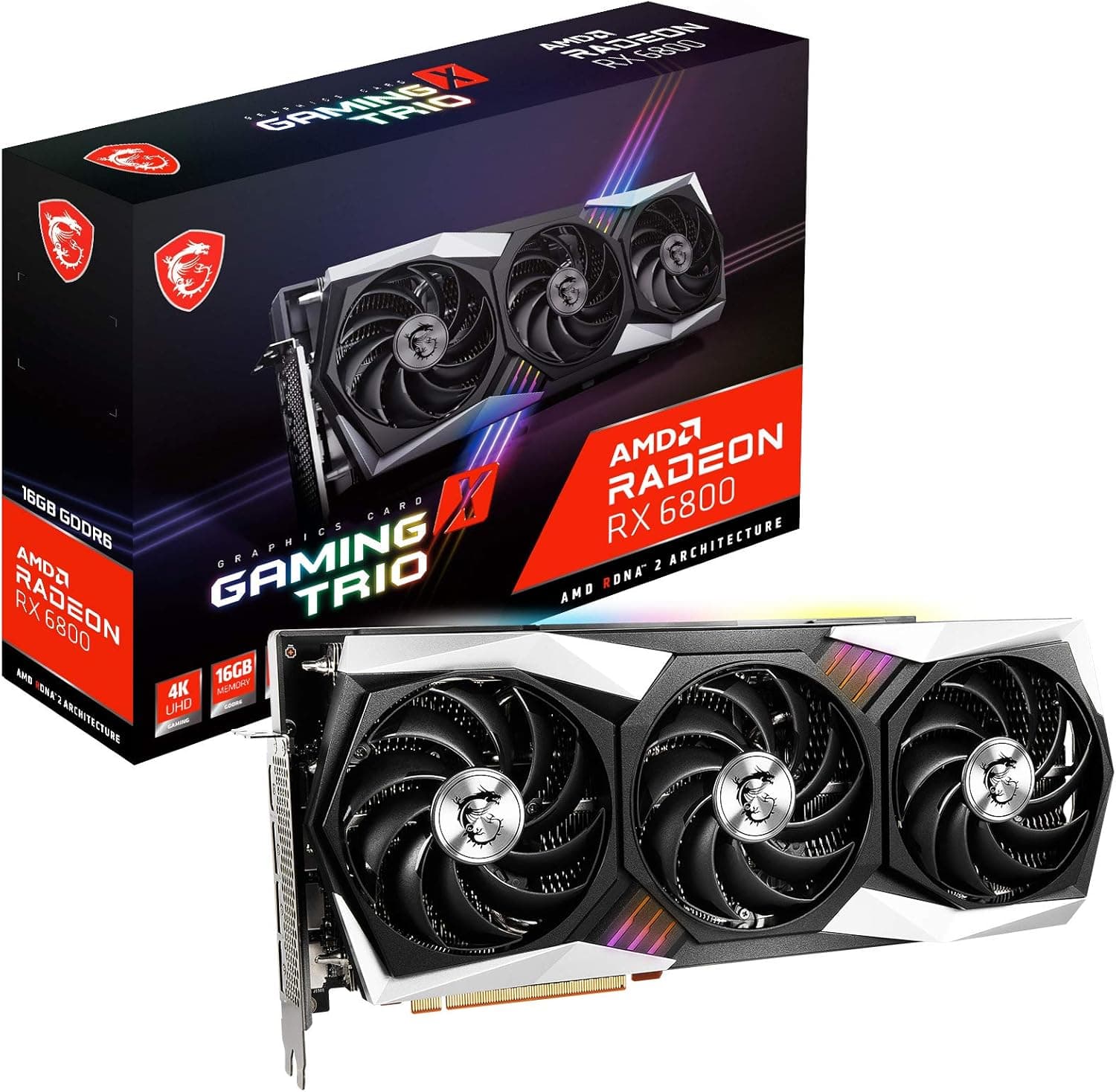
The MSI Radeon RX 6800 GAMING X TRIO 16G is a mid-high range graphics card built on AMD's RDNA 2 architecture. It features the AMD Radeon RX 6800 GPU with a base clock of 1,775 MHz, game clock of 1,925 MHz, and boost clock of 2,155 MHz. The card is equipped with 16GB of GDDR6 memory on a 256-bit bus, delivering 512 GB/s of memory bandwidth. This makes it a strong contender for 1440p high-refresh-rate gaming, and it can handle many titles at 4K with adjusted settings. MSI's proprietary Tri Frozr 2 triple-fan cooler keeps temperatures in check even under sustained loads. Positioned competitively against the GeForce RTX 3070 and RTX 3070 Ti, the RX 6800 offers double the VRAM capacity, which is a significant advantage for texture-heavy games, VR, and some creative workloads. The card also supports semi-fanless operation—fans stop completely when idle—ensuring near-silent operation during light use.
Compatibility Guide
This graphics card uses a PCIe 4.0 x16 interface. It will work in PCIe 3.0 slots, but you may experience a slight performance penalty in bandwidth-sensitive scenarios. For optimal performance, pair it with a PCIe 4.0-capable motherboard (AMD B550/X570 or Intel Z590/Z690 or newer). Power requirements: two 8-pin PCIe power connectors. The card has a TDP of 250W, and MSI recommends a power supply of at least 650W for the whole system. The card is triple-slot and measures approximately 324mm in length and 55mm in thickness. Ensure your case has enough clearance, especially in narrower or smaller form-factor builds.
Product Info
Released in November 2020, the MSI Radeon RX 6800 GAMING X TRIO 16G originally launched around ¥100,000 but now sells for roughly ¥168,600 on Japan. It comes with a 1-year manufacturer warranty through official Japanese distributors. The card is available through major online retailers and PC component shops. Market positioning: mid-high tier. As the upper-mid-range model in the RDNA 2 lineup, it offers a balanced blend of performance and VRAM capacity for 1440p gaming. Compared to the RTX 3070, it has twice the VRAM and higher memory bandwidth, though its ray tracing performance trails that of Nvidia's competing cards.
Best Use Cases
1440p High-FPS Gamers: Ideal for users targeting 100+ fps at 1440p in most titles. The 16GB VRAM ensures smooth performance in texture-heavy games and future-proofs against rising memory demands. Avoid this card if you prioritize ray tracing, as Nvidia alternatives offer better RT performance. Content Creators Needing VRAM: Perfect for video editors, 3D modelers, and designers who work with large textures or high-resolution assets. The 16GB buffer allows handling complex scenes without swapping to system memory. Not ideal for users who only do light photo editing—a cheaper 8GB card would suffice. Budget-Conscious Builders: If you want RTX 3070-class performance at a potentially lower price, this card is a solid choice. It offers excellent value for raw rasterization performance. However, be aware of its higher power draw compared to newer generation cards. Quiet HTPC or Secondary Builds: The semi-fanless mode makes the card nearly silent at idle, perfect for a living room PC or media server. But its large size limits case options—mini-ITX or compact cases likely won't fit.
Things to Consider
This is a 2020-era card, and by mid-2026 it is two generations behind current RDNA 4 and GeForce RTX 40-series cards. Ray tracing performance and power efficiency are noticeably worse than modern alternatives. If ray tracing is a priority, consider an RTX 4060 Ti or RX 7700 XT instead. Physical size is a major constraint: the card is 324mm long and occupies three slots. Always check your case's GPU clearance before purchasing. A 650W PSU is the minimum recommendation; older or lower-wattage units will likely need an upgrade. Competitors in the same price range include the GeForce RTX 4060 Ti 16GB and Radeon RX 7700 XT. These newer cards offer better efficiency and feature sets. However, the RX 6800 still holds an edge in raw memory bandwidth, which can benefit certain workloads. ## FAQ
Q: Can this graphics card handle 4K gaming? A: Yes, but performance depends on the game and settings. Modern AAA titles at medium-high settings can achieve around 60 fps. With ray tracing enabled, expect significant frame rate drops. We recommend using FidelityFX or Radeon Boost to maintain playable framerates. Q: What power supply wattage do I need? A: A minimum of 650W is recommended for the entire system. For headroom and overclocking, a 750W unit is a safer choice. Ensure your PSU has two 8-pin PCIe power cables. Q: How does this compare to the RTX 3070? A: The RX 6800 has double the VRAM (16GB vs 8GB) and higher memory bandwidth, making it better for texture-heavy games and creative work. However, the RTX 3070 offers superior ray tracing performance and slightly lower po
Product Disclosure (Amazon)
- Manufacturer: MSI
- Seller: Reg shop
- Fulfilled by: Reg shop
- ASIN: B08RHQC4KQ
- Note: This article covers a manufacturer-made product based on Amazon listing details.