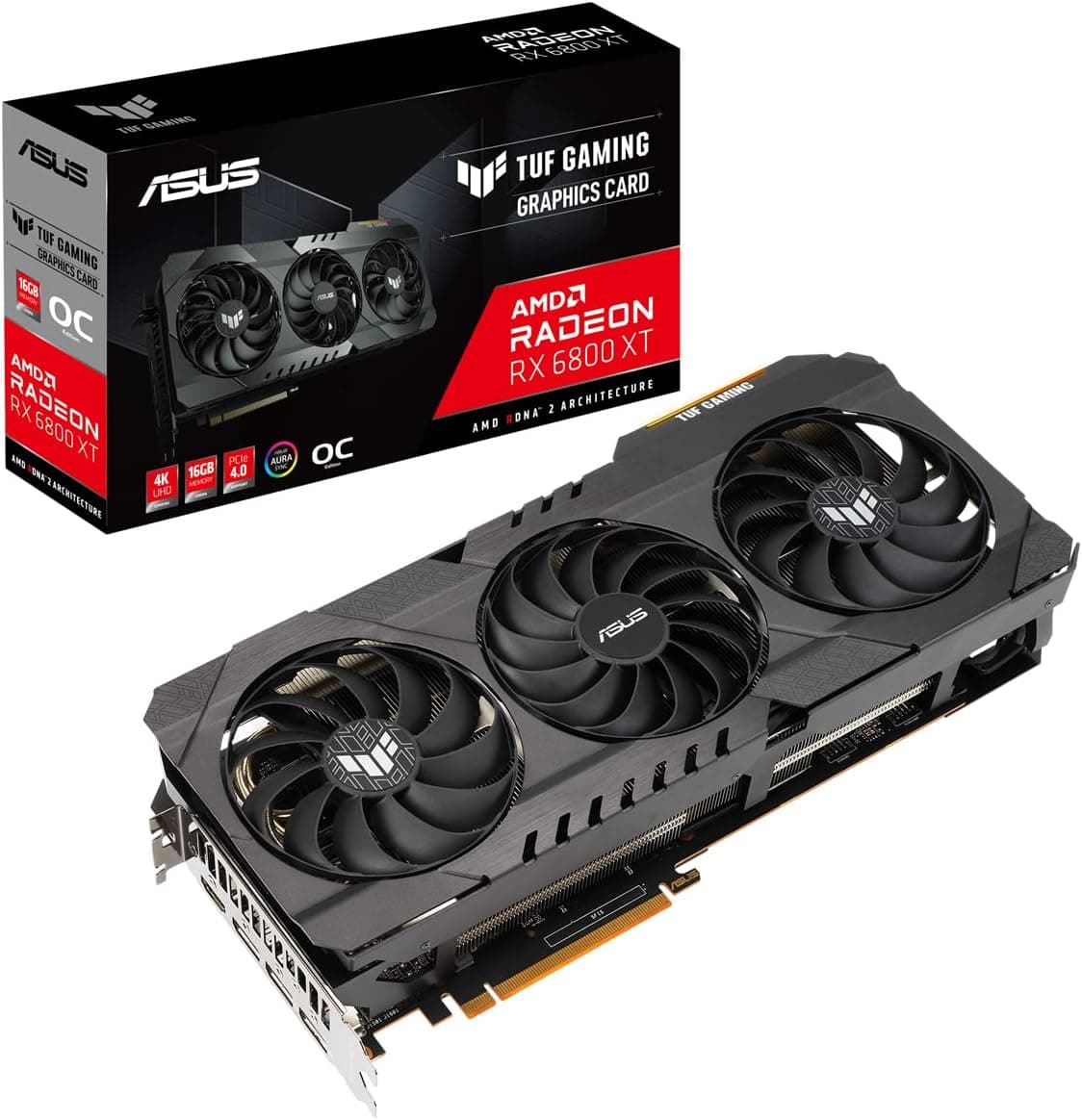
This article covers ASUS TUF GAMING AMD RADEON RX 6800 XT OCエディション グラフィックカード (PCIE 4.0 16GB GDDR6 HDMI 2.1 ディスプレイポート 1.4A デュアルボールファンベアリング アルミニウムシュラウド 強化フレーム GPU TWEAK II).
Overview
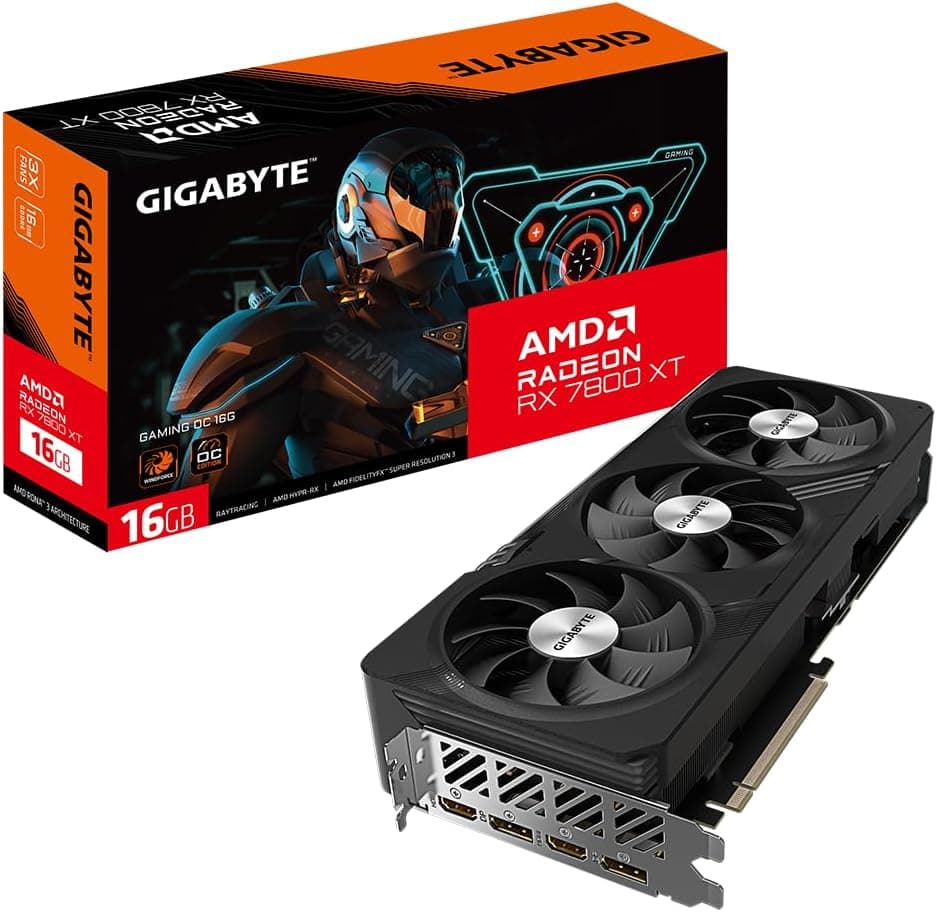
The ASUS TUF GAMING AMD RADEON RX 6800 XT OC Edition is a high-midrange to high-end graphics card built around the AMD Radeon RX 6800 XT GPU with Navi 21 core. It comes with 16GB of GDDR6 memory on a 256-bit bus and features factory overclocking for slightly higher boost clocks out of the box. True to the TUF series legacy, this card emphasizes durability and thermal performance, making it suitable for long gaming sessions and content creation workloads.
It particularly shines at 1440p high-refresh-rate gaming, delivering smooth frame rates even with ray tracing enabled. The card also supports 8K output, VR, and multi-monitor setups, appealing to both gamers and professionals who need wide screen real estate.
Compatibility Guide
This card uses a PCI Express 4.0 x16 interface and performs best with a PCIe 4.0 motherboard, though it works fine on PCIe 3.0 with minimal real-world performance loss. Power delivery requires an 8-pin and a 6-pin PCIe power connector. A minimum 600W power supply is recommended, but 750W or more is ideal for overclocking headroom and peak loads.
The physical dimensions are approximately 285mm in length and 2.5 slots thick, so you need at least 300mm of clearance inside your case and a sufficiently wide PCIe slot area. Always check your case’s maximum GPU length before purchase.
Product Info
The ASUS TUF-RX6800XT-O16G-GAMING launched in November 2020 and sits in the mid-high to high-end segment, competing initially with the RTX 3080. Today it offers strong value for 1440p gaming, often priced below equivalent RTX cards while providing similar rasterization performance.
Key specs include a boost clock of up to 2360 MHz in OC mode, 16GB GDDR6 memory (16 Gbps effective, 256-bit), and a TDP of ~300W. Cooling is handled by two Axial-tech fans with dual ball bearings, along with a large aluminum heatsink and a full-coverage backplate. The card also features military-grade capacitors and a reinforced frame to prevent PCB sag.
Best Use Cases
- 1440p high-refresh-rate gamers: The RX 6800 XT delivers excellent frame rates in 1440p for most titles, even with some ray tracing. It’s a great match for 144Hz or 165Hz monitors. If ray tracing is a priority, consider an RTX 3080 instead.
- Multi-monitor productivity users: With HDMI 2.1 and DisplayPort 1.4a outputs, you can drive up to four displays simultaneously, including 4K 120Hz or even 8K. Good for video editors, traders, or developers needing a lot of screen space.
- Cost-conscious builders: In the current market, the RX 6800 XT often undercuts NVIDIA’s RTX 3070 Ti and 3080 in price while offering similar or better rasterization. Great for budget-focused high-end builds.
- Users who value longevity and reliability: TUF series components (military-grade chokes, dual ball bearing fans, reinforced frame) provide extra durability for long-term use.
Things to Consider
This card is large and heavy, so measure your case’s GPU clearance (300mm+). Also confirm your PSU has the required 8+6 pin cables and sufficient wattage. The TDP of ~300W means it runs warm, so good case airflow is essential.
Ray tracing performance is noticeably below NVIDIA’s RTX 3080, especially in titles that heavily rely on RT effects. If you play a lot of RT-intensive games, an RTX card might be a better fit. However, for pure rasterization, the RX 6800 XT remains a strong contender.
The factory OC is modest, but you can manually overclock further if your cooling allows. Be aware that overclocking increases power draw and noise. Also, the card uses a 2.5-slot design, so it will block the adjacent PCIe slot on most motherboards.
FAQ
Q: Will this GPU bottleneck a Ryzen 5 5600X at 1440p?
A: At 1440p, the GPU is usually the primary bottleneck, so a Ryzen 5 5600X pairs well. At 1080p high refresh rates (240Hz+), the CPU may become a bottleneck, and you might see better performance with a Ryzen 7 5800X or Intel Core i7-12700K.
Q: How long is this card, and will it fit in a Mini-ITX case?
A: Length is ~285mm. Some Mini-ITX cases support 300mm+ GPUs, but many limit to 280mm or less. Always check your case’s maximum GPU length. Width is 2.5 slots, so ensure the case can accommodate that thickness.
Q: Can this card handle 4K gaming?
A: Yes, but you may need to lower settings to high or medium for 60fps in demanding games, especially with ray tracing. Using FSR (FidelityFX Super Resolution) helps maintain playable frame rates at 4K without sacrificing much visual quality.