Game Overview
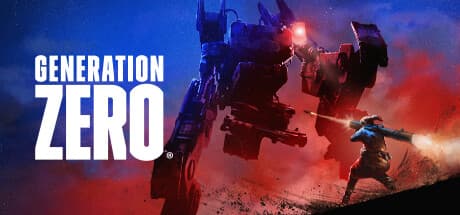
Generation Zero: Survive Sweden's Machine Invasion is an open-world FPS set in an alternate 1980s Sweden occupied by hostile machines. You travel through forests, farmland, abandoned towns, and bunkers while searching for supplies and clues about the invasion.
Released on March 26, 2019, it supports both single-player and online co-op.
The core loop combines travel, reconnaissance, combat planning, and resupply. Fighting every machine on sight is rarely the safest approach; terrain, distance, and a clear escape route can matter as much as raw firepower.
The contrast between quiet countryside and the threat of sudden detection gives exploration its tension.
Combat and Exploration
Machines do not behave like ordinary human FPS opponents, so repeatedly firing at the center of a target is not always an efficient plan. Watching patrol paths, choosing a suitable firing position, and controlling when an encounter begins can conserve health and ammunition.
Alerting several enemies at once can quickly turn a manageable fight into a retreat.
Exploration is also part of the progression rather than empty travel between battles. Buildings and bunkers provide opportunities to look for supplies and information connected to the mystery.
Because the map is broad, planning a route through settlements where you may be able to resupply can be more effective than heading directly to every objective.
Solo and Online Co-op
Solo play gives you full control over pacing, engagement, and retreat. It also leaves one player responsible for reconnaissance, resource use, and recovery when a fight goes wrong.
This format suits players who enjoy moving carefully and separating enemies before attacking.
Online co-op allows friends to share resources and coordinate attacks from different directions. Its value is not limited to additional firepower: one player can draw attention while another attacks from a safer angle.
Coordination still matters, since unplanned gunfire can involve more machines than the group intended to fight.
PC Requirements
The minimum specification lists a 64-bit version of Windows 7 SP1, a quad-core Intel i5, 8GB RAM, and 35GB of available storage. Graphics options include a GeForce GTX 660 or Radeon HD 7870 with 2GB VRAM, as well as Intel Iris Pro Graphics 580.
Treat this as an entry point and expect to reduce resolution or visual settings when performance becomes unstable.
The recommended specification lists 64-bit Windows 10, a quad-core Intel i7, 16GB RAM, and a GeForce GTX 960 or Radeon R9 280 with 4GB VRAM. The move from 8GB to 16GB RAM and from 2GB to 4GB VRAM is especially relevant.
Players who value stable exploration and combat over merely launching the game should use the recommended tier as the safer target.
Reception and Common Impressions
Generation Zero has maintained a broadly positive audience over time. Its distinctive strengths are the Cold War-inspired Swedish setting, the isolation created by deserted landscapes, and the experience of tackling machines with friends.
Players who prefer tension, scouting, and preparation to constant competitive action are more likely to appreciate its pace.
The same structure can divide opinion. Crossing large areas and searching for supplies may feel slow to players who expect uninterrupted combat.
Early caution and equipment management are meaningful parts of the experience, so the game can feel demanding if you only want immediate, consequence-free firefights.
Who Should Play It
This is a good match for players who enjoy tense exploration, observing enemies before committing to a fight, and discussing tactics with a co-op group. It also stands out for anyone drawn to the combination of Scandinavian countryside and science-fiction machines.
Solo play emphasizes survival and deliberate movement, while co-op makes positioning and role coordination more prominent.
Limitations and Who Should Skip It
This is not structured like a competitive shooter built around short, repeated matches. Travel, searching, and resource management occupy a meaningful share of playtime, so players who dislike downtime between fights may struggle with its rhythm.
Enjoyment depends partly on accepting that avoiding a battle or retreating can be the correct tactical choice.
The listed languages include English, French, German, Spanish, Russian, Simplified Chinese, Japanese, and Polish. Language availability and platform support can change, however, so check the current Steam listing before installing.
Users relying on an older operating system should also confirm present support instead of assuming that the original minimum OS remains fully supported.