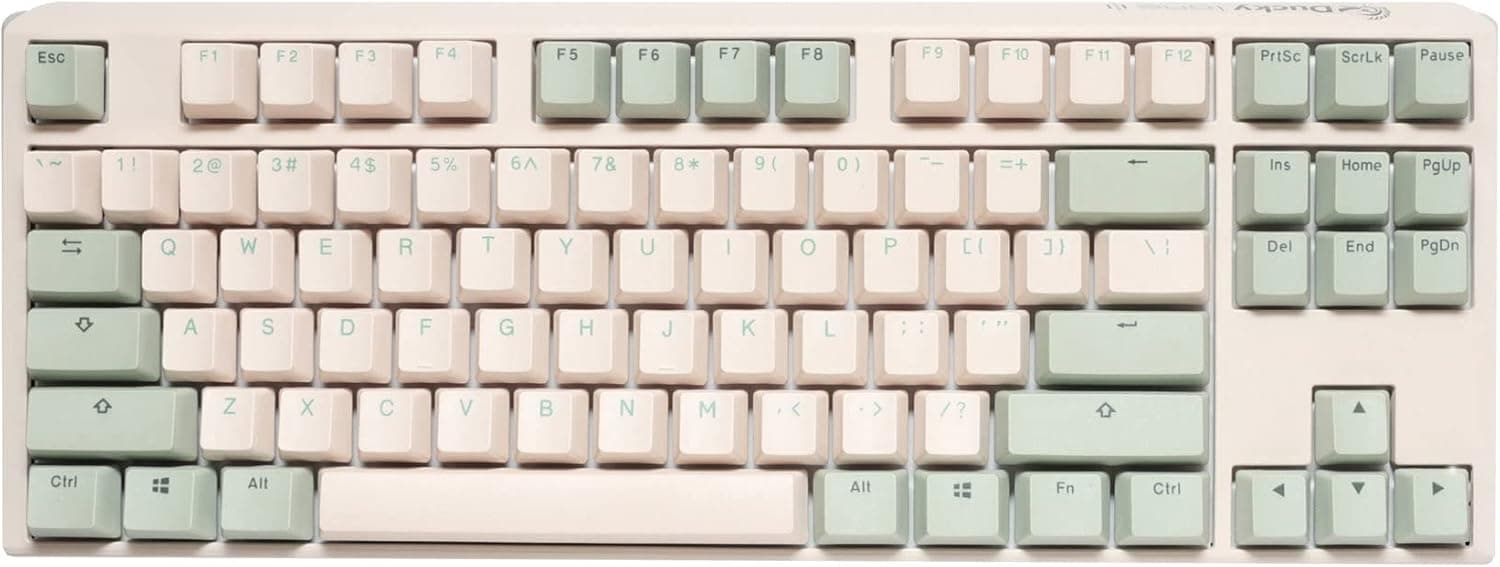
This article looks at the Ducky One 3 TKL Matcha hot-swappable double-shot PBT Quack mechanical keyboard (Cherry MX Red) in depth — specs, compatibility, and the pitfalls buyers usually find out about after purchase.
Overview
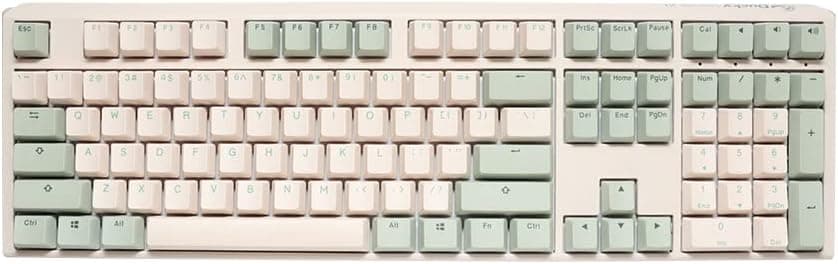
The Ducky One 3 TKL Matcha is a tenkeyless (87-key) mechanical keyboard from the Taiwanese brand Ducky. It ships with linear Cherry MX Red switches and uses Kailh Yellow hot-swap sockets, so switches can be replaced without soldering.
In short, it suits someone who wants a board that works properly out of the box today, and can be refreshed later by swapping switches instead of buying a new keyboard.
The keycaps are thick double-shot PBT with a seamless finish. Double-shot legends are moulded into the plastic rather than printed, so they do not wear off, and PBT generally resists the greasy shine that ABS develops over time.
If you type for hours and dislike watching your keys turn glossy, this matters more than it sounds.
The board follows Ducky's QUACK Mechanics design philosophy, with a two-layer PCB plus silicone plate and EVA foam dampeners to cut hollow case resonance. A detachable braided USB-C cable, three-stage adjustable feet, and V2 stabilizers round out a well-sorted package for the price bracket.
"Matcha" is the colourway name; the internals are identical to other colours.
Compatibility Guide
Connection is USB-C only, via a detachable braided cable. There is no Bluetooth and no 2.4GHz wireless — settle that expectation first.
It works plug-and-play on Windows, macOS, and Linux with no driver install, and because it is a standard USB HID device it generally works through docks and hubs. That said, cheap hubs with weak power delivery can misbehave once RGB lighting is running, so a direct motherboard port is the safer choice.
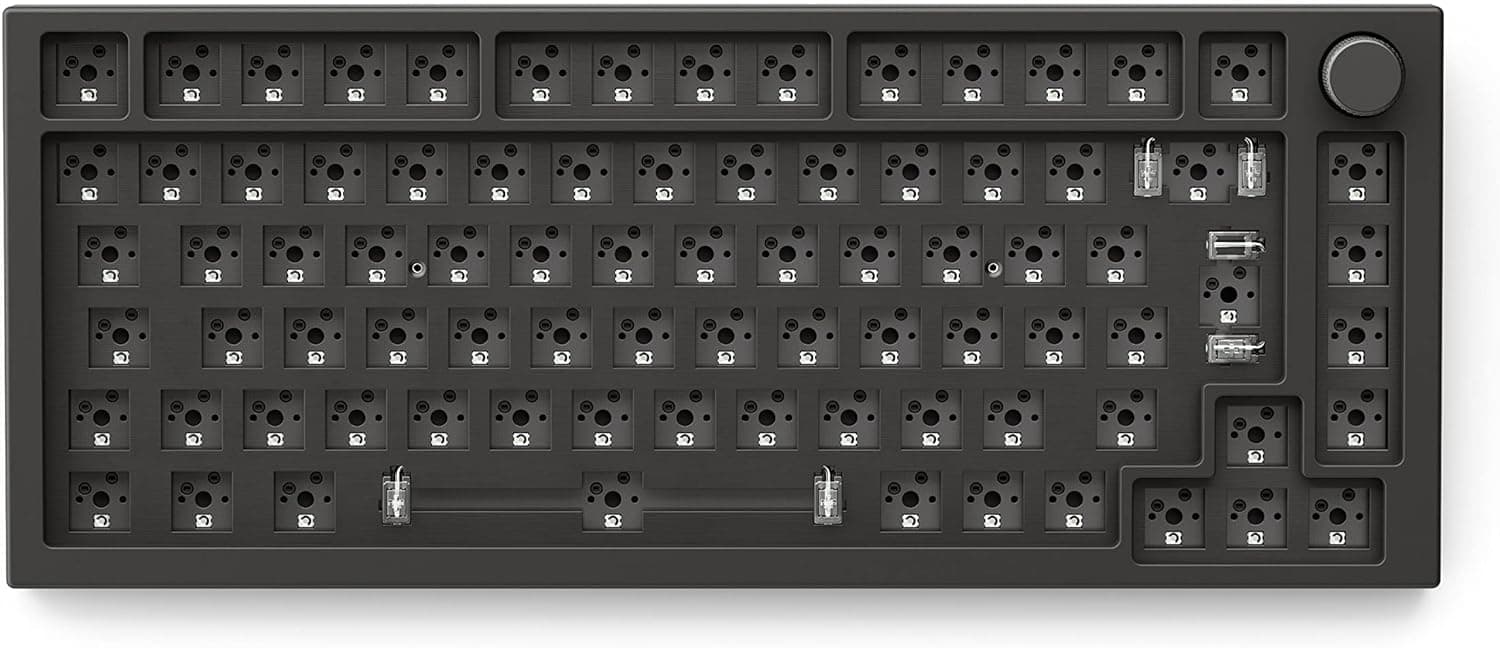
The hot-swap sockets accept Cherry MX-compatible 3-pin and 5-pin switches, which covers most Gateron, Kailh, and TTC offerings. Even so, some "MX-compatible" switches differ slightly in pin shape or height, so check the switch listing for an explicit 3-pin/5-pin MX-compatible note.
When swapping, inspect the pins for bends and press straight down; a bent pin damages the socket and leaves you with one dead key.
Physical size is 37 × 14 × 4 cm (W×D×H). If you plan to use a keyboard tray or work under a monitor arm, add your wrist rest depth to that figure before committing.
A TKL is roughly 10 cm narrower than a full-size board, which is the real practical benefit: more room to swing a mouse. The flip side is that accountants and data-entry users lose the numpad and will need a separate pad.
Key remapping and macros are handled through Ducky's official software and firmware, plus on-board key combinations. Ducky has traditionally favoured on-board configuration, which helps on locked-down work machines where you cannot install background utilities — though it does mean a learning curve if you expected a friendly GUI.
Product Info
The core specifications, as supplied:
| Item | Detail |
|---|---|
| Switch | Cherry MX Red (linear) |
| Layout | Tenkeyless (87 keys) |
| Connectivity | USB-C (detachable braided cable) |
| Keycaps | Double-shot PBT, seamless |
| Hot-swap | Yes (Kailh Yellow sockets, 3-pin/5-pin) |
| Backlight | RGB (LED) |
| Dimensions | 37 × 14 × 4 cm |
Prices below are captured snapshots and will change. On Amazon.co.jp the board was listed at ¥26,280 as of 9 June 2026 and ¥23,937 as of 27 August 2026.
A swing of more than ¥2,000 in about two and a half months tells you this model moves with stock and sales, so if you are not in a hurry, waiting for a dip is worth it. Listings also appear on overseas marketplaces such as eBay, but seller pricing varies widely — compare landed cost including shipping and duties.
User rating stood at 4.3 out of 5 (86% positive) as of 9 June 2026, from 10 reviews.
The score is good, but 10 reviews is a small sample and cannot tell you anything statistically meaningful about defect rates or unit variance. Judge this board on its specification trade-offs rather than on that number.
It launched in early 2022 and carries a one-year manufacturer warranty. The box includes a USB-C cable, keycap puller, switch puller, and spare spacebar keycaps — having a switch puller included from the start is a small but welcome touch on a hot-swap board.
How It Compares
"Hot-swappable mechanical keyboard" covers very different products. The useful decision axes:
- Do you need wireless? The One 3 TKL is wired only. If you move it between desks or want to pair a tablet, look at multi-mode boards instead.
- Do you want a soft gasket-mount feel? Many recent hot-swap boards use gasket mounts with noticeable flex. The One 3 leans traditional and firm — a matter of taste.
- Do you want knobs or screens? This is a plain TKL layout. Volume control lives on function-key combinations, not a dedicated dial.
- Do you value a finished product? Double-shot PBT caps and built-in dampening come standard, so there is no mandatory upgrade spending.
If you want maximum features per yen, louder options exist. If you want a wired TKL that gets the fundamentals right, this is the straightforward answer.
What Actually Matters In Use
Cherry MX Red is linear — no bump, no click, smooth all the way down. That suits rapid repeats and quick key changes in games, but the trade-off is that typos are easier to miss.
Writers who want a tactile checkpoint under the finger are exactly who benefits from the hot-swap sockets: the real value here is not RGB or looks, it is being able to retune the board to your hands later.
The silicone plate dampener and EVA foam reduce case resonance, but this is not a silent keyboard. Linear switches still produce bottom-out noise, which matters in a quiet office or on an always-on microphone.
If silence is the priority, plan on fitting silent switches.
Things To Check Before Buying
There is no wireless at all. Wired USB-C only.
The detachable cable makes it portable, but if your use case requires Bluetooth, this board is simply the wrong tool.
There is no numpad. With 87 keys you gain mouse room and lose number entry.
If spreadsheets are a daily task, budget for a separate numeric pad.
Linear switches are not universal. Tactile or clicky may suit typing-heavy users better.
The hot-swap sockets fix this, but a full set of 87 switches is an extra purchase — and plenty of people who plan to swap never get around to it.
The price swings. ¥26,280 then ¥23,937 across two captures means today's figure is likely different again.
Treat every price here as a dated snapshot and check the product page.
Do not take listing metadata at face value. Sellers and fulfilment change over time, and parallel imports may carry different local support terms.
Amazon listings occasionally mix in another product's manufacturer details or model numbers. Colourway (Matcha) and switch type (Cherry MX Red) are the two fields most often confused, so confirm the product images and title match the variant you want before ordering.
Only 10 reviews back the score. An 86% positive rating (captured 9 June 2026) is encouraging, but with that sample size a single review moves the average noticeably.
FAQ
Q. Does it work on macOS? A.
Yes. It enumerates as a standard USB HID device on Windows, macOS, and Linux with no drivers.
The keycaps carry Windows legends, so Command/Option are not printed; remap in OS settings.
Q. Which switches fit? A.
Cherry MX-compatible 3-pin and 5-pin switches, covering most Gateron, Kailh, and TTC options. Verify the listing explicitly states MX compatibility and pin count.
Q. Is it quiet? A.
The dampening tames case resonance, but linear switches still bottom out audibly. For genuinely quiet typing, swap in silent switches.
Q. Can I remap keys and record macros? A.
Yes, via Ducky's official software and firmware plus on-board key combinations. Settings are held on the board, which helps on managed work PCs.
Q. Is the cable replaceable?
A. Yes — it is a detachable USB-C cable, so a frayed cable means a new cable, not a new keyboard.
Q. Can I use third-party keycaps? A.
Mostly yes, since the layout is standard TKL. Modifier and spacebar widths vary between sets, so choose one that lists TKL support.
Best Use Cases
FPS and MOBA players who make big mouse movements benefit most: the TKL footprint is about 10 cm narrower than full-size, so low-sensitivity swipes stop colliding with the keyboard, and linear Cherry MX Reds do not snag during rapid input.
Tinkerers get real value too. Solder-free switch changes mean you can start linear and move to tactile without replacing the board, while the stock build quality is high enough that you never have to go down the modding rabbit hole.
Writers and office users are well served by double-shot PBT caps that keep their legends and matte finish for years. It is a poor fit, however, for heavy numeric-entry work or anyone who needs wireless — look at full-size or multi-mode boards in those cases.
Product Disclosure (Amazon)
- Manufacturer: Ducky
- Seller: FK MIKANEX IMPORT
- Fulfilled by: FK MIKANEX IMPORT
- ASIN: B09RZ3MB2C
- Note: This article covers a manufacturer-made product based on Amazon listing details.