Overview
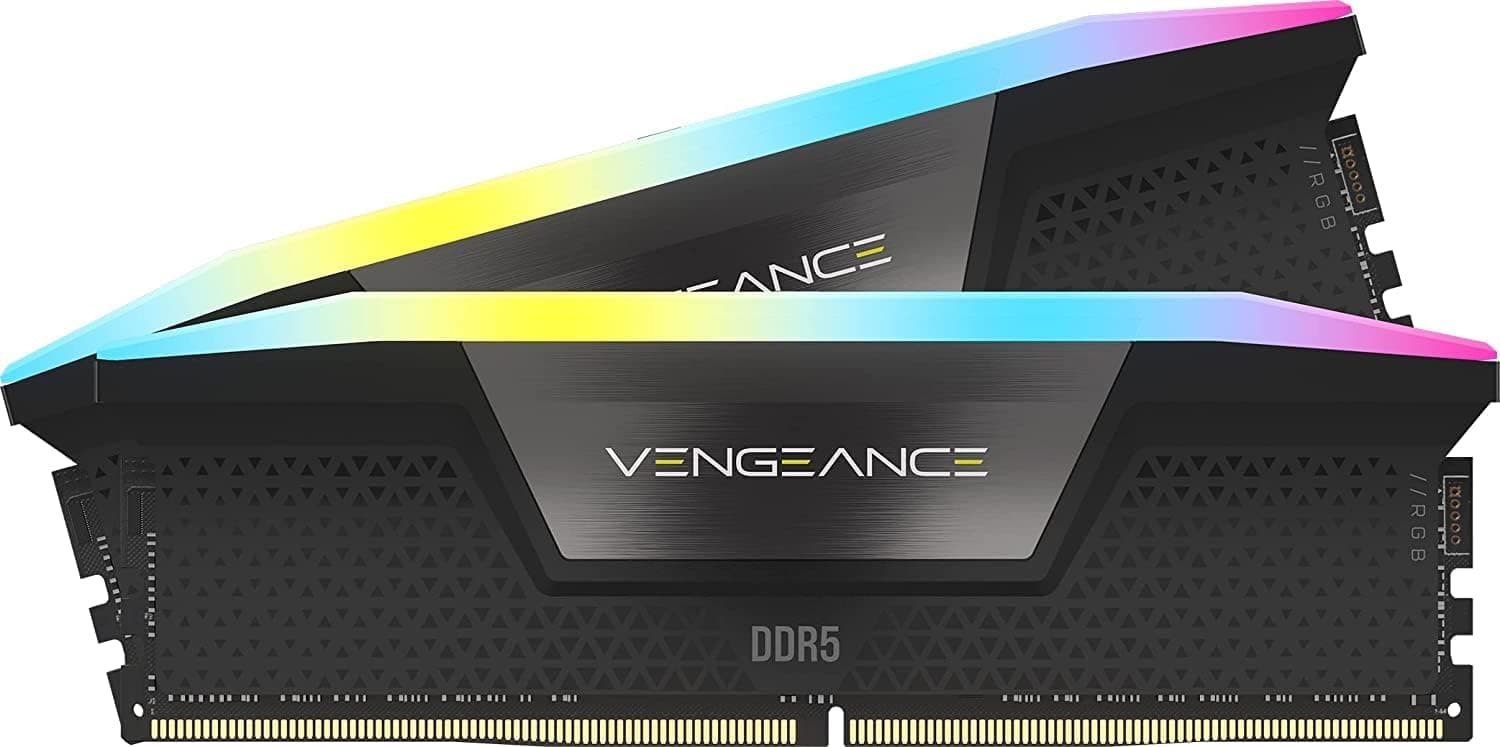
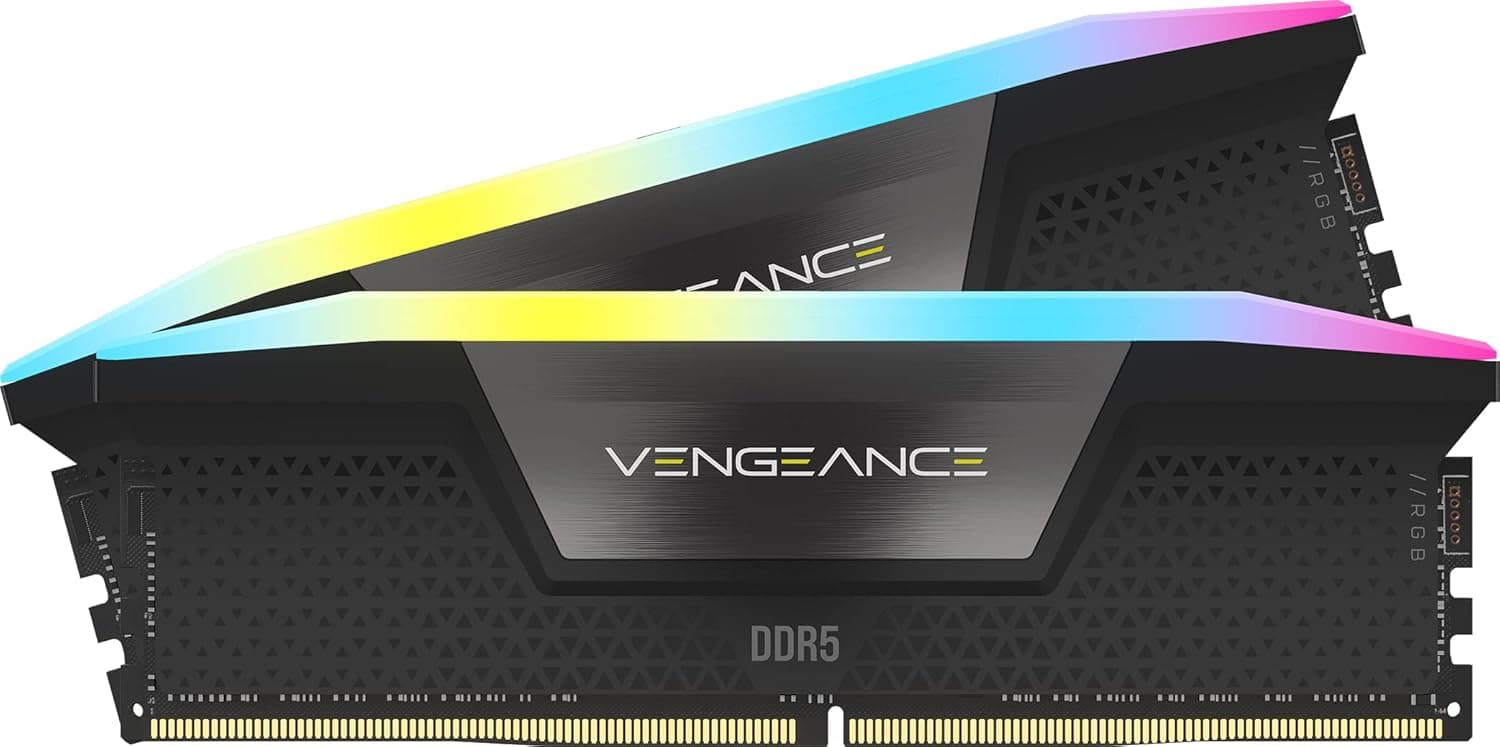
The CORSAIR VENGEANCE DDR5 memory kit delivers a solid entry point for users moving to the DDR5 platform. This specific model, CMK32GX5M2A4800C40, consists of two 16GB modules for a total of 32GB, running at a maximum speed of 4800MHz with CL40 latency. It supports Intel XMP 3.0 profiles, allowing even novice builders to enable overclocked performance with a few clicks in the BIOS. The black aluminum heat spreaders keep the modules cool while maintaining a low profile for broad cooler compatibility.
Designed for mainstream desktop setups, this kit fits Intel 12th-gen and newer processors on Z690, Z790, B760, and similar chipsets, as well as AMD AM5 boards with Ryzen 7000-series CPUs. The dual-channel configuration maximizes memory bandwidth, making it suitable for gaming, content creation, and everyday multitasking. Priced competitively at around 40,000 yen in Japan, it sits in the entry-to-mid tier of DDR5 memory, offering a balanced mix of performance, stability, and brand trust.
While faster 6000MHz kits exist, this 4800MHz model remains a practical choice for users who want to adopt DDR5 without overspending. Its reliable design and CORSAIR's warranty coverage add peace of mind, making it a sensible upgrade for a new build or a platform transition.
Compatibility Guide
This memory uses the standard 288-pin DDR5 DIMM form factor, which is physically incompatible with DDR4 slots. You'll need a motherboard with DDR5 slots, such as Intel Z690, Z790, B760, B660 (some), or AMD X670, B650, and A620 boards. It works with Intel Core 12th-gen and newer CPUs, and with AMD Ryzen 7000/8000-series processors on AM5.
The 4800MHz speed is the default JEDEC standard for early DDR5, but to hit that exact frequency with CL40 you must enable the XMP profile in the BIOS. Without XMP, the modules may run at lower JEDEC speeds (often 4800MHz is already standard, but some boards default to 4000MHz or 4200MHz). Always confirm the memory slots and follow the motherboard manual for proper channel configuration (typically slots 2 and 4 for dual-channel).
Regarding power, memory has minimal impact on PSU requirements. A mid-range gaming system with this kit can operate comfortably with a 550W–650W power supply, depending on the CPU and GPU. The low-profile heat spreader (about 34mm tall) ensures clearance for most tower CPU coolers, though always check your cooler’s dimensions.
Product Info
This kit was released in late 2021 as part of the initial wave of DDR5 memory. It carries CORSAIR's limited lifetime warranty, and the black anodized aluminum heat spreaders provide efficient heat dissipation. The market position is entry-to-mainstream: it offers basic DDR5 performance without the premium price of high-frequency kits, making it an ideal starting point for new DDR5 builds.
The included XMP 3.0 profiles allow customization through CORSAIR iCUE software, though that’s optional. The kit supports both Intel and (with manual tuning) AMD platforms. With a street price around ¥40,000, it represents a reasonable value for a 32GB kit, especially when compared to older DDR4 setups that may require a full platform swap.
Best Use Cases
- First-time DDR5 builder
Why: Simple XMP enables 4800MHz without complicated settings, and the 32GB capacity covers mainstream workloads. Not ideal for enthusiasts chasing record benchmark scores. - Budget-conscious gamer
Why: Dual-channel 32GB handles modern AAA titles well, and the lower cost leaves budget for other components. Competitive gamers running 360Hz+ monitors might prefer higher-speed kits to reduce CPU-bound bottlenecks. - Content creator on a budget
Why: Video editing and photo processing benefit from the bandwidth and capacity. However, tasks like 3D rendering that are extremely memory-sensitive could see gains from faster memory, so weigh the cost increase. - Small form factor (SFF) builds
Why: The low-profile heat spreader minimizes clearance issues with large coolers and tight cases. But in mini-ITX boards with only two slots, you must ensure you buy the right capacity upfront since you can't expand later.
Things to Consider
The primary limitation is the 4800MHz frequency, which is modest compared to newer 6000–6400MHz kits. In synthetic benchmarks and memory-heavy applications, you'll see lower throughput, though real-world gaming differences are often small. If you plan to overclock seriously, this kit may not have as much headroom as higher-binned modules.
Compatibility with AMD EXPO is not natively supported; while the memory works on AM5 boards, you'll need to manually enter timings or rely on the board's memory try-it features. Also, some early-adopter boards have had memory training issues, so updating your BIOS to the latest version is recommended. Finally, if you're building a high-end system with a flagship CPU, a faster kit might be
Product Disclosure (Amazon)
- Manufacturer: CORSAIR
- ASIN: B09MTS5YH1
- Note: This article covers a manufacturer-made product based on Amazon listing details.