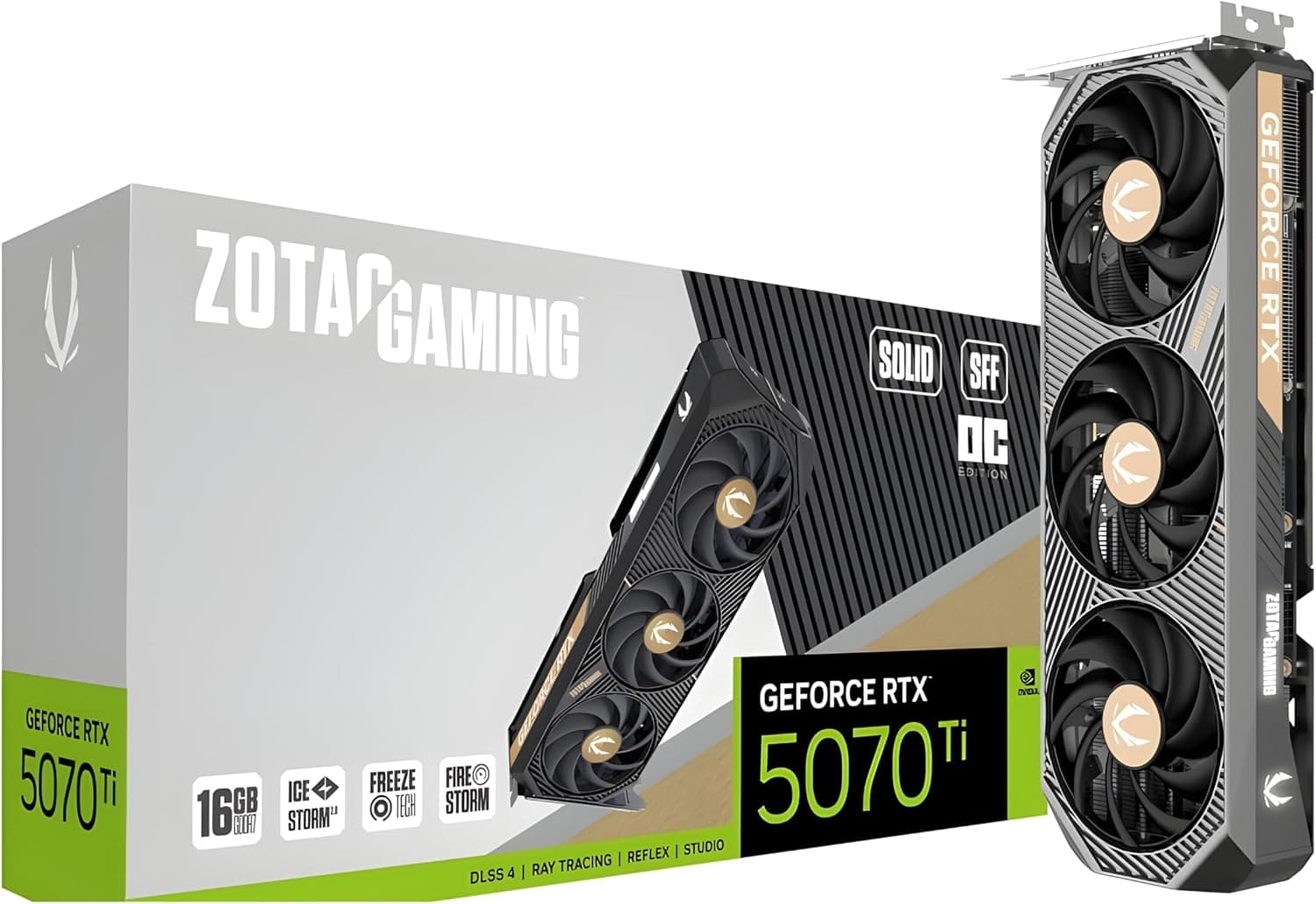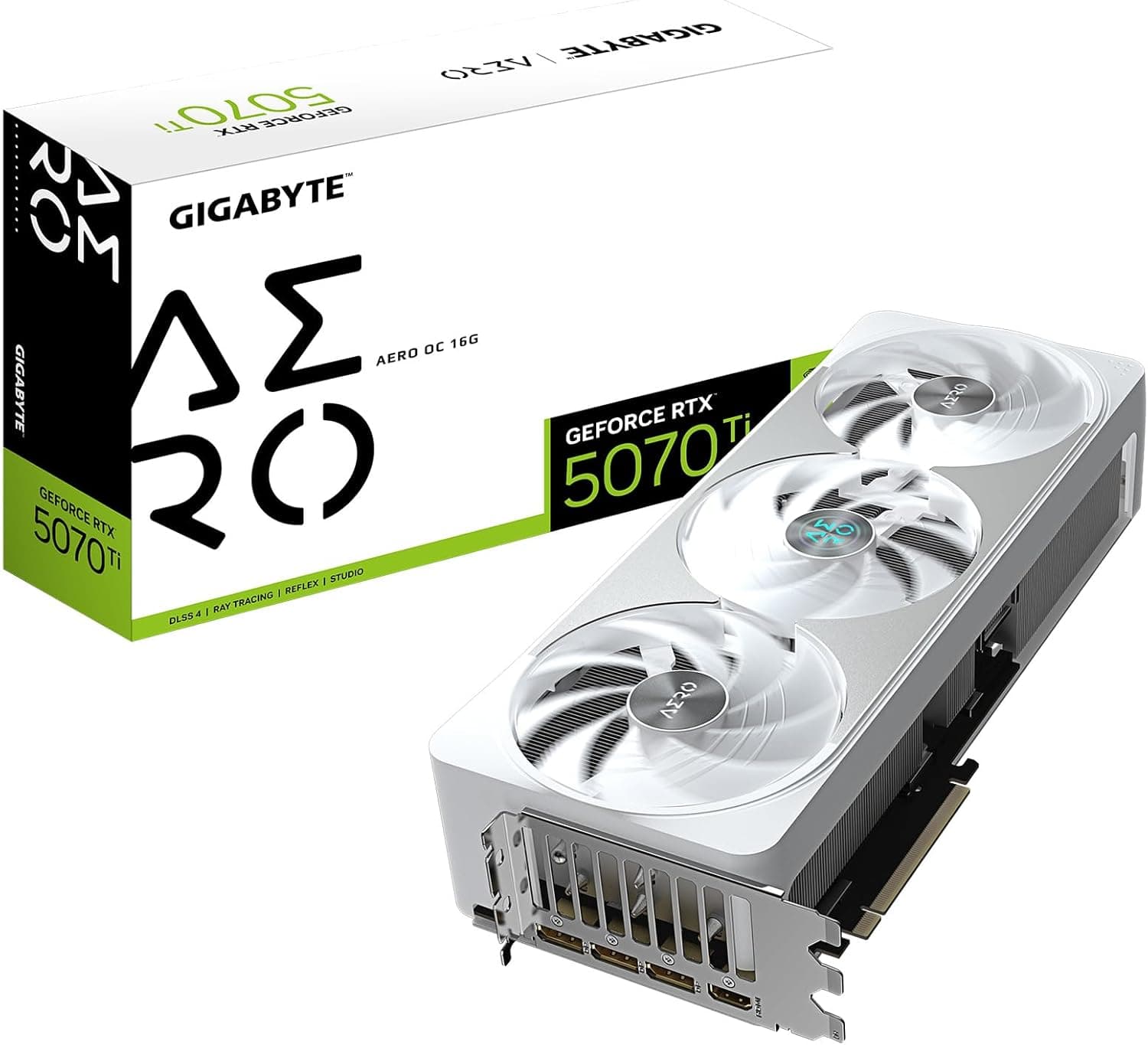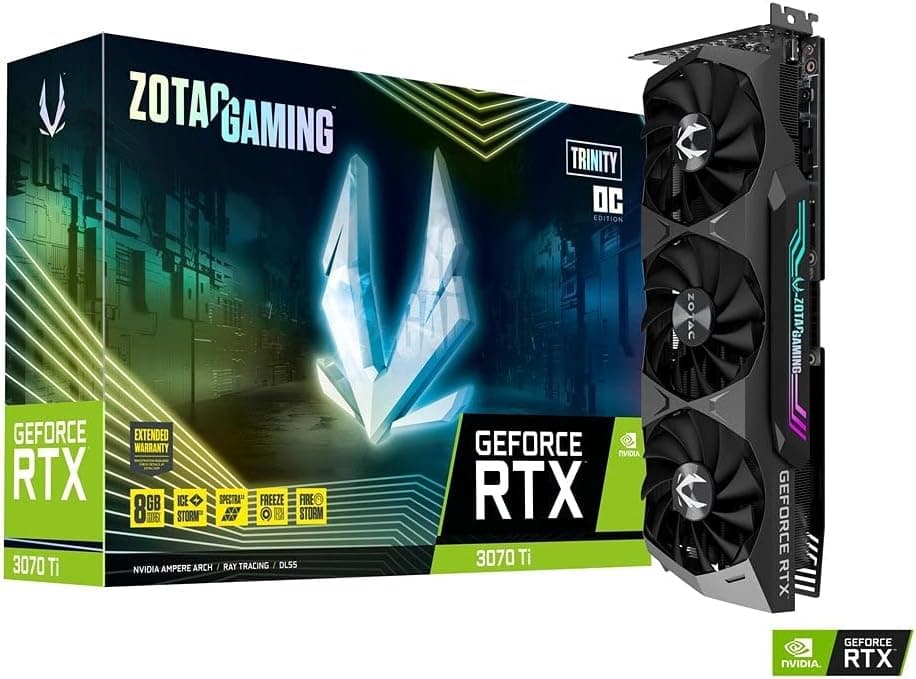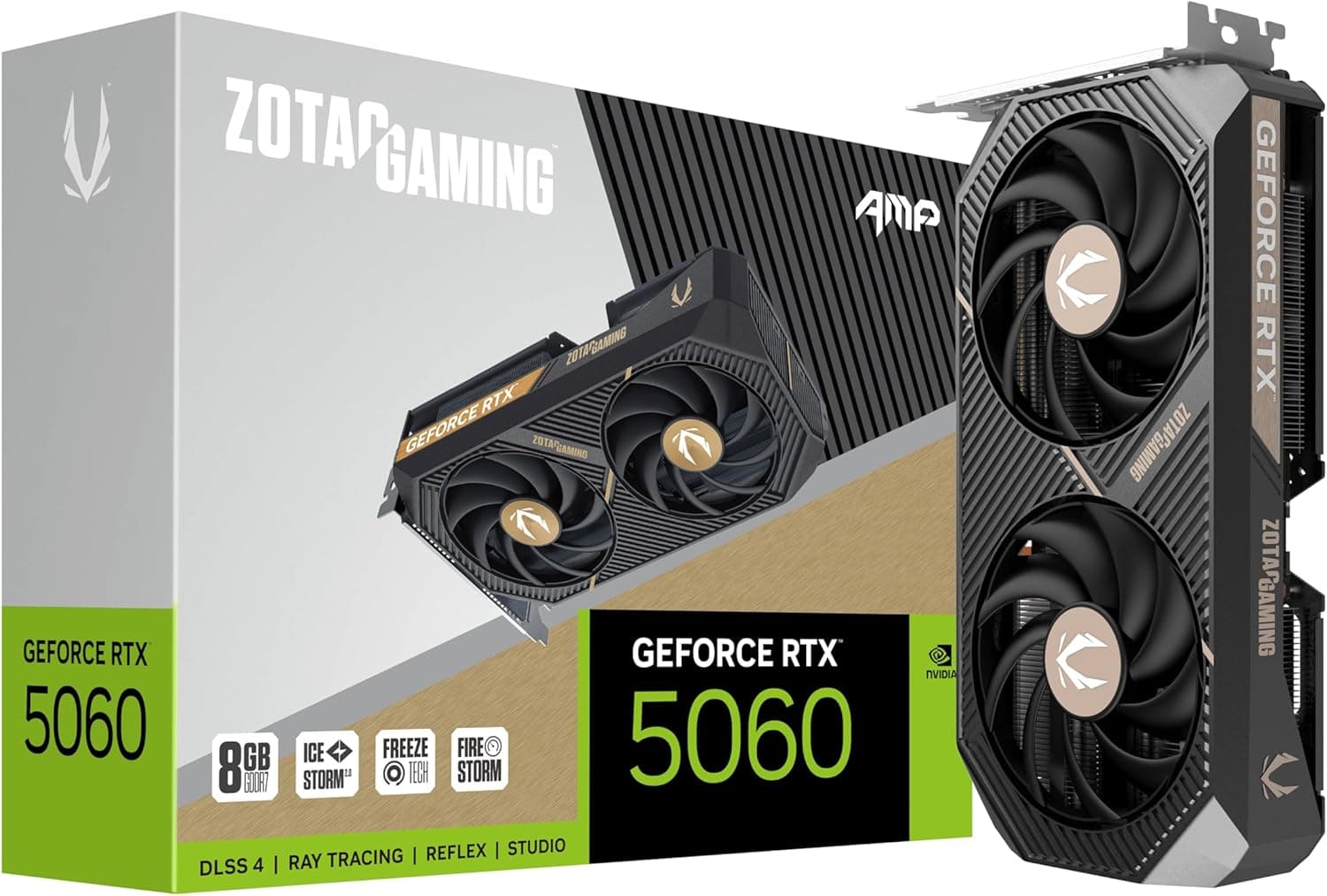
This article covers ZOTAC Gaming GeForce RTX 5060 AMP DLSS 4 8GB GDDR7 128ビット 28Gbps PCIE 5.0 ゲーミンググラフィックスカード IceStorm 2.0冷却 ZT-B50600F-10M.
Overview
The ZOTAC Gaming GeForce RTX 5060 AMP is a mid-range graphics card built on NVIDIA's Blackwell architecture. It features a GeForce RTX 5060 GPU paired with 8GB of GDDR7 memory over a 128-bit bus, delivering 448GB/s of bandwidth at 28Gbps. With DLSS 4 support, it offers impressive frame rate boosts in the latest game titles. Despite its compact 2-slot design, the card packs ZOTAC's IceStorm 2.0 cooling system, including two 90mm BladeLink fans, composite heat pipes, and a pass-through airflow design. A metal backplate reinforces the PCB, and the FREEZE fan-stop mode keeps the card silent during light workloads. Positioned as an entry-to-mid-range option, the RTX 5060 AMP targets 1080p and 1440p gaming, as well as light creative tasks. It competes directly with AMD's Radeon RX 7600 XT and the previous-gen RTX 4060, offering advantages in DLSS 4 support and memory bandwidth thanks to GDDR7.
Compatibility Guide
The card uses a PCI Express 5.0 x16 interface, fully backward compatible with PCIe 4.0 and 3.0 motherboards. To leverage the full bandwidth, a PCIe 5.0-capable board is ideal but not required. Power is supplied via a single 8-pin PCIe connector. With a TDP of just 145W, a 500W power supply is recommended for a typical gaming build, and even SFX units can handle it easily. Physical dimensions are approximately 225mm in length (exact specs vary; check official data) and dual-slot thickness. It fits most mini-tower and SFF cases. Video outputs include three DisplayPort 2.1b ports and one HDMI 2.1b, supporting up to four displays and 8K output, plus VR compatibility.
Product Info
The RTX 5060 AMP launched in early-to-mid 2026. Pricing in Japan sits around ¥89,000 (as of this writing). Warranty is standard two years from ZOTAC, though some retailers offer extended coverage. Distribution channels include and major PC hardware stores. As a market position, this card sits near the lower end of the mid-range spectrum. It doesn't match the RTX 5060 Ti or RTX 5070 in raw performance, but it offers excellent price-to-performance for users building a balanced gaming rig on a budget. It's a worthy upgrade from an RTX 3060 or RTX 4060.
Best Use Cases
1080p High-FPS Gaming: If you primarily game at 1920×1080 with high refresh rates (144Hz+), this card delivers smooth experiences in esports titles like Valorant, Overwatch 2, and Apex Legends, while also handling demanding AAA games with DLSS 4 enabled. It's ideal for competitive gamers who want high frame rates without breaking the bank. Small Form Factor Builds: Thanks to its compact length and dual-slot design, this card is perfect for Mini-ITX and SFF enthusiasts. The efficient cooling system ensures reliable operation even in tight enclosures. Users building a portable gaming PC should consider this as a top contender. Content Creation on a Budget: For beginner video editors using DaVinci Resolve or Premiere Pro, the CUDA and Tensor cores accelerate rendering and effects. 8GB VRAM handles 1080p and 1440p timelines well, and Blender 3D projects benefit from RTX-optimized workloads. Not for: 4K ultra settings gaming or heavy 3D rendering professionals—those should aim for RTX 5070-class cards or higher. ## Alternatives
AMD Radeon RX 7600 XT (16GB): Similar price point, but with double the VRAM. However, AMD's FSR upscaling lags behind DLSS 4 in image quality and performance, and ray tracing performance is noticeably weaker. If you need more VRAM for specific workloads, the RX 7600 XT is worth a look. NVIDIA GeForce RTX 4060: The predecessor is often found at lower prices, but the RTX 5060 brings ~30% more performance, GDDR7, and DLSS 4. Unless the price gap is very large, the newer card is the better buy. NVIDIA GeForce RTX 5060 Ti / RTX 5070: If your budget allows, stepping up to these offers more VRAM and raw power for 1440p high-refresh and light 4K gaming. Consider them if you plan to keep the card for 4+ years.
Things to Consider
The 8GB VRAM could become a bottleneck in future games pushing higher texture quality at 1440p. For 1080p, it's fine for now, but heavy texture mods or upcoming titles may require dropping settings. The card uses a traditional 8-pin power connector rather than the latest 12VHPWR. This is good for PSU compatibility but means you won't have future-proofing for higher-power cards from the same build. ZOTAC's warranty and after-sales support in Japan may be less robust than that of ASUS or MSI, though 's return policy can mitigate risk. Always check the exact dimensions against your case before purchase. ## FAQ Q: Is it worth upgrading from RTX 4060? A: Yes, especially if you play ray-traced games or want DLSS 4. Expect 30-40% performance uplift at 1080p. However, if you're happy with current performance, waiting for a larger jump may be wiser. Q: Can this card handle 4K gaming? A
Product Disclosure (Amazon)
- Manufacturer: ZOTAC
- Seller: ジェネロシティー
- Fulfilled by: ジェネロシティー
- ASIN: B0F8THBBXH
- Note: This article covers a manufacturer-made product based on Amazon listing details.