Game Overview
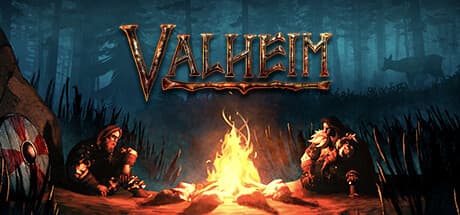
Valheim: Viking Survival in a Mythological Open World is a survival-crafting game built around exploration, gathering, construction, equipment upgrades, and boss progression. Its procedurally generated Norse-inspired world supports solo play and groups of up to 10 players.
A typical expedition begins with gathering food and materials, improving a base, and preparing equipment before entering a more dangerous region. New resources provide reasons to rebuild tools and armor, while each journey expands the area that can be explored safely.
Preparation is therefore part of the adventure rather than a separate menu task.
Released on February 2, 2021, the game is developed by Iron Gate AB and published by Coffee Stain Publishing. It supports Japanese, English, and several other languages, making crafting requirements and item descriptions accessible to a broad range of players.
Features and Systems
Survival is closely tied to combat and travel. Food choices affect the health and stamina available for running, gathering, blocking, dodging, and attacking.
A long expedition therefore requires more than a weapon: players must consider meals, armor, repair options, and a safe route home.
Construction also has practical value. A longhouse can be an expressive project, but a first base works best when shelter, beds, storage, and crafting stations come before decoration.
Leaving room for new stations and storage prevents repeated rebuilding as more materials become available.
Because the map is procedurally generated, resources and objectives do not appear in identical locations on every world. Ocean voyages can become costly when players leave without a forward base or return plan.
Marking resources and hazards on the map also makes later trips—and recovery after death—far more manageable.
Combat and Progression
Combat rewards observation more than reckless attacks. Blocking, dodging, weapon reach, and stamina management all matter, especially when several enemies appear together.
Entering a fight after spending all available stamina on sprinting or mining leaves little room to escape.
Boss encounters serve as major progression milestones. Rushing toward them without improving food and equipment can make both the boss and the next region feel disproportionately punishing.
Preparing upgraded gear, spare supplies, and a recovery route often saves more time than repeated attempts with inadequate equipment.
Solo and Cooperative Play
Solo players control every resource and can explore without waiting for a group. The tradeoff is that gathering, hauling materials, and recovering equipment must all be handled alone.
Small outposts and shorter expedition stages help reduce the risk of losing a long trip's progress.
In cooperative play, up to 9 friends can join the host for a total group size of 10. Gathering, cooking, building, scouting, and fighting can be divided among players, making ambitious settlements easier to complete.
Groups should still agree on shared storage, boss timing, and progression into new regions, since uneven play schedules can leave some members behind.
PC Requirements
The listed minimum requirements are Windows 10 or later, a 2.6 GHz quad-core processor or similar, a GeForce GTX 950 or Radeon HD 7970, 8 GB of RAM, and DirectX 11.
The listing states 1 GB of available storage, but keeping additional free space for updates and save data is sensible.
Minimum specifications indicate a baseline for running the game, not a guarantee of consistently high frame rates. Large settlements, dense crafting areas, and busy multiplayer sessions may be more demanding than the early wilderness.
Systems close to the minimum should begin by reducing resolution, shadows, and view-distance settings.
No recommended specification was included in the supplied data. Players targeting high resolutions or unusually large shared bases should compare their exact CPU and GPU with the latest requirements shown on the product page before buying.
Reception and Common Impressions
Valheim has maintained strong long-term player support because exploration, equipment progression, and functional construction reinforce one another. Discovering a region is only the beginning; players must establish routes, improve shelter, and decide how much risk the next voyage is worth.
The same structure can feel repetitive to players who dislike gathering replacement resources, transporting cargo over long distances, or returning to a dangerous death location. Its pace works best when construction and unexpected detours are treated as part of the experience.
Players looking only for a short, tightly scripted campaign may find the preparation too time-consuming.
Who Should Play It
Valheim suits players who enjoy turning resources found during exploration into equipment and useful settlements. It is also a strong fit for builders who want structures to support crafting, rest, storage, and future expeditions rather than exist only as decoration.
Co-op groups that like assigning informal roles and planning dangerous journeys will get particular value from it. The game is at its best when friends can laugh about failed voyages, rebuild, and use each mistake to improve the next expedition.
Limitations and Who May Not Enjoy It
Players who dislike repeated gathering or travel should approach with caution. Death can lead to a difficult equipment-recovery trip, and an unprepared expedition may require additional time just to restore the previous position.
Those seeking nonstop combat may see cooking, mining, hauling, and construction as interruptions.
Procedural generation also means an online guide may not match the geography of a particular world. Progress depends on adapting plans to the available coastline, resources, and hazards instead of copying a fixed route.
Minimum requirements and language support may change with updates, so confirm the current product-page listing before installation.