Game Overview
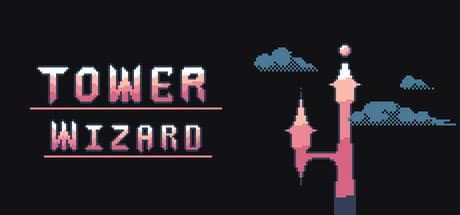
Tower Wizard: Build Your Magical Empire is an active incremental game about gathering magic and resources, summoning spirits, and turning those materials into an expanding wizard tower. Spirits assist with collection, while buildings and upgrades increase the speed at which new options become available.
The core loop is straightforward: collect resources, choose an upgrade, unlock another system, and use the resulting efficiency to reach the next target faster. It is not presented as a purely passive idle game; deciding where to invest is an important part of maintaining momentum.
Developed and published by Barribob, the game was released on June 19, 2025.
Features and Progression
Spirit-assisted collection and tower construction belong to the same progression loop. Investing in immediate production can shorten the current wait, while saving for a building or ability may open a more valuable route forward.
With numerous upgrades available, the useful question is not simply what can be purchased now, but which purchase brings the next meaningful unlock within reach.
The prestige system converts completed progress into faster future runs. Although restarting can initially look like a loss, the purpose is to pass earlier milestones more quickly and push beyond the point where the previous run slowed down.
When small upgrades stop producing meaningful momentum, beginning a stronger run may be more effective than waiting for marginal gains.
A defined ending distinguishes the game from incremental titles built around endless numerical expansion. Tower construction leads toward a concrete conclusion instead of an indefinitely moving target.
That structure may suit players who enjoy compounding growth but still want a clear point of completion.
Early-Game Approach
During the opening phase, consider how each purchase affects the entire collection cycle rather than judging it by its immediate visual impact. A modest improvement that unlocks another mechanic sooner may be more useful than an expensive boost that takes a long time to repay.
When several upgrades are available, prioritizing those that broaden the next set of choices can help prevent an early stall.
Prestige decisions are easier to understand when measured by the speed of the following run, not only by what disappears during the reset. The goal is to cross familiar ground in less time and return to the previous barrier with stronger growth.
Repeating shorter, increasingly efficient runs is central to the intended rhythm.
System Requirements
The listed minimum configuration calls for Windows 10, a 2.7 GHz dual-core CPU, and 4 GB of RAM.
Graphics hardware needs 512 MB of memory with OpenGL 3 or later support, while the storage requirement is 150 MB. These requirements do not call for a large installation or a high-end dedicated GPU, making the game a plausible option for relatively modest PCs.
Only minimum requirements are provided, so there is no official recommended tier to use as a comfort target. Owners of older integrated graphics should verify OpenGL support in particular.
Background applications and driver condition can also affect results, so check the current Steam requirements if the PC is close to the minimum.
Reception and Player Expectations
The game has maintained strong user reception over time, suggesting that its incremental progression loop connects well with its intended audience. The satisfying element is the relationship between collection, upgrades, and prestige: milestones that once felt distant become routine, allowing each run to reach farther.
That same structure can feel repetitive to anyone who does not enjoy optimizing production and watching efficiency rise in stages. This is more about upgrade order and run planning than action combat, branching dialogue, or narrative decisions.
Its reception is therefore less useful than a simple personal test: do repeated cycles feel rewarding when each one becomes faster?
Who It Suits
Tower Wizard is a good fit for players who enjoy monitoring resource growth and planning the next upgrade. It should especially appeal to those who want active decisions alongside idle accumulation rather than a game that progresses entirely without input.
Players who like comparing upgrade paths can find satisfaction in shaping a more efficient route toward the completed tower.
It is also worth considering if you prefer incremental games with a defined objective. The ending provides a natural stopping point and makes it easier to set a concrete goal.
The structure can support short check-ins, while still giving optimization-minded players room to spend longer sessions testing progression choices.
Limitations and Who Should Skip It
English is the confirmed supported language. Because players need to compare upgrade effects and unlock conditions, those uncomfortable reading gameplay information in English should take this limitation seriously.
Check the current language listing on the store page before purchasing.
Do not approach it expecting reflex-driven combat, extensive character dialogue, or free-form city design. Its focus is improving resource efficiency and repeatedly rebuilding with stronger progression.
Players who experience prestige resets mainly as lost work may struggle with the loop, while those who treat faster future runs as the reward are more likely to enjoy it.
Store metadata and system requirements can change after publication. Verify the title, supported languages, and current hardware listing before making a purchase decision.