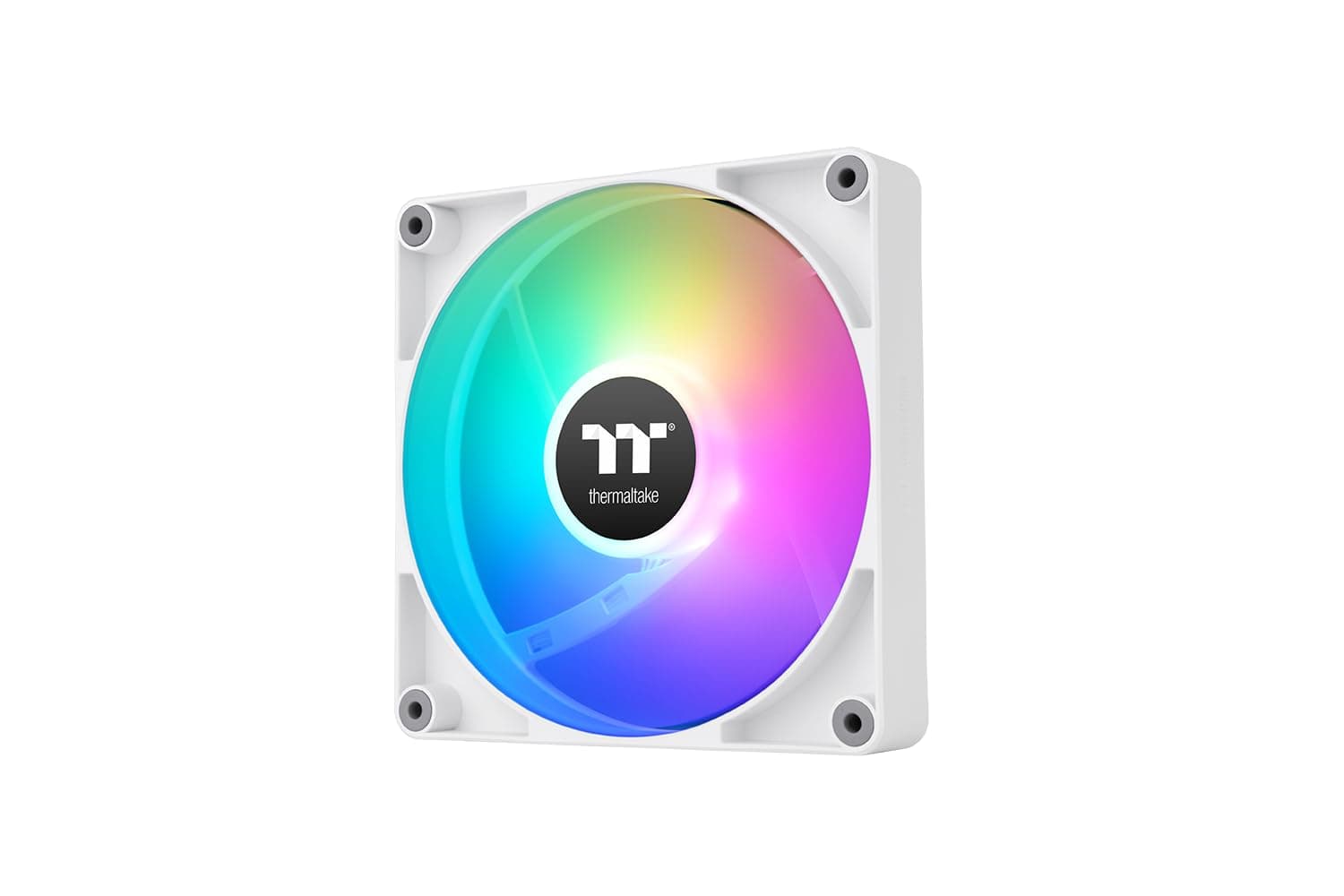
This article covers Thermaltake CT140 Reverse ARGB Sync 2枚セット White PCケースファン CL-F176-PL14SW-A FN2399.
Overview
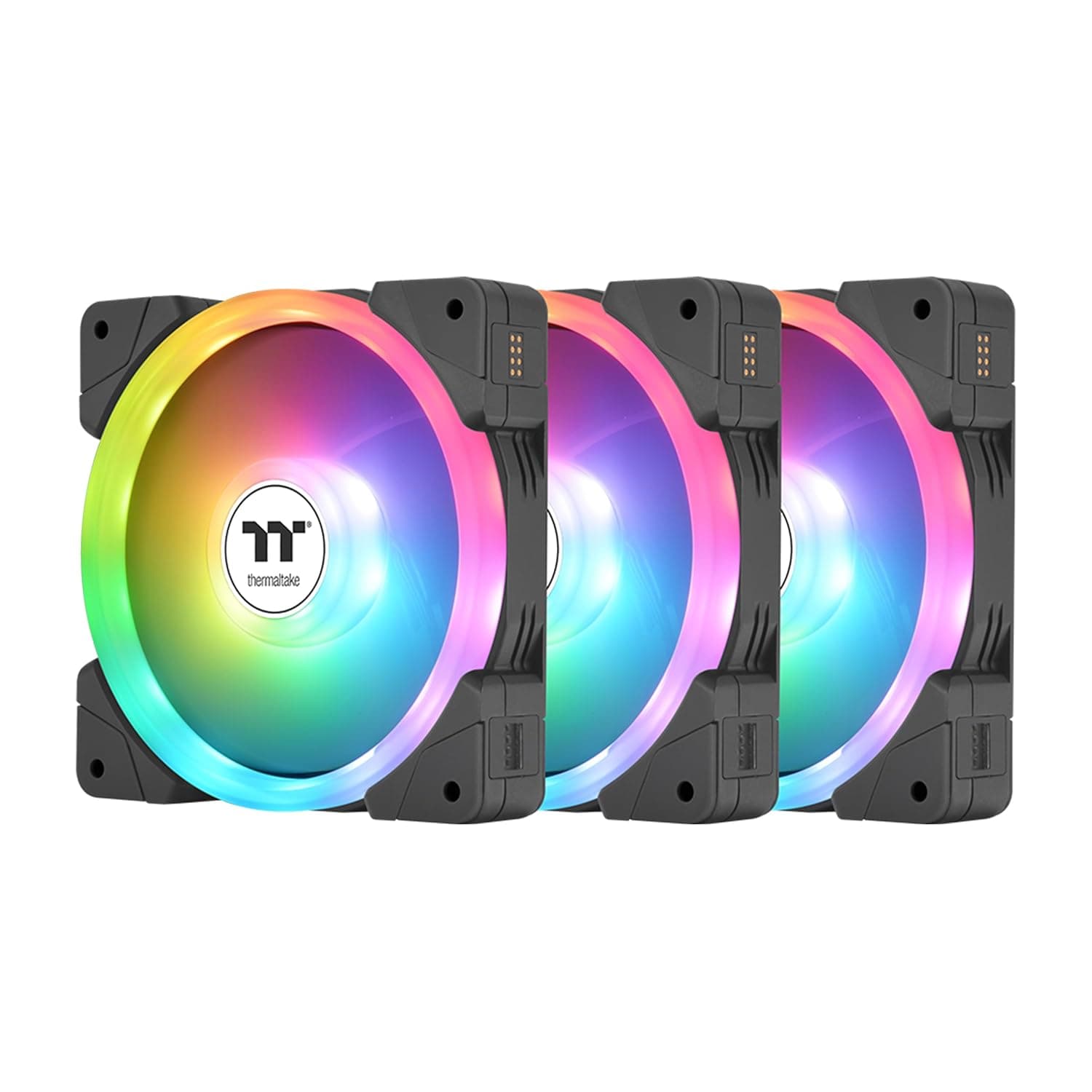
The Thermaltake CT140 Reverse ARGB Sync 2-Pack White is a pair of 140mm case fans featuring a unique reverse blade design. With a maximum airflow of 94.95 CFM and static pressure of 2.54 mmH2O, these fans deliver solid cooling performance while keeping noise at a modest 32.8 dBA. The addressable RGB lighting is compatible with major motherboard ecosystems like ASUS Aura Sync, MSI Mystic Light, GIGABYTE RGB Fusion, and ASRock Polychrome Sync. The white color scheme makes them an excellent choice for builders aiming for a clean, unified aesthetic. The standout feature is the reverse blade orientation. Traditional fans often hide the RGB lighting when mounted as intake because the hub and blades face inward. The CT140 Reverse solves this by spinning the blades in the opposite direction, so the illuminated side always faces the interior of the case. This means you get a full view of the ARGB effects whether the fan is pulling air in or pushing it out. Additionally, the fans support daisy-chaining for both PWM and ARGB connections. Included cables and clips let you link multiple fans together, reducing cable clutter and simplifying installation. The two-pack format offers good value for those looking to outfit a case with matching fans.
Compatibility Guide
Form Factor: Standard 140mm x 140mm x 25mm fan size. Fits most PC cases with 140mm mounting points. Power Connectors: 4-pin PWM for fan speed control and 3-pin ARGB (5V) for lighting. Requires a PWM header and a 5V ARGB header on the motherboard. RGB Compatibility: Works with ASUS Aura Sync, MSI Mystic Light, GIGABYTE RGB Fusion, ASRock Polychrome Sync, and other addressable RGB software. Note: The ARGB connector is 5V only. Do not connect to a 12V RGB header, as it may damage the LEDs.
Product Info
Released in late 2024, the CT140 Reverse ARGB Sync 2-Pack White is priced around ¥4,400, placing it in the mid-range segment for 140mm ARGB fans. It comes with a 2-year warranty through authorized Japanese distributors. The hydraulic bearing offers a rated lifespan of 40,000 hours MTTF. Market positioning is mid-tier with a focus on visual appeal and balanced performance, differentiated by the reverse blade design.
Best Use Cases
White-themed PC builds: The white frame and blades blend seamlessly with white components, and the reverse blade ensures RGB is visible even on intake fans. Quiet yet effective cooling: At 32.8 dBA max, these fans are unobtrusive. The 94.95 CFM airflow and 2.54 mmH2O static pressure handle typical case cooling needs well. RGB enthusiasts: Addressable LEDs allow per-LED customization via motherboard software. Daisy-chaining keeps wiring tidy. Who should skip: Users with cases that only support 120mm fans, or those who don't want RGB lighting. Also, if you need extreme static pressure for radiators, consider higher-pressure models.
Things to Consider
The ARGB functionality requires a 5V addressable RGB header on your motherboard. Older boards with only 12V RGB headers won't support the lighting. The reverse blade design is primarily aesthetic; cooling performance is comparable to standard CT140 fans. Don't expect a thermal improvement. Hydraulic bearings are cost-effective but have a shorter lifespan (40,000 hours) compared to FDB or dual-ball bearings. For 24/7 operation, this may be a factor. The two-pack is convenient, but if your case needs three or more fans, you'll need to buy additional single units. ## FAQ
Q: Can I use these fans for intake or exhaust? A: Both. When mounted as intake, the reverse blade shows the RGB side toward the interior. As exhaust, the lighting is still visible but less prominent. Choose based on your case layout. Q: My motherboard has only one ARGB header. Can I connect both fans? A: Yes, daisy-chaining is supported. Use the included ARGB cable and clips to connect the two fans in series, then plug into a single 5V ARGB header. The same applies to PWM. Q: How loud are these fans at full speed? A: Maximum noise is rated at 32.8 dBA, which is comparable to a quiet library. At lower RPMs via PWM control, they become nearly silent.