Game Overview
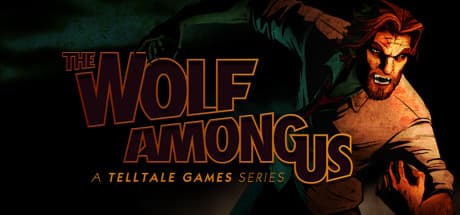
The Wolf Among Us: A Fables Thriller is a story-driven adventure from Telltale Games, based on the Fables comic series published by DC Comics/Vertigo. Released on October 11, 2013, it follows a murder investigation across five connected episodes.
You play Bigby Wolf, the former Big Bad Wolf and sheriff of Fabletown, a hidden community populated by fairy-tale characters. The regular play loop mixes interviews, scene investigation, dialogue decisions, and tense action sequences.
The focus is not simply on discovering a culprit, but on deciding how Bigby uses authority in a community where nearly everyone has something to conceal.
Features and Systems
Dialogue choices may be timed, so the game does not always let you consider every consequence at leisure. Silence can also function as a response, affecting the mood of a conversation and how characters treat Bigby later.
The point is less about selecting a clearly correct answer and more about defining what kind of sheriff he becomes under pressure.
Investigation involves examining relevant locations and questioning people to uncover the circumstances surrounding the case. This is not a free-form deduction game built around combining a large inventory of evidence.
Its structure is closer to interactive television: exploration and conversations move the authored plot forward, while major decisions alter relationships and individual scenes.
Fights and pursuits include prompts that demand quick reactions. Their value comes from abrupt shifts between conversation and violence rather than deep combat mechanics.
The result is more interactive than a conventional visual novel, but far more focused on character and narrative than a typical action game.
Getting the Most From the Story
No prior knowledge of Fables is required because Bigby's role and the rules of Fabletown are introduced through the story. Familiarity with fairy tales can add another layer, however, as recognizable figures have been reworked into troubled adults living in a harsh modern community.
It works well as an entry point to the setting rather than assuming the player has read the comics.
Because all five episodes form one continuous mystery, playing them without very long breaks makes testimony and relationships easier to remember. Choices can reshape conversations and personal loyalties, but players should not expect every decision to create an entirely separate plot.
The appeal lies in seeing how the same central investigation changes tone according to Bigby's conduct.
System Requirements
The minimum specification lists a Core 2 Duo at 2GHz or equivalent, 3GB of RAM, and an ATI or NVIDIA graphics card with 512MB of video memory. The recommended specification raises this to a Core 2 Duo at 2.3GHz or equivalent, 4GB of RAM, and a GPU with 1GB of video memory.
Both tiers list 2GB of available storage and DirectX 9.0c.
These are modest requirements by modern gaming-PC standards, but both tiers warn that Intel integrated graphics are not recommended. An older laptop may therefore satisfy the listed system-memory requirement without delivering reliable graphics performance.Check the review panel on this page or the Steam listing for the latest user review trend.
Reception and Review Tendencies
The game has maintained exceptionally strong user reception over time. Its noir presentation, pressured conversations, and transformation of fairy-tale characters into participants in an adult crime drama are especially well suited to players who value narrative.
The episodic structure steadily builds tension and gives each chapter a clear dramatic destination.
Its choices do not produce unlimited branches, however. Players primarily interested in unrestricted investigation, complex puzzles, or deep combat may find the interaction narrow.
It is better approached as an authored drama in which the player controls Bigby's attitude, relationships, and responses at pivotal moments.
Who It Is For
The Wolf Among Us suits fans of detective fiction and crime drama who enjoy judging motives through testimony and behavior. It is also a strong fit for players comfortable making decisions in morally unclear situations and living with an imperfect response.
Anyone who enjoyed the dialogue-led design of Telltale's The Walking Dead will recognize the same emphasis on character pressure and consequence.
Cautions and Who Should Skip It
Conversation and story take priority over open exploration, elaborate puzzles, and sustained combat. The game also contains violence and mature subject matter, so its fairy-tale premise should not be mistaken for a gentle fantasy.
Quick-response action sequences mean it is not entirely a passive reading experience.
The supplied language information confirms English support but does not confirm Japanese. Because timed dialogue and subtle wording are central to the experience, players who need another language should verify the current language list on the store page before buying.
This matters more here than in a game where the story is secondary.