Game Overview
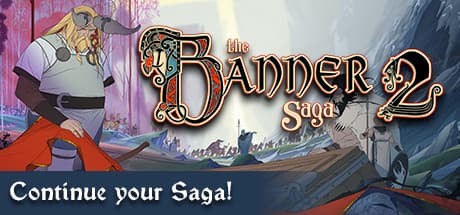
The Banner Saga 2: Continue Your Epic Viking Journey is a narrative-focused tactical RPG about leading a caravan through a world approaching collapse. Released on April 19, 2016, it was developed and published by Stoic.
Play alternates between conversations, travel decisions, resource management, and turn-based battles in which the survival of the clan is at stake.
This is the second chapter of a continuing story rather than a self-contained episode. Relationships and earlier decisions give later events much of their weight, so playing the first game beforehand provides valuable context.
The core rhythm of dialogue, travel, and combat is still straightforward once its systems are understood.
Features and Systems
In combat, a unit's Strength serves as both health and attack power, while Armor reduces incoming damage. This creates an important choice: strip Armor so later attacks hit harder, or reduce Strength to weaken an enemy's retaliation.
Positioning and turn order therefore matter as much as concentrating damage on a single target.
Willpower can extend movement or improve an action, but it is a limited resource. Obstacles, narrow routes, and the space occupied by larger units affect who can reach each target.
Injuries and character development also encourage planning beyond the immediate encounter.
During travel, the caravan must manage supplies as well as morale and population. A compassionate answer can create a new danger, and saving everyone is rarely guaranteed.
The game is less about discovering a visibly correct option than choosing priorities with incomplete information and living with the outcome.
Why the First Game Matters
Where save importing is available, earlier choices and surviving characters can carry into this chapter. The appeal is not merely seeing branches; it is watching past decisions shape the clan, relationships, and available perspectives.
New players may find that some characters and factions arrive with less explanation than expected.
Hand-drawn 2D animation, bleak landscapes, and a restrained score reinforce the fatigue and loss of the journey. This is not primarily a loot-driven RPG.
Its pace depends on the contrast between reflective dialogue and tense tactical encounters, rewarding players who consider the context behind each choice.
System Requirements
The minimum requirements list Windows 10, 2 GB of RAM, and 4 GB of available storage. The recommended requirements list Windows 10, 4 GB of RAM, and 6 GB of available storage.
Based on those supplied requirements, the game is relatively light by modern gaming-PC standards and does not demand a large installation.
The provided data does not specify a particular CPU or GPU. Players using integrated graphics or unusual display configurations should compare their hardware with the current store listing before buying.
Minimum requirements indicate a baseline for operation, not a guarantee of perfectly smooth performance in every scene.
Reception and Review Trends
The game has maintained strong user sentiment over time. Positive feedback commonly focuses on consequential decisions, the interaction between Armor and Strength, the hand-drawn presentation, and the way music supports the story.
Continuing the journey of characters shaped by the first game is especially valuable for returning players.
Criticism often concerns the direct dependence on the previous chapter. The alternating initiative system also behaves differently from many tactical RPGs: removing weak enemies too quickly can let a remaining powerful opponent act more often.
Delayed consequences and the lack of obviously ideal outcomes can frustrate players who prefer clear optimization.
Who It Suits
The Banner Saga 2 suits players who want narrative choices and tactical combat to carry equal weight. It is also a good fit for anyone who enjoys distributing scarce resources and role-playing a leader without access to perfect information.
Its hand-drawn animation and subdued Nordic-inspired fantasy atmosphere are additional reasons to consider it.
Caveats and Who Should Skip It
Players seeking a cheerful heroic tale or a route where every character can be protected may find the experience unusually heavy. Dialogue and travel occupy a substantial part of the game, so it is a weaker fit for anyone wanting uninterrupted battles or loot collection as the main reward.
Those who need full narrative context should consider starting with the first entry.
The game is listed with support for multiple languages, including English, Japanese, and Simplified Chinese, though current availability should be checked in the store's language section. Its design works best when mistakes are accepted as part of a personal story.
Repeatedly reloading to engineer a perfect outcome can diminish the tension that gives its decisions meaning.