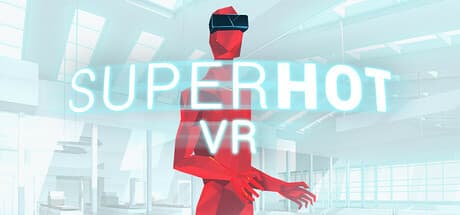
Game Overview
SUPERHOT: MIND CONTROL DELETE is the third entry in the single-player first-person shooter series developed and published by SUPERHOT Team. Released on July 16, 2020, it expands the signature rule established by SUPERHOT and SUPERHOT VR: time advances primarily when the player moves.
More weapons, enemies, objectives, and story material give that core idea additional room to develop.
A typical encounter begins with reading enemy positions, incoming bullets, and nearby weapons while the scene is almost still. The player then combines movement, aiming, firing, and dodging one action at a time.
It looks like an FPS, but the decision-making often resembles a spatial puzzle in which the important question is not merely whether a shot will land, but where that action will leave the player afterward.
How Time Shapes Combat
Every movement has a cost because enemies and projectiles move with the player. Sidestepping one bullet may allow another opponent to close the distance, so a safe dodge must also create a useful follow-up position.
Pausing gives the player time to inspect the scene, but this is not a conventional turn-based system; aiming and repositioning continue to influence the flow of danger.
Regenerating health and convenient ammunition supplies are not dependable safety nets here. Success comes from deciding which target deserves a limited shot and how to reach the next usable weapon.
Players who lack fast FPS reflexes can take more time to aim, but poor positioning and target priority can still make recovery difficult.
The minimalist presentation supports these decisions. White environments, red enemies, and dark weapons make threats and tools easy to distinguish without excessive visual clutter.
Even so, the simple art direction should not be mistaken for a guarantee that every low-powered PC will run it well; the listed requirements remain the useful baseline.
How It Differs from Earlier Entries
MIND CONTROL DELETE does not abandon the series formula for a different genre. Instead, it stretches the same time-driven combat across more encounters and variables.
Returning players can understand the basic rule immediately, while the broader selection of enemies and weapons prevents every situation from having an obvious familiar answer.
That structure also means it may not suit someone expecting only a short, linear campaign with constant scenery changes. Much of the appeal lies in revisiting the combat loop, identifying why an attempt failed, and changing target order or movement on the next run.
Enjoyment depends on whether refining decisions feels rewarding rather than repetitive.
Unlike SUPERHOT VR, this is designed for a standard display rather than as a VR-only experience. Full controller support and Steam Cloud are included.
A mouse is the natural choice for precise targeting, while a controller can suit players who prefer a more relaxed posture and deliberate pacing.
PC Requirements and Practical Targets
The minimum specification lists Windows 10, an Intel Core i3-4130, a GeForce GTX 650 with 1024 MB of VRAM, and 8 GB of RAM. The recommended specification lists Windows 10, an Intel Core i5-4690, a GeForce GTX 660 with 2048 MB of VRAM, and 8 GB of RAM.
Memory capacity is unchanged between the two tiers, while the recommended tier provides more CPU and graphics headroom.
These components come from older hardware generations, so many modern gaming PCs should clear the stated baseline. Integrated graphics vary substantially, however, and should be checked against the GeForce GTX 650 rather than judged by age alone.
No storage figure appears in the supplied requirements, so confirm the current download and installation space in the Steam client before installing.
Consistent visual feedback matters more than elaborate effects in a game built around tracking bullets and small movements. If a system near the minimum target feels uneven, lowering resolution or graphics options is preferable to sacrificing clear input response.
Reception and Common Reactions
Players commonly value the tactical use of time and the satisfaction of escaping a crowded encounter through a carefully planned sequence. The ability to observe danger makes raw aiming speed less important than route selection, target priority, and awareness of what will happen after each move.
The repeated use of the series' central mechanic is also the likely dividing line. Players who want constant narrative progression or an entirely new concept in every stage may find the structure repetitive.
Those who enjoy learning from failure and producing a cleaner solution on the next attempt are more likely to appreciate its design.
Who Should Play It
It is a strong fit for fans of SUPERHOT or SUPERHOT VR who want a longer exploration of the same time-manipulation concept. It also suits players looking for an FPS in which observation and planning matter more than sprinting, sustained fire, or competitive reflexes.
The game works well for focused sessions built around solving compact combat situations. It supports multiple languages, including English and Japanese, along with Steam Achievements, Steam Cloud, Family Sharing, and full controller input.
Limitations and Who Should Skip It
This is primarily a single-player experience, not a destination for online competition or cooperative squads. It also differs from a conventional military shooter built around realistic battlefields, large maps, and persistent weapon collection.
Players seeking PvP competition, open-world exploration, or realism should look elsewhere.
Time manipulation creates room to think, but it does not remove difficulty. Without regenerating health or convenient ammunition support, mistakes can force repeated attempts.
Players who dislike repetition may struggle with that structure; players who enjoy analyzing failure can find substantial tactical depth inside its deliberately simple rules.