Game Overview
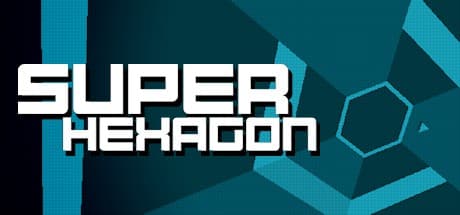
Super Hexagon: Minimalist Action with a Pulsating Soundtrack is a minimalist action game developed and published by Terry Cavanagh and released on November 27, 2012. You control a tiny triangle moving left or right around a central hexagon.
The goal is to spot openings in walls rushing inward and survive without touching them.
The controls are simple, but wall patterns, screen rotation, and rapid visual movement force you to make precise decisions in very little time. Each collision ends the attempt, so this is less about carefully clearing a long level and more about replaying short runs until you extend your record by a few seconds.
Features and Systems
The central strength is how much difficulty the game creates from a deliberately limited input set. There are no equipment choices or long combo lists to learn.
Instead, you read where the next gap is forming, choose a direction, and stop moving before you overshoot it.
That clarity makes mistakes easy to examine. A failed run often reveals whether you reacted late, moved too far, or changed direction unnecessarily.
Immediate restarts let you apply that lesson without waiting through a long reload or repeating unrelated sections.
Chipzel's soundtrack is more than background decoration: it gives repeated attempts their momentum. Electronic music, geometric graphics, and relentless movement form a tightly unified presentation.
Super Hexagon may feel rhythm-driven, but it is not a conventional rhythm game in which inputs must match musical beats; success depends primarily on reading patterns and steering accurately.
Difficulty and How to Improve
Watching the upcoming gap rather than staring only at the triangle gives you more time to decide. Large corrections can leave you poorly positioned for the following wall, so controlled movement is usually more useful than holding a direction until the last moment.
After a collision, identify one cause before restarting instead of immediately repeating the same input.
It can also help to set goals beyond simply breaking a record. Try crossing the next pattern without reversing direction or avoiding an unnecessary correction.
These small targets make improvement visible even when a run ends early.
Attempts are short, but the game demands sustained concentration. It works well in brief sessions, while extended play can lead to rushed inputs and visual fatigue.
Taking a break is often more productive than repeatedly forcing another run after your reactions begin to slip.
System Requirements
The listed minimum requirements are Windows XP, a 2 GHz CPU, 256MB of RAM, a Direct X9.0c-compatible graphics card, Direct X9.0c, and 35MB of storage.
By modern PC standards, these are extremely modest requirements. The game does not call for a large installation or a high-end GPU, making it a plausible option for older or lower-powered hardware.
Minimum specifications describe a baseline, not guaranteed compatibility with every current operating system, controller, or display setup. Because this is an older release, check current platform compatibility before purchasing for a modern machine.
Stable frame delivery and reliable input matter more here than visual detail, so reducing background activity may help if a system behaves inconsistently.
Reception and Player Experience
The game has maintained a strong reputation over time. Praise commonly centers on its ability to generate tension from a compact ruleset, as well as the close fit between its music, visual design, and rapid restarts.
Players who enjoy learning through repetition are especially likely to appreciate how quickly one attempt leads into the next.
Its narrow focus is also the main reason it will not suit everyone. Avoiding walls remains the core activity throughout, with no story campaign, exploration, equipment progression, or collection system to provide a change of pace.
The high difficulty is intentional, so enjoyment depends heavily on whether repeated failure feels motivating or merely frustrating.
Who Should Play It
Super Hexagon suits players who want a focused arcade challenge, a test of reflexes, or a score-attack game that fits into short sessions. It is also a good match for people who prefer learning directly through play instead of reading lengthy tutorials.
Fans of energetic electronic music and bold geometric visuals will get more from its tightly coordinated presentation.
Short runs make it easy to start without setting aside an entire evening, but short does not mean easy. Tiny errors can end an attempt immediately.
It is best for players who see that pressure as an invitation to improve rather than an obstacle to seeing more content.
Caveats and Who Should Skip It
Screen rotation, rapid motion, and strong color changes are central to the experience. Players prone to visual fatigue or discomfort from rotating imagery should begin with brief sessions and stop if symptoms appear.
It is also a poor fit for anyone seeking a calm presentation, narrative progression, or consistent forward movement on every attempt.
The supplied metadata lists multiplayer support, while the article tags identify the game as single-player, creating a direct inconsistency. Anyone buying specifically for competitive or cooperative play should verify the current feature listing first.
Controller support is also listed, but compatibility with a particular controller and modern operating system should be checked for the intended setup.