Game Overview
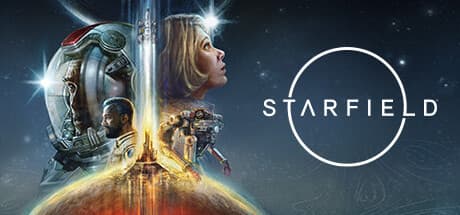
Starfield — Bethesda's Newest RPG Set in Vast Space is a science-fiction RPG from Bethesda Game Studios, creator of The Elder Scrolls V: Skyrim and Fallout 4. It is the studio's first new fictional universe in 25 years.
Released on September 5, 2023, it casts the player as a recruit of the exploration group Constellation, following clues connected to a mysterious phenomenon.
The core loop alternates between taking assignments in cities or stations, traveling by ship, exploring planetary locations, fighting, investigating, and talking to characters. The game reveals more of its identity when the player wanders into faction stories, local jobs, resource gathering, research, or ship construction instead of following only the main quest.
There are more than 1,000 planets, but that does not mean every world is a densely handcrafted map; city-based stories and surveys of remote terrain provide distinctly different experiences.
Features and Systems
Character creation covers appearance, background, starting skills, and optional traits. Some traits change dialogue or exploration conditions while also imposing a drawback, so they work best when chosen around a role rather than treated as simple bonuses.
Skills are divided among combat, science, technology, social, and physical disciplines. Spending a point begins progression, while related challenges must be completed before higher ranks become available.
Ground combat supports first- and third-person perspectives and is built mainly around firearms. Weapon type, modifications, spacesuit properties, and local gravity can all alter an encounter.
Dialogue may offer persuasion attempts or options linked to a background and skills, sometimes avoiding combat or changing the outcome of a job. Not every decision transforms the wider galaxy, however; the design is better understood as quest-level choice combined with character role-playing.
Ships are both vehicles and construction projects. Weapons, engines, cargo modules, and habitable sections can be combined, but extra capacity and facilities must be balanced against mass and mobility.
Space combat also allows the player to target individual ship systems, disable a vessel, and board it. Outposts can gather planetary resources, yet construction and logistics are largely optional pursuits rather than mandatory steps in the main narrative.
What Exploration Actually Feels Like
Travel is broad in scope but is not a seamless manual flight from one planet to another. The star map and fast travel are used frequently, with transitions between orbit, planetary surfaces, and interiors.
Players expecting a continuous spaceflight simulator may therefore be disappointed. It is more accurate to picture a Bethesda-style RPG whose separate regions are connected by a customizable ship.
Planetary surveys involve scanning fauna, flora, resources, and notable geographical features. Considerable time can be spent walking through quiet terrain and gathering materials, so combat and authored events do not arrive at every turn.
That breathing room may suit players who enjoy atmosphere and self-directed surveying, but it can feel repetitive to anyone who expects a new scripted event every few minutes.
PC Requirements and Practical Targets
The minimum specification lists Windows 10 version 21H1, a Ryzen 5 2600X or Core i7-6800K, a Radeon RX 5700 or GeForce GTX 1070 Ti, and 16GB of RAM. The recommended specification calls for an updated Windows 10 or 11 installation, a Ryzen 5 3600X or Core i5-10600K, a Radeon RX 6800 XT or GeForce RTX 2080, and 16GB of RAM.
DirectX 12 support and 125GB of available storage are required.
An SSD is explicitly required at both tiers. Because the game moves substantial environment data, installing it on a slower hard drive is inadvisable even if that drive has enough capacity.
Leave room for updates in addition to the listed installation space. A minimum specification is an entry point rather than a promise of high settings or consistently high frame rates, so systems near that tier should be prepared to lower resolution, shadows, reflections, and crowd density or use upscaling.
The broad range represented by the recommended GPUs also means that results depend heavily on resolution and visual settings. A quiet interior and a populated city need not place the same load on a PC, so tuning settings in a busy urban area gives a more useful worst-case test.
Laptop GPUs can perform differently from desktop parts with similar names; power limits and cooling should be checked instead of relying on the model name alone.
Reception and Common Review Themes
Positive impressions frequently focus on shipbuilding, lengthy faction questlines with distinct identities, and the familiar Bethesda rhythm of collecting objects and improving equipment. The freedom to abandon an intended route for an unexpected assignment also supports character-driven play.
Moving between cities, barren moons, industrial stations, and zero-gravity spaces lets the game present several forms of science fiction inside one RPG.
Criticism commonly centers on frequent transitions during travel, repeated activities or facilities during planetary exploration, and the pace of the opening hours. Quests and conversations take priority over continuous piloting, creating a mismatch for players primarily seeking a spaceflight experience.
Since patches and the date of play can affect individual impressions, consult the current rating panel on the article or the latest Steam display when judging present sentiment.
A Sensible Start
Trying to master resources, outposts, weapon modification, and shipbuilding immediately can create problems with carrying capacity and missing skills. Progressing the main assignment far enough to visit important locations provides a gentler introduction to the systems.
Loot should be judged by weight as well as value, with ammunition for regularly used weapons and reliable healing supplies taking priority.
Some skills unlock new interactions rather than merely increasing statistics, so early investment should reflect an intended play style. Social abilities suit conversation-focused characters, science and technology support research and modification, and combat skills can strengthen a preferred weapon category.
Ships and outposts consume substantial materials and credits, making modest upgrades more manageable until the character's basic equipment is established.
Who Should Play It
Starfield is well suited to players who enjoyed discovering an unrelated task while traveling through Skyrim or Fallout 4 and treating the detour as the real adventure. It also fits people who like designing ships, collecting and modifying equipment, or viewing contrasting societies through several faction storylines.
Players who value role-playing over strict efficiency and can invent reasons for their character to explore are likely to get the most from its scale.
Limitations and Who May Not Enjoy It
It is a poor match for anyone expecting uninterrupted travel from open space to a planet's surface or a unique story on every world. Exploration can include uneventful walks and familiar location structures.
Players who prioritize density should concentrate on major cities, faction arcs, and authored missions rather than attempting to clear every landing area. Ground combat is also one part of a larger RPG progression system, not a competitive shooter designed chiefly around precision gunplay.
The game supports Japanese, English, and several other languages, although audio availability differs by language. Check the Steam product listing for the current interface, subtitle, and voice support before installing.
The 125GB storage requirement and mandatory SSD are equally important: PCs with limited solid-state capacity will need space cleared in advance.


