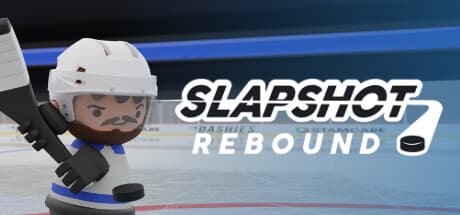
Slapshot: Rebound – Fast-Paced 3v3 Physics Hockey is a multiplayer sports game built around direct control rather than automated assistance. Matchmaking uses 3v3 games and accepts solo players, duos, or full trios.
Custom games support up to 12 participants, making the game suitable for organized competition as well as larger friend-group sessions.
Game Overview
A typical match revolves around winning the puck, moving it between teammates, pulling defenders out of position, and creating a shot. There is no conventional shoot button or puck glue to complete those actions for you.
Your movement, stick position, momentum, and angle of contact determine where the puck goes.
Scoring therefore involves more than reaching the goal area and pressing a button. New players may miss the puck, send it in the wrong direction, or skate past it with too much momentum.
The benefit is that improved control directly translates into cleaner passes and shots, so mechanical progress is easy to recognize.
Oddshot Games developed and published the title, which was released on April 11, 2024. Its monetization emphasizes cosmetic customization and rewards earned through play and events instead of selling a gameplay advantage.
That distinction matters for players who want matches decided by execution and coordination.
How Physics Shapes Every Match
Because the puck does not automatically attach to a player, possession is always vulnerable. An opponent can knock it loose, and an awkward touch near the boards can turn a controlled play into a scramble.
The relationship between player, stick, and puck is not merely visual; it determines the result of each interaction.
On offense, carrying the puck alone is often less effective than passing when a defender commits. A teammate can create a safe outlet by staying wide or slightly behind the puck carrier instead of joining the same chase.
On defense, players need to consider passing lanes and the route to goal rather than focusing exclusively on the puck.
Limited automation also makes the gap between beginners and experienced players visible. With practice, however, bank plays, quick returns, and passes against an opponent's movement become repeatable skills rather than lucky outcomes.
The competition is built around fundamentals, not spectacular special abilities.
Solo Queue Versus Playing With Friends
Solo players must quickly interpret how unfamiliar teammates move. If everyone attacks at once, the team leaves its own end exposed, so holding a supporting position can be more valuable than chasing another shot.
Roles should remain flexible because possession can change without warning.
A duo or trio can communicate about passing options and defensive coverage. A full group of three can maintain a loose structure with a forward player, a support option, and a deeper defender, then measure whether its coordination is improving.
Overly rigid roles are still risky because unexpected rebounds demand immediate adaptation.
Custom games for up to 12 players offer an option for community events and crowded friend-group matches. Depending on the chosen setup, these games may become more chaotic than standard 3v3 competition.
Players who primarily want to develop small-team coordination should begin with the normal team size.
What to Practice First
Beginners will usually gain more from reliable puck contact than from repeatedly attempting powerful shots. Try to move toward the puck's future path and place the stick where it will arrive instead of following directly behind it.
Even a gentle touch has value when it reaches a teammate.
The next priority is reacting after possession is lost. If every player rushes toward the turnover, one pass can remove the entire team from the play.
A more stable response is for the nearest player to apply pressure while the others protect the center and goal side.
System Requirements in Context
The listed minimum configuration requires 64-bit Windows 10, an Intel i5 or better, a GTX 760 or R9 270 or better, 4 GB of RAM, 2 GB of available storage, and DirectX 11. The small storage requirement should make installation manageable on most gaming systems.
However, the CPU requirement does not name a generation, so the words “Intel i5” alone cannot establish performance.
The minimum GPUs are older midrange models, which suggests that many newer gaming PCs should clear the basic launch requirement. Minimum specifications do not guarantee a stable target frame rate, though.
No recommended configuration is present in the supplied data, so there is not enough evidence to promise high-resolution or high-refresh-rate performance.
Consistent frame delivery and responsive input matter more than elaborate visuals in this type of competitive game. If performance is uneven, lowering resolution or graphics settings and closing background applications are sensible first steps.
Before installing, confirm that the system is 64-bit, supports DirectX 11, and has at least 2 GB of free space.
Reception and Review Pattern
Slapshot: Rebound has maintained broadly positive user sentiment over time. Since reception can change, consult the article's live rating panel or the current store display for the latest status.
Enjoyment largely depends on whether learning manual physics controls and completing coordinated team plays feels rewarding to you.
The limited assistance is also the clearest source of friction. Early sessions can involve missed shots, lost possession, and difficulty matching experienced players' pace.
This is central to the design rather than a temporary side issue, making the game better suited to players willing to examine mistakes and practice than to those expecting immediate mastery.
Who Should Play It
The game suits hockey fans, but knowledge of the sport is not the only reason to try it. Players who enjoy competitive games decided by precise input, positioning, and teamwork are also a strong match.
It works particularly well for anyone who prefers personal skill over stronger equipment or character statistics.
It is also a compelling option for a regular group that wants to develop coordinated play. In 3v3, an individual decision has a visible effect, while communication and better rotations can produce clear improvements.
Support for custom games with up to 12 players also gives larger groups a way to organize private sessions.
Caveats and Who May Not Enjoy It
Players seeking team management, athlete development, licensed-league simulation, or a long single-player campaign should set different expectations. The central experience is real-time multiplayer competition governed by physics.
Anyone mainly interested in solo progression or matches against computer-controlled opponents should verify that the available modes fit their needs.
The game can also feel unforgiving to players who want strong aiming or movement assistance. Team reliance means that solo matchmaking may sometimes produce coordination problems.
It is easier to enjoy when you can evaluate your own positioning and approach to the puck instead of treating every loss as a teammate's fault.
The supplied data does not confirm Japanese-language support. Players who require Japanese text should check the current language listing before installation.
Owners of older PCs should also avoid relying on the vague CPU label alone and verify real-world compatibility where possible.