Overview
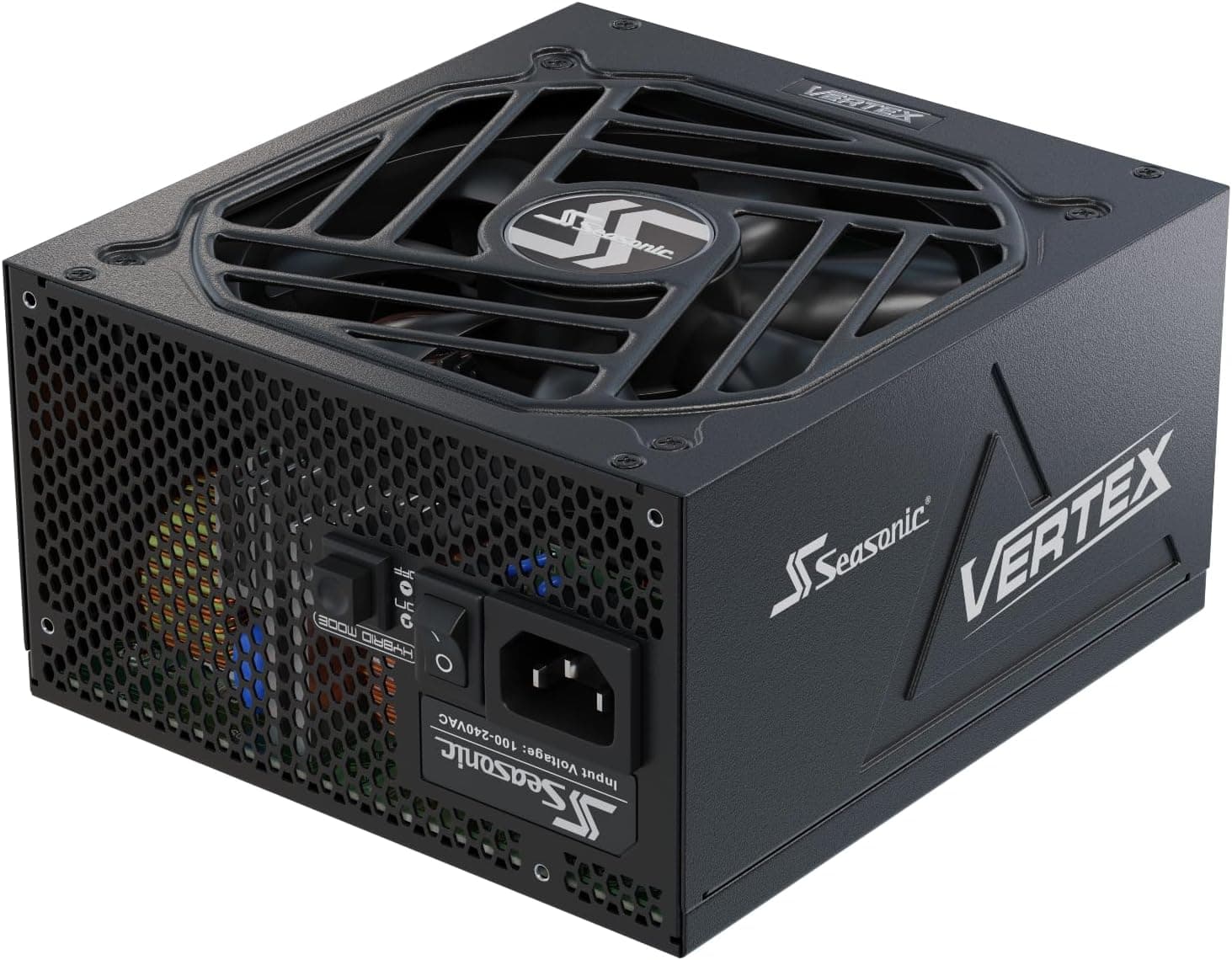
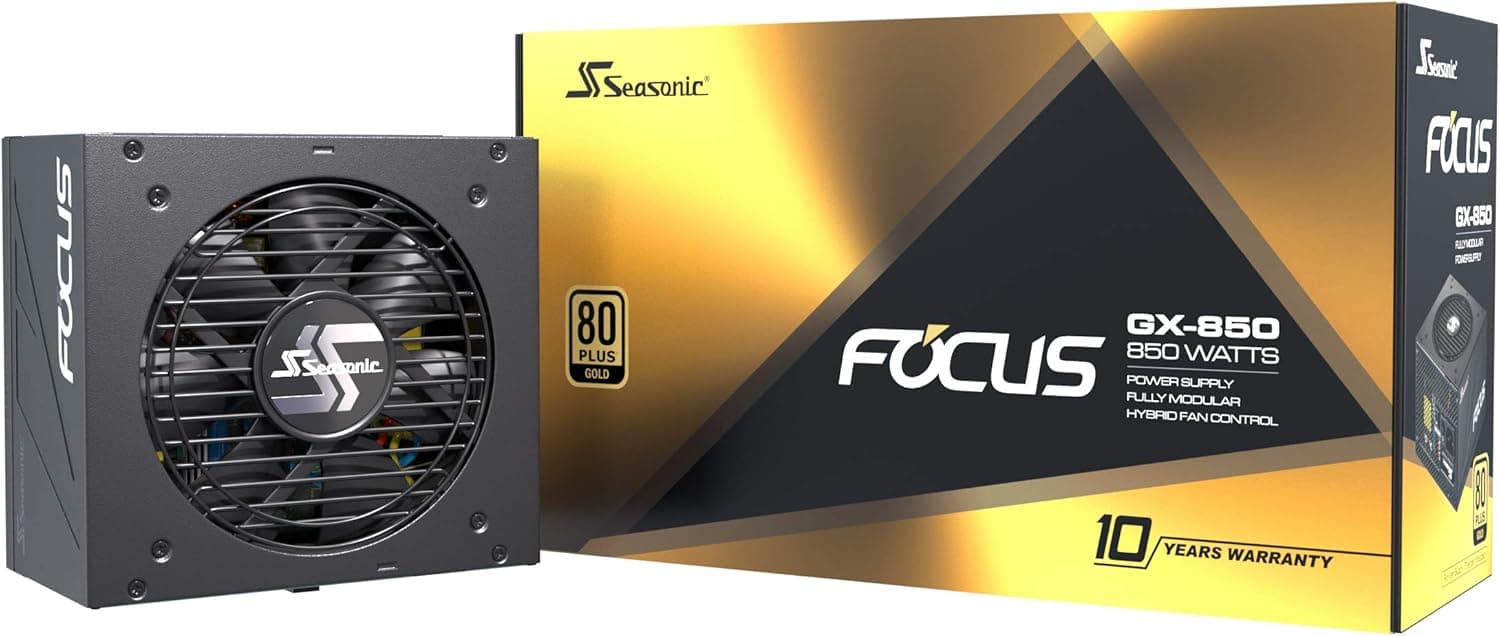
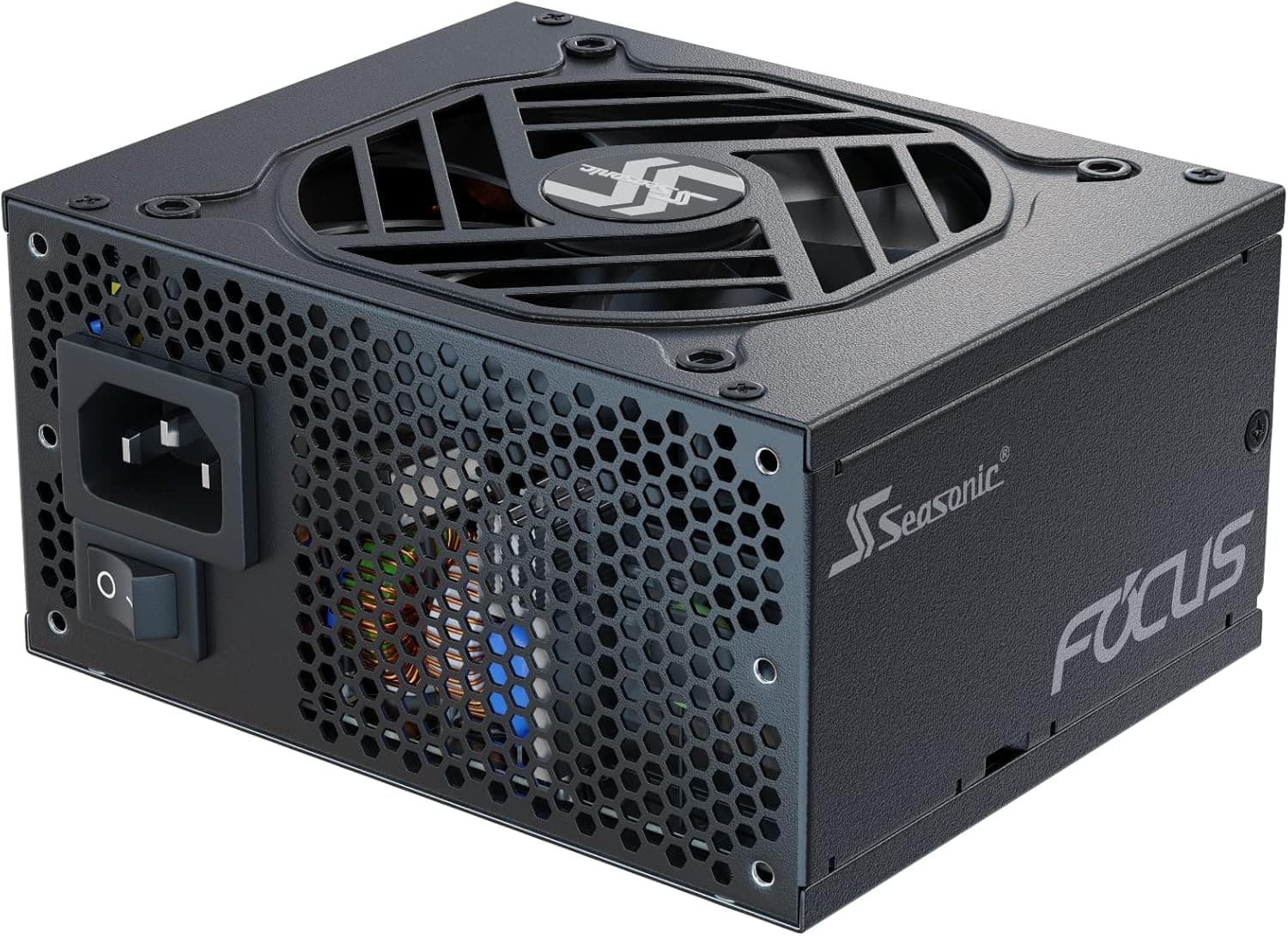
The unit sold as Seasonic FOCUS-SPX-650 unité d'alimentation d'énergie 650 W 20+4ピン ATX ノワール is a 650W PC power supply with 80PLUS GOLD certification. The French wording in the listing name (unité d'alimentation d'énergie means power supply unit, noir means black) is simply export packaging text that ended up registered as the product name; the product itself is the 650W member of Seasonic's FOCUS line.
The short version: 650W lines up neatly with an RTX 4060 Ti to RTX 4070 class GPU paired with a Core i5 or Ryzen 5 to 7, and you buy this unit for quiet operation and build quality rather than for headline specs.
What it does not have is ATX 3.0 / PCIe 5.0 compliance.
Units at the same price point now ship with ATX 3.1 and a native 12V-2x6 cable, so it is worth deciding explicitly why this one, before buying.
The Amazon.co.Check the retailer's page for the latest user reviews.
Weigh the spec-sheet inconsistencies described below more heavily than the star count.
Compatibility Guide
The cable set is documented as follows. Bundled cable counts can vary by batch and sales channel, so confirm against the box contents list.
| Rail | Count / type | Typical use |
|---|---|---|
| ATX main | 20+4 pin x1 | Motherboard |
| CPU (EPS12V) | 4+4 pin x1 | CPU power |
| PCIe | 6+2 pin x2 | Graphics card |
| SATA | 4 cables | SSD/HDD, AIO pump |
| Peripheral (Molex) | 3 cables | Fan controllers, etc. |
The easy thing to miss is that there is only one EPS12V connector. Mainstream B760 and B650 boards are happy with a single 8-pin, but higher-end Z790 and X670E boards expose 8+4 or 8+8 and leave VRM delivery thinner when one header is empty.
Most boards will boot on one cable, but if you plan to raise power limits as a daily setting, choose a supply with two EPS12V rails. Likewise, two 6+2 pin PCIe connectors mean any card demanding three auxiliary plugs is out of scope.
Physical size deserves a check of its own. The word ATX in the name and spec sheet also describes the 20+4 pin main connector standard, and does not by itself guarantee an ATX-sized chassis.
In Seasonic naming, SGX and SPX suffixes have historically belonged to the compact SFX-L family, and an ATX unit (150mm wide, 86mm tall as the reference) mounts differently from SFX-L (roughly 125mm x 63.5mm).
The original product description also mentions a depth of around 140mm, which would be short for an ATX unit. If your case has an ATX bay, an SFX-L unit needs an adapter bracket, so verify the stated dimensions and product photos before ordering.
There is no 12VHPWR / 12V-2x6 connector. RTX 40-series and newer cards need an 8-pin adapter, which usually ships in the graphics card box rather than with the PSU.
When you use one, feed it from two separate PCIe cables and seat the connector fully. Partially seated connectors are exactly where this connector generation has caused heat problems in the field.
How to Size 650W
Whether 650W is enough comes down to adding rough GPU and CPU peaks and leaving about 100W of margin. The figures below are approximations and shift with silicon variance, overclocking, and power limits.
| Example build | Approx. system peak | Verdict at 650W |
|---|---|---|
| RTX 4060 Ti + Ryzen 5 | ~350W | Comfortable; most efficient band |
| RTX 4070 / 4070 SUPER + Core i5 | ~450W | Ideal; the target use case |
| RTX 4070 Ti SUPER + Core i7 | ~550W | Works, but thin. 750W advised |
| RTX 4080 / RX 7900 XT and up | 600W+ | Not enough capacity |
80PLUS GOLD asks for roughly 87% / 90% / 87% efficiency at 20% / 50% / 100% load. Peak efficiency sits near 50% load, meaning about 300 to 350W on this unit, which is precisely where the RTX 4070 plus Core i5 build lands.
On noise, the fan stops below 180W in semi-fanless operation. Browsing and video playback are genuinely silent, but that also means heat leaves by convection alone during those periods, so avoid blocking the intake vent in a tightly sealed PSU shroud.
Product Info
Check the retailer's page for the latest price.co.jp as of 20 May 2026.
Prices move often with sales, currency, and grey-import stock, so check the product page for the current figure. Note that the collected data lists an Amazon US entry pointing at the same Japanese page with the same yen price, so it is effectively one listing.
The marketplace (eBay) entry carries a figure an order of magnitude away from normal pricing for a 650W supply, so this article treats it as a collection error and does not quote it.
| Item | Detail |
|---|---|
| Manufacturer | Seasonic |
| Rated power | 650W |
| 80PLUS certification | GOLD |
| Form factor | ATX (verify; see above) |
| Modular type | Fully modular (spec sheet also lists Semi) |
| Fan size | 120mm |
| Protections | OVP / UVP / SCP / OPP / OTP |
| Warranty | 7 years (verify) |
The modular entry is the odd one. The collected specs contain both fully modular and a cable-attachment value of Semi, and those contradict each other.
Fully modular means every cable including the 24-pin detaches; semi-modular means the 24-pin and CPU cables are fixed, which changes both routing freedom and case clearance. If cable management is your reason for picking this unit, check the product photos for a 24-pin socket on the PSU body first.
The protection suite (OVP / UVP / SCP / OPP / OTP) is complete for a unit in this class.
How It Compares
At this budget in 2026, the real comparison is not 650W Gold from the pre-ATX 3.0 era but 750W Gold with ATX 3.1.
Moving to 750W absorbs an RTX 4070 Ti SUPER class card comfortably, and an ATX 3.1 unit provides a native 12V-2x6 cable, removing the adapter contact question entirely.
We cover several 750W options in the same price range, including the MSI MAG A750BN PCIE5 III, the ASRock PRO 750G, and the Silverstone DA750 Gold.
The case for the Seasonic FOCUS-SPX-650 rests on build quality, the seven-year warranty term (verify), and the short chassis depth. In builds where the enclosure only accepts an SFX-L sized unit, physical fit outranks standards generation because the option list is short to begin with.
In a conventional mid-tower with room to spare, a 750W ATX 3.1 unit is the better long-term purchase.
Recommended Users
- Builders locking in an RTX 4060 Ti to 4070 class system: a 300 to 400W typical draw sits in this unit's efficiency sweet spot, balancing capacity, noise, and heat.
- Silence-first builders: the fan stops below 180W, so light workloads produce no PSU noise at all. Combined with zero-fan GPU modes, idle is close to silent.
- Small-form-factor builders: the short body frees up routing space, provided the mounting standard (ATX bay vs SFX-L bay) matches your case.
- Buyers who value warranty length: seven years (verify) is long for a PSU and suits multi-year continuous use.
It is a poor fit for 4K high-refresh ambitions with a high-end GPU, or for anyone planning a GPU upgrade within two years. In those cases a 750W or larger ATX 3.1 unit costs less overall.
Before You Buy
The main compromise is the lack of ATX 3.0 support.
ATX 3.0 and later explicitly require a supply to ride out transient spikes where a GPU briefly pulls close to twice its rated draw; earlier designs leave more room for the protection circuit to read that as overcurrent and shut down.
The risk only becomes real when the GPU is oversized for the supply, so staying inside the sizing table above keeps you clear. Pushed to the edge of 650W, however, the failure mode is the hardest kind to diagnose: benchmarks pass, and the machine drops only during actual gameplay.
The price also deserves an honest note. At ¥38,564 as of 20 May 2026, this is not cheap for 650W Gold.
Low-volume grey imports and end-of-life stock often carry prices out of step with their specs. The same money buys a 750W ATX 3.1 unit, so unless the Seasonic name or the chassis size is a firm requirement, line up the alternatives before committing.
Never reuse modular cables from another supply. Even when the PSU-side connector fits, pin assignments differ between makers and series, and using the wrong cable can destroy drives or a motherboard.
When replacing an older unit, use only the cables that came in this box and bag the old ones separately so they cannot get mixed in.
Finally, treat the listing data itself with care. This product is registered under a French-and-Japanese mixed name, and the spec sheet carries both fully modular and Semi, while the form factor value cannot be distinguished between connector standard and chassis size.
Store listings do contain errors, so confirm the target product against the model number, the product images, and the stated dimensions before ordering.
FAQ
Q. Is 650W enough for an RTX 4070? A.
Yes, with a Core i5 or Ryzen 5 to 7. System peak lands around 450W, inside the unit's best efficiency band.
Since there is no 12V-2x6 connector, use the adapter supplied with the card and feed it from two separate PCIe cables.
Q. I plan to move to an RTX 4080 or RX 7900 XTX later. A.
Then this is too small. Buy 750W or more from the start, ideally ATX 3.1 with a native 12V-2x6 cable.
Replacing the PSU later costs you both money and a full rebuild.
Q. Is it really silent? A.
The fan stops below 180W, so light workloads are silent. Under gaming load the fan spins up.
Expect silence during light use, not always.
Q. Will it fit a Mini-ITX case? A.
That depends on the PSU standard your case accepts. An SFX-class unit needs a bracket in an ATX bay, and an ATX unit will not fit an SFX bay at all.
Because ATX in the name also refers to the connector standard, check width, height, and depth as numbers before deciding.
Q. How do I claim the warranty? A.
The term is listed as 7 years (verify), but the process depends on where you bought it. Units sold through an official distributor go through that distributor, while grey imports usually go to the maker or the shop, and both need proof of purchase.
Keep the order record until the term expires.