Game Overview
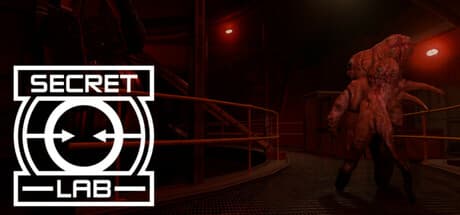
SCP: Secret Laboratory - Survive the Containment Breach is a first-person multiplayer horror game set during a catastrophic failure at an SCP Foundation facility. Rather than simply running from monsters, players search for access cards and equipment, move between secured zones, and pursue objectives tied to their assigned faction.
A round can place players in roles such as D-Class personnel, Foundation staff, Chaos Insurgency operatives, or hostile SCP subjects. Even human characters do not always share the same goal.
Deciding whether to trust a stranger, exchange information, follow a group, or retreat can be as important as shooting accurately.
Roles and Systems
The central structure is asymmetrical and round-based. D-Class personnel initially seek a route out, Foundation-aligned roles work to restore control, and SCP players hunt or disrupt the human factions.
Reinforcements and changing circumstances can alter the balance during a match, so an early advantage does not guarantee the outcome.
Facility knowledge matters as much as combat. Doors require different access permissions, and a powerful weapon will not help much if the player lacks the keycard needed to leave a sealed section.
Beginners benefit from learning routes, recognizing announcements and dangerous sounds, and checking escape options before committing to a fight.
Conversation is another major system, even when it is not presented as a conventional menu or ability. Temporary alliances, false claims, warnings, and sudden betrayals create much of the tension and comedy.
This is less about executing one rehearsed cooperative plan and more about reacting to unpredictable people in each round.
Beginner Priorities
During the first few matches, following a group can make it easier to learn routes and observe how equipment works. A large group is also noisy and vulnerable when trapped in a corridor, however.
Keep track of nearby doors and avoid joining a crowd with no clear exit.
Finding a firearm does not mean every SCP should be challenged directly. When the enemy's abilities and the strength of nearby allies are unclear, closing doors, creating distance, redirecting the threat, and passing information to teammates may be safer.
Early deaths are part of learning, so building map and role knowledge is more useful than judging the game by one result.
System Requirements
The listed minimum requires 64-bit Windows 10 21H1 or later, or Windows 11. It calls for an Intel Core i5-6600 or equivalent CPU with 4 threads and x86-64-v2 support, plus 4 GB of RAM.
The GPU baseline is a GeForce GTX 1050 Ti or equivalent with 4 GB of VRAM, and Intel integrated graphics are not supported.
The game also requires 8 GB of available storage and DirectX 11. DirectX 12 and Vulkan are optionally supported.
Storage and system-memory requirements appear modest, but the dedicated-GPU requirement is important: an office laptop relying only on Intel integrated graphics does not meet the stated baseline.
No recommended specification is included in the supplied data, so a precise configuration for high frame rates cannot be claimed. Players seeking steadier performance during crowded encounters should leave headroom above the minimum CPU, GPU, and memory requirements, then adjust graphical settings gradually.
Reception and Player Experience
The game has maintained strong player reception over a long period. Its lasting appeal comes from combinations of roles, social interaction, and unexpected reversals that make exact repetition unlikely.
Knowledge of SCP lore adds context, but it is not required to understand the immediate goals of escaping, containing threats, or hunting opposing factions.
The experience can vary substantially between servers. Some communities may favor role-play, others efficient competition, and others casual conversation and jokes.
A poor first session may reflect a server's rules or culture rather than the whole game, so trying a different community can materially change the experience.
Who Should Play
It is a strong fit for SCP fans, players who enjoy asymmetrical horror, and groups comfortable with improvised voice interaction. People who treat accidents, misinformation, and unexpected defeats as part of the story will get more from it than those seeking identical competitive conditions every round.
Joining with friends can improve information sharing, but friends may not always receive the same role or faction. Groups that enjoy adapting when former allies become opponents are particularly well suited to its structure.
Caveats and Who Should Skip It
Players wanting a tightly authored solo horror story may not find what they expect. The original article data mentions both single-player and multiplayer modes, but the described core experience depends on multiple people filling opposing roles in round-based sessions.
Anyone planning to play alone should verify the currently available modes on Steam before installing.
Voice communication and spontaneous negotiation contribute heavily to the game. Players who want to avoid interacting with strangers may miss information and much of the emergent humor.
Early elimination, uneven knowledge, and chaotic encounters can also frustrate anyone who expects every match to be predictable and competitively symmetrical.
The supplied language list includes English, Korean, Simplified and Traditional Chinese, and several European languages, but it does not list Japanese. Players who require Japanese text should confirm current language support on the product page.
The game was released on December 29, 2017, and its live online environment means features, language options, and available servers may change over time.