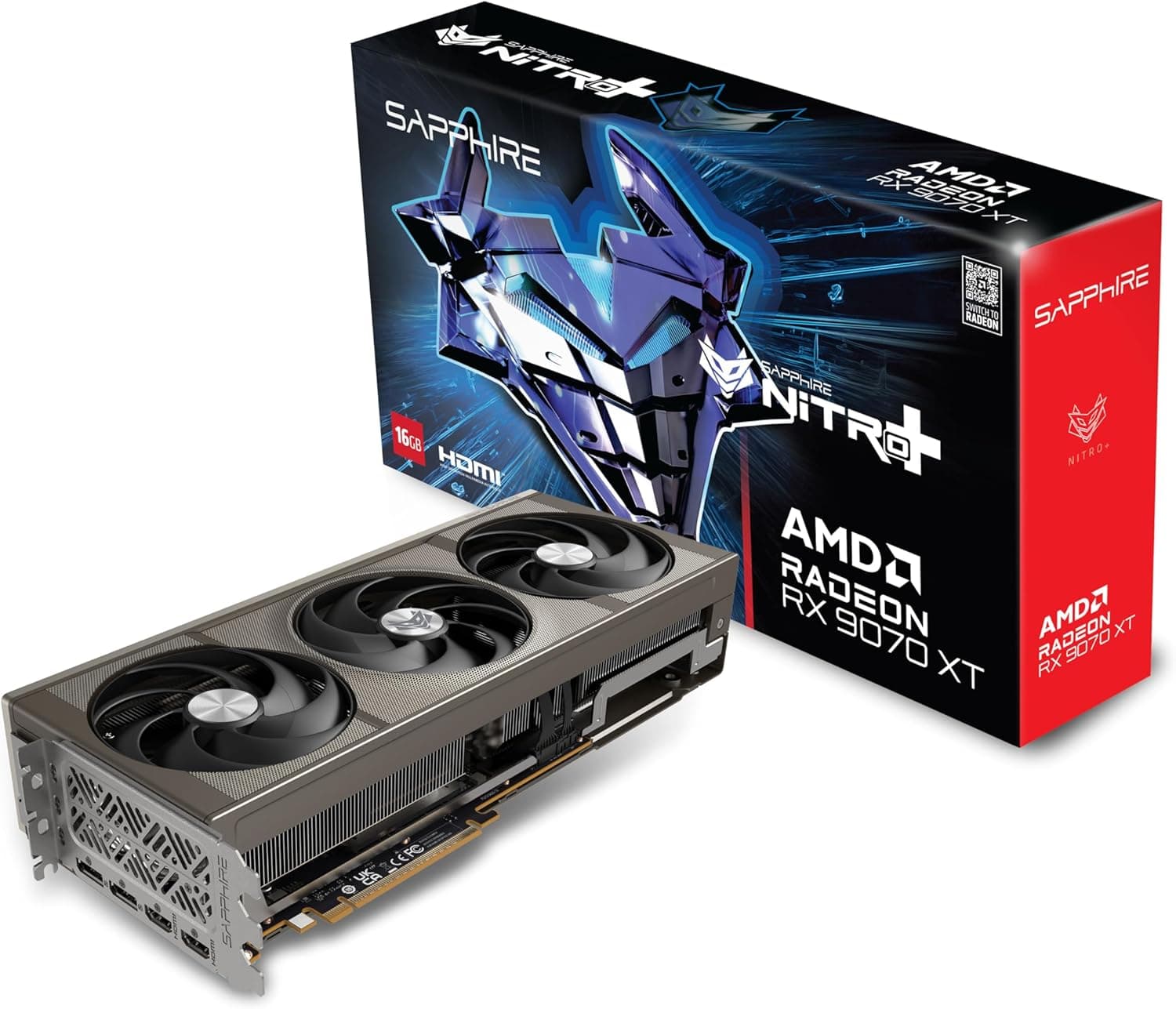
This article covers Sapphire 11348-01-20G Nitro+ AMD Radeon™ RX 9070 XT Gaming OCグラフィックスカード 16GB GDDR6 AMD RDNA 4.
Overview
The Sapphire 11348-01-20G NITRO+ AMD Radeon RX 9070 XT Gaming OC is a premium graphics card built around the RDNA 4 architecture. It packs 16GB of GDDR6 memory on a 256-bit bus and boasts a boost clock of 3060 MHz — one of the highest for this GPU chip. Equipped with two HDMI 2.1b and two DisplayPort 2.1 outputs, it supports multi-monitor setups and high refresh rates up to 4K and beyond. Positioned in the upper-midrange to high-end segment, this card directly competes with NVIDIA’s RTX 4070 Ti SUPER and RTX 4080. The NITRO+ series is known for its robust triple-fan cooler, which keeps temperatures in check even during extended gaming sessions. With a 16GB frame buffer and 640 GB/s memory bandwidth, it is well-suited for 4K gaming and content creation.
Compatibility Guide
The card uses a PCI-Express x16 interface (PCIe 4.0 recommended). It is physically large — over 300mm long and a triple-slot design — so check your case clearance carefully. A 750W or higher PSU is advised, with two 8-pin PCIe power connectors required (most modern ATX power supplies include these). The card does not use the 12VHPWR connector, so adapters are not needed.
Product Info
Launched in March 2025, this card retails for around ¥145,000 (≈$950 USD) as of June 2026. Sapphire provides a 2-year warranty in most regions. The NITRO+ sits at the high-end tier: it offers factory overclocking out of the box and a premium cooling solution that competes with other aftermarket flagships. Key specs include: Boost clock 3060 MHz, 16GB GDDR6, 256-bit memory bus, and 640 GB/s memory bandwidth. While AMD does not officially disclose CUDA-equivalent core counts, the RX 9070 XT delivers competitive rasterization performance in this price range.
Best Use Cases
- 4K gaming enthusiasts: The 16GB VRAM and high bandwidth ensure smooth textures at 4K with high settings, especially in titles like Cyberpunk 2077 or Horizon Forbidden West. The boost clock of 3060 MHz helps maintain high frame rates. - Long-session gamers: The triple-fan cooler runs quietly under load, making it ideal for marathon gaming or VR sessions where thermal throttling would be a concern. - Content creators: RDNA 4’s AV1 encoder and DisplayPort 2.1 output allow for high-res video editing and fast exports. The large memory buffer is beneficial for 8K timeline playback. ## Alternatives
Primary rival: ASUS TUF Gaming RTX 4070 Ti SUPER OC 16GB (~¥145,000). The NVIDIA card excels in ray tracing and offers DLSS 3 frame generation, while the Sapphire RX 9070 XT wins in pure raster performance and memory bandwidth (640 vs 560 GB/s). For gamers who prioritize raw FPS in non-ray-traced titles, the Sapphire is the better value. Another option is the PowerColor Hellhound RX 9070 XT, which is often slightly cheaper but has a less elaborate cooling design.
Things to Consider
Be mindful of physical dimensions: the card is over 320mm long and 60mm thick (triple slot). Ensure your case supports these measurements and that your PSU has two free 8-pin cables. The card draws around 300W under load, so adequate case airflow is essential to avoid thermal buildup. If you plan to overclock further, you may need a larger PSU (850W recommended). Also note that AMD’s driver stability has improved, but some legacy games may still perform better with NVIDIA cards. Finally, at ¥145,000, this is a significant investment — consider whether a mid-range card like the RX 7800 XT would meet your needs if 4K gaming is not mandatory.
Product Disclosure (Amazon)
- Manufacturer: SAPPHIRE
- Seller: Amazon US
- Fulfilled by: Amazon US
- ASIN: B0DTHP39JF
- Note: This article covers a manufacturer-made product based on Amazon listing details.