Game Overview
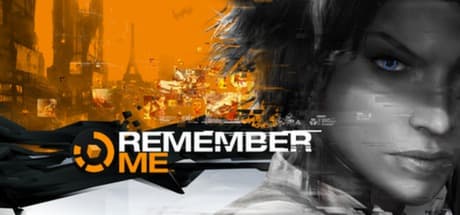
Remember Me: Master Memory Hunting in Neo-Paris is a third-person action-adventure set in Neo-Paris in 2084, where personal memories can be digitized, shared, and sold. Released on June 4, 2013, it was developed by DONTNOD Entertainment and published by Capcom.
You play Nilin, a former elite memory hunter capable of entering minds, stealing memories, and altering what people believe happened. Her own memories have been taken, however, so the story follows her escape from the authorities and her attempt to uncover both her past and the system controlling the memory trade.
The basic loop is structured and story-led: move through a district, traverse environmental obstacles, fight groups of enemies, and use memory-related powers during key scenes. Neo-Paris is not an open world that can be explored in any order.
The game is better suited to players who enjoy deliberately staged chapters than those looking for a city-sized sandbox.
Memory Manipulation as a Playable Idea
The defining mechanic is the Memory Remix. Nilin replays another person's recollection and interferes with selected details, changing how that character remembers an event and what conclusion they draw from it.
These sequences work as cause-and-effect puzzles: the player searches for elements that can be altered, tests combinations, and observes how the reconstructed event changes.
What makes the system memorable is that it is not merely a supernatural key for opening doors. Nilin advances her mission by changing another person's perceived reality, giving the mechanic an uneasy ethical dimension.
The story's themes of memory, identity, and technological control are therefore expressed through player interaction rather than exposition alone.
Memory Remixes do not offer unlimited solutions or appear in every chapter. They take place within authored scenes and generally ask the player to work toward an intended outcome.
Anyone expecting a large detective sandbox or a heavily branching narrative may find them limited in scope; their value lies in how each sequence reinforces the story.
Building Combos for Different Jobs
Combat uses chained punches and kicks, but its most distinctive feature is the Combo Lab. Moves assigned to a combo can serve different purposes, including increasing damage, restoring health, or helping Nilin regain access to special abilities sooner.
Rearranging those effects lets a familiar input sequence solve a different combat problem.
A recovery-focused chain can stabilize a difficult encounter, while a damage-oriented chain helps remove a dangerous target quickly. Cooldown-related effects become useful when a special power is central to controlling a crowd.
When several enemies surround Nilin, positioning and timely evasion usually matter more than stubbornly completing the longest available chain.
This is not a system for inventing entirely new animations or fighting styles. It places functional effects into predefined combo structures, so its flexibility has clear boundaries.
Combat can become repetitive across enemy-heavy stretches, but changing a combo's purpose gives it more tactical texture than simple button mashing.
Exploring Neo-Paris
Neo-Paris combines recognizable historic architecture with pervasive advertising, surveillance, and infrastructure built around the memory economy. The contrast between prosperous spaces and neglected districts shows that the benefits of this technology are not distributed evenly.
Its identity comes from extending Paris into a controlled future, rather than treating neon signs as a substitute for world-building.
Traversal includes climbing, ledges, and guided platforming between encounters. Routes are generally clear, and exploration does not radically alter the larger story.
The emphasis is on scenery, dialogue, and cinematic pacing rather than extensive side quests or discovering a personal route across the city.
PC Requirements and Practical Expectations
The listed minimum calls for an Intel Core 2 Duo at 2.4GHz or an AMD Athlon X2 at 2.8GHz, a GeForce 8800 GTS or Radeon HD 3850, 2GB of RAM, and 9GB of storage.
The original-style recommended listing names an Intel Core Quad at 2.7GHz or AMD Phenom II X4 at 3GHz, a GeForce GTX 560, 4GB of RAM, and the same 9GB of storage.
By the standards of current large releases, both the memory demand and installation size are modest.
There is an important data caveat. The supplied recommended field also appends a Core i7-9700 or Ryzen 7 2700 and a GeForce RTX 2070 SUPER or Radeon RX Vega, alongside Windows 11, using slash-separated text.
It is unclear whether these are intended as formal requirements or whether newer compatibility-test data has been merged with the original recommendation, so verify the current store listing before buying.
The minimum and recommended OS text still mentions Windows Vista, XP, 7, and 8. That reflects the game's original PC era and does not by itself guarantee trouble-free behavior on every modern system.
Raw performance may be more than sufficient while launch, display-mode, or input compatibility still needs attention; starting with standard settings and adjusting resolution or display mode is a sensible first check.
Reception and Common Points of Debate
Players commonly value the art direction, the concept of a commercial memory economy, the music, and the idea behind the Memory Remix sequences. The game also stands apart from gun-focused cyberpunk stories by making personal experience and identity the contested resources.
Its setting remains a strong reason to revisit it long after release.
Criticism tends to focus on linear progression, constrained traversal, repetition in regular combat, and the limited use of its most original mechanic. This is not a sandbox in which memories can be rewritten whenever the player chooses.
It is a directed adventure with a handful of carefully placed signature sequences, and that distinction matters when setting expectations.
Who Should Play It
Remember Me suits players who want a focused single-player cyberpunk story supported by melee combat. It is particularly appealing if questions about privacy, identity, and ownership of personal data are as interesting to you as defeating enemies.
Players who prefer chapters with controlled pacing over enormous maps and long lists of side activities may also appreciate its structure.
The Combo Lab offers an additional hook for anyone who likes adapting a build to immediate needs. It is not deep character construction in the role-playing sense, but choosing between recovery, damage, and ability support makes combat preparation meaningful.
Limitations and Who May Not Enjoy It
Players seeking free exploration, multiple routes through every mission, or numerous choices that reshape the plot should look elsewhere. Much of the platforming and combat follows authored paths, and Neo-Paris cannot be toured like an open-world city.
Memory manipulation also occupies only part of the experience, with conventional traversal and fighting accounting for substantial stretches.
The supplied metadata mentions multiplayer, but the described core experience is a single-player story centered on Nilin. Do not buy it specifically for cooperative or competitive play without checking the current store feature list.
Because the supplied recommended specifications also combine hardware from very different eras, confirm both the current feature labels and system requirements on the product page.