Game Overview
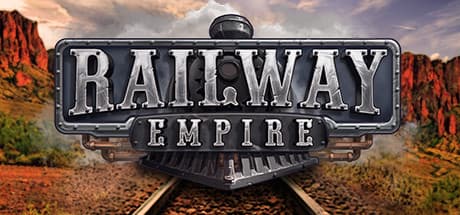
Railway Empire: Build Your North American Rail Network is a management simulation set in the United States from the 1830s onward. You connect tracks, stations, trains, and industries, then turn those links into a railway company that can survive competition and expand toward the 20th century.
The core loop is practical rather than decorative: identify where goods are produced, study where they are needed, place stations, build track, and assign trains to profitable routes. Successful deliveries help cities and industries grow, creating new demand and forcing you to reinforce old lines or enter new regions.
Rival companies make land, capital, and timing part of every expansion decision.
The game was released on January 26, 2018. It was developed by Gaming Minds Studios and published by Kalypso Media.
Its historical progression gives you reasons to keep revising the company instead of treating the first working network as the finished product.
How the Railway System Fits Together
The game includes more than 40 detailed train models, but collecting locomotives is not the whole objective. Route length, cargo type, station congestion, and traffic on shared track all affect whether a service is useful.
Choosing where each train belongs matters more than simply placing additional vehicles on the map.
Stations, factories, and tourist attractions are also parts of the economic system. A direct line between two promising cities may help, but a route becomes more purposeful when it carries raw materials to an industry and finished goods onward to consumers.
Building a compact source of income before extending trunk lines and branches makes the network easier to understand and finance.
Rival companies add pressure to otherwise efficient plans. You can compete early for attractive cities and industries or establish a steadier base in less contested territory.
Railway Empire is therefore better suited to players who want logistics and commercial competition than to those seeking only a relaxed model-railway display.
Early-Game Priorities
Give each early route a clear job. If income is weak, check whether the destination actually needs the cargo, whether production can reach your station, and whether the chosen path is unnecessarily long before buying more trains.
This approach makes it easier to separate a demand problem from a capacity problem.
As traffic grows, congestion can become more important than the simple presence of track. Sending more trains through the same busy segment may increase waiting rather than useful throughput.
Separating the roles of trunk and branch lines, then investing in the sections that are genuinely constrained, supports controlled expansion.
A common strategic trap is building too much in anticipation of future growth. An impressive network cannot support itself when it lacks sufficient passengers or freight.
Establishing a modest revenue flow first and reinvesting as demand changes is the safer way to develop the company.
System Requirements
The minimum specification lists a 64-bit version of Windows 7 SP1, Windows 8.1, or Windows 10.
It requires an Intel Core i5 750 at 2.6GHz or AMD Phenom II X4 at 3.2GHz, plus a GeForce GTX 460 or Radeon HD 5870.
The GPU must support Shader Model 5.0 and provide 1GB of VRAM; the remaining requirements are 4GB of RAM, 7GB of available storage, and DirectX 11.
The recommended specification raises the CPU target to an Intel Core i5 2400S at 2.5GHz or AMD FX 4100 at 3.6GHz.
It calls for a GeForce GTX 680, Radeon HD 7970, or better, with Shader Model 5.0 support and at least 2GB of VRAM.
It also raises system memory to 8GB while retaining the 7GB storage and DirectX 11 requirements.
These parts belong to older hardware generations, but the minimum specification should still be treated as a floor rather than a promise of comfortable performance in a large network. Use the recommended specification as the more sensible reference if you expect to manage many trains and routes.Check the review panel on this page or the Steam listing for the latest user review trend.
Reception and Player Expectations
Railway Empire has maintained a broadly positive reception over time. Its appeal comes from treating demand, industry, train operations, and rival companies as connected management problems rather than presenting track building in isolation.
The same structure can create friction for players who do not enjoy diagnosing inefficient systems. You need to determine what should be transported, locate bottlenecks, and revise routes when the network stops producing the intended result.
Players who enjoy watching economic relationships change are more likely to appreciate it than those primarily interested in unrestricted scenery design. Check the current Steam feedback panel for the latest community assessment.
Multiplayer and Steam Features
The game supports multiplayer, adding an option for players who want company management in an environment involving other people. Solo play remains suitable for learning the economic and routing systems at a personal pace.
Available modes and participation requirements should be checked in the current game interface before arranging a session.
Steam Achievements, Steam Trading Cards, and Steam Workshop support are also included. Achievements provide additional goals, while Workshop content can offer ways to explore beyond the standard setup.
These features give players reasons to continue after learning the basic campaign structure.
Who Should Play It
This is a strong fit for players who like designing supply chains, reinvesting earnings, and improving a business through repeated observation. Railway enthusiasm helps, but patience with logistics is more important.
The game rewards players willing to inspect a stalled or unprofitable line and correct the underlying cause.
It also suits those interested in 19th-century North American industry and territorial competition between companies. Consider it if you want a management game focused more tightly on transportation than a city builder, or an economic simulation that approaches production differently from a first-person factory game.
Limitations and Who May Not Enjoy It
Players expecting a pure sandbox for drawing tracks and watching trains may find the demand, revenue, and competition systems intrusive. Diagnosing several routes at once is part of the play rather than an occasional interruption.
It may also feel slow to anyone who wants immediate spectacle or dislikes revising plans after economic conditions change.
Both published requirement tiers specify 64-bit Windows. Do not assume support for macOS, Linux, or any other unlisted environment without checking the current product information.
Players choosing the game mainly for multiplayer or Workshop content should likewise confirm the present availability and requirements of those features.