Game Overview
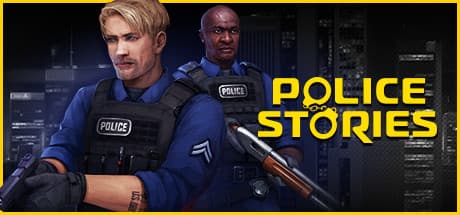
Police Stories: Tactical Top-Down Shooter Action follows police operatives John Rimes and Rick Jones as they enter dangerous crime scenes. Missions include infiltrating gang hideouts, rescuing civilians, arresting suspects, and defusing bombs.
Released on September 19, 2019, the game supports both single-player and online co-op.
The core loop involves assessing each scene, watching for civilians and threats, and clearing the area one room at a time. The top-down view provides a broad perspective, but entering an unseen space without preparation remains dangerous.
Success depends less on rushing forward and more on deciding where to enter and which problem requires immediate attention.
Tactics Beyond Gunfights
Defeating every suspect is not the only objective. The surrender system permits non-lethal resolutions, requiring players to decide when force is justified and when restraint is the better option.
Because civilians may be present, treating every visible character as a target can undermine the mission.
This design tests target identification and composure alongside aiming skill. Rescue, arrest, infiltration, and bomb-disposal objectives also demand different priorities.
That combination distinguishes Police Stories from shooters built mainly around winning direct firefights.
Single-Player and Online Co-op
Single-player puts the responsibilities of a two-officer operation under one player's control. It offers space to learn the controls and surrender mechanics at a personal pace.
However, monitoring several directions and handling multiple tasks alone can create considerable pressure.
Online co-op allows two players to divide entry routes and responsibilities. One officer can watch the surroundings while the other handles a suspect or civilian, making communication part of the tactical challenge.
Partners who advance independently without discussing timing may struggle against the game's deliberate structure. Clear calls and coordinated movement matter at least as much as accurate shooting.
System Requirements in Practical Terms
The listed minimum hardware includes an Intel Pentium 2.9GHz or equivalent CPU, 2GB of RAM, and a DirectX 9-compatible graphics card with 512MB of memory and Shader Model 3.0 support.
The game requires 400MB of available storage and DirectX 9.0.
These are modest requirements and do not suggest that a dedicated modern gaming system is essential.
Check the review panel on this page or the Steam listing for the latest user review trend.1, which are older than the Windows versions now commonly used.
Anyone installing the game on a current system should check the latest compatibility information and recent player reports first. Minimum specifications also do not guarantee a particular resolution or frame rate, and they say nothing about network stability during co-op.
Reception and Player Expectations
The game is best suited to players who value careful room clearing, non-lethal control, and the tension of distinguishing suspects from civilians. Its mechanics connect police-procedure themes to actual decisions instead of using them only as a setting.
Repeated attempts can encourage players to reconsider their route and the order in which they address threats.
Players seeking uninterrupted combat may find the required restraint limiting. Stopping to identify targets and protect civilians produces a more deliberate rhythm than a conventional arcade shooter.
Since reception can change over time, consult the current rating panel and Steam listing when making a purchase decision.
Who Should Play It
Police Stories is a strong match for fans of tactical games in the vein of SWAT 4, where entry procedure and identification matter more than a high elimination count. It also suits players who enjoy reading a map from above and making quick priority decisions.
Friends looking for a co-op game built around communication and assigned roles can make especially good use of its systems.
Its modest storage and minimum hardware requirements also make it worth considering for less powerful PCs. Support for English, Japanese, Simplified Chinese, and other languages makes it accessible to players who prefer not to rely entirely on untranslated text.
Limitations and Who Should Skip It
This is not an ideal choice for players who expect every encounter to reward immediate shooting. Suspects, civilians, and mission objectives must be distinguished, so anyone who dislikes cautious checking may find the structure frustrating.
Co-op likewise favors partners willing to coordinate rather than two players independently chasing action.
No recommended specification is provided in the supplied data, so the minimum requirements cannot establish performance at a chosen resolution or frame rate. The older operating-system list also deserves attention.
Check the current product page for compatibility and online-feature information before installing the game on a modern PC.