Game Overview
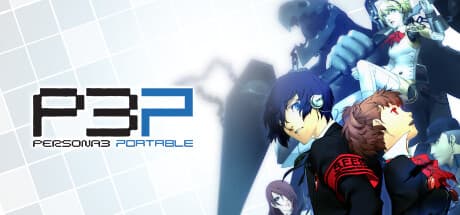
Persona 3 Portable: A Remastered JRPG Classic combines a calendar-based school life with turn-based expeditions into Tartarus. After transferring to Gekkoukan High School, the protagonist discovers the Dark Hour, a hidden period between days when most people become coffins and Shadows roam the city.
Joining the Specialized Extracurricular Execution Squad, the protagonist uses Persona powers to investigate this phenomenon.
During the day, you attend school, improve personal qualities, and spend time with classmates or other residents. At night, you form a party and climb Tartarus, fighting enemies and reaching new checkpoints.
The central challenge is deciding how to divide a limited calendar among relationships, character development, and dungeon progress.
This modern-platform version was released on January 19, 2023. It retains the portable original's interface-driven presentation, so most school and city navigation uses menus and selectable points rather than fully explorable 3D spaces.
Tartarus itself is explored in 3D, creating a clear contrast between efficient visual-novel-style daily scenes and conventional dungeon movement.
Two Protagonist Routes
You can begin as either the male or female protagonist. The central mystery and main dungeon remain broadly shared, but available Social Links, conversations, music, and perspectives differ.
This is more substantial than a cosmetic choice and gives a second playthrough a distinct set of relationships to discover.
The male protagonist provides the route closest to the original version's core experience. The female protagonist is a strong option for players who want different social interactions or another perspective on the same events.
The choice cannot be changed midway through a run, so players interested in particular relationships should choose carefully before starting.
Combat and Persona Building
Battles reward identifying elemental weaknesses. Striking a weakness can create additional opportunities and knocking down every enemy enables an All-Out Attack, so choosing the right skill matters more than relying only on raw damage.
The protagonist can switch between multiple Personas, while each companion has a more defined role; carrying Personas that cover missing elements and support skills makes the party more adaptable.
Personas can be fused into new ones with different strengths, resistances, and inherited abilities. Bonds formed through Social Links also contribute to Persona growth, connecting the school-life decisions to combat preparation.
When a boss becomes difficult, useful adjustments include reviewing resistances, changing inherited skills, and balancing healing or support rather than simply gaining levels.
Tartarus is a long, multi-floor dungeon, and repeated exploration forms a major portion of the game. Reaching the current stopping point early can leave more later dates open for Social Links and personal-stat activities.
Staying too long without adequate recovery or equipment can be inefficient, however, so knowing when to leave is part of the planning.
Early-Game Priorities
It is safer to check Tartarus progress early than to postpone an entire section until a deadline approaches. Against unfamiliar enemies, test different elements and remember weaknesses that produce reliable knockdowns.
Keep Personas with varied roles so the protagonist is not restricted to a single damage type.
Daily activities also require balance. Some relationships need sufficient personal qualities before they can advance, which means spending every available period on immediately accessible Social Links may create obstacles later.
Trying to complete everything on a blind first run can turn the calendar into a checklist, so following the characters that genuinely interest you is often the better introduction.
PC Requirements
The minimum specification lists Windows 10 or later, an Intel Core i3-540 or AMD Phenom II X4 940, and an NVIDIA GeForce GT 730 1GB or AMD Radeon R7 240 1GB. It also requires 4GB RAM, DirectX 11, and 10GB of available storage.
This tier targets low settings at 720p and 60 FPS.
The recommended specification raises the CPU to an Intel Core i5-650 or AMD FX-4100 and the GPU to a GeForce GTX 650 1GB or Radeon HD 5770 1GB. Memory and storage remain 4GB RAM and 10GB, with the target described as high settings at 1080p and 60 FPS.
These are modest discrete-GPU requirements by modern standards, although users relying on integrated graphics should still verify the exact model and driver support.
Leave more than the stated 10GB free so updates and temporary installation data have room.Check the review panel on this page or the Steam listing for the latest user review trend.Check the review panel on this page or the Steam listing for the latest user review trend.
Player Feedback Trends
Players commonly value the somber story, the gradual development of its cast, and the meaningful differences between the two protagonist routes. The link between weakness-focused battles and calendar planning also gives ordinary decisions weight: choosing when to explore affects how much time remains for relationships.
Being able to play this important series entry on a current PC is another practical strength.
The most frequent reservations concern repetition in Tartarus and the portable-style presentation. Much of daily life is shown through portraits, dialogue, and cursor-based navigation, which can feel sparse to someone expecting the freely explorable schools and cities of later Persona games.
This release modernizes access and presentation, but it should not be mistaken for a ground-up 3D remake.
Who Should Play It
It suits players who enjoy calendar management, relationship systems tied to character growth, and turn-based battles built around weaknesses and party roles. Its story is especially effective for those comfortable with serious themes involving mortality and loss.
Players willing to replay a long narrative can also find meaningful value in seeing how the alternate protagonist changes its relationships.
The modest hardware requirements make it approachable without a recent high-end GPU. Success depends more on preparation, skill selection, and scheduling than reflexes.
It is best enjoyed by someone willing to let small daily interactions accumulate instead of rushing only toward major plot scenes.
Caveats and Who Should Skip It
Tartarus may become monotonous for players who need every dungeon floor to introduce a new environment or puzzle. It is also a poor match for anyone seeking real-time action or extensive free-roaming exploration.
Comfort with an interface inherited from a handheld game is one of the most important purchasing considerations.
The narrative addresses dark subjects and takes time to reach its conclusion. Players looking for a short, lightweight RPG may find the commitment excessive, while completionists may dislike missing events because of calendar choices.
Completing every Social Link during an unguided first run can conflict with playing naturally, so some willingness to miss content or replay is helpful.
Do not assume that every edition or later remake of Persona 3 contains the same routes and additional scenarios. Available protagonists and included story content differ between releases.
If a particular mode, language, or extra chapter is essential, verify the listed contents of this specific edition before buying.