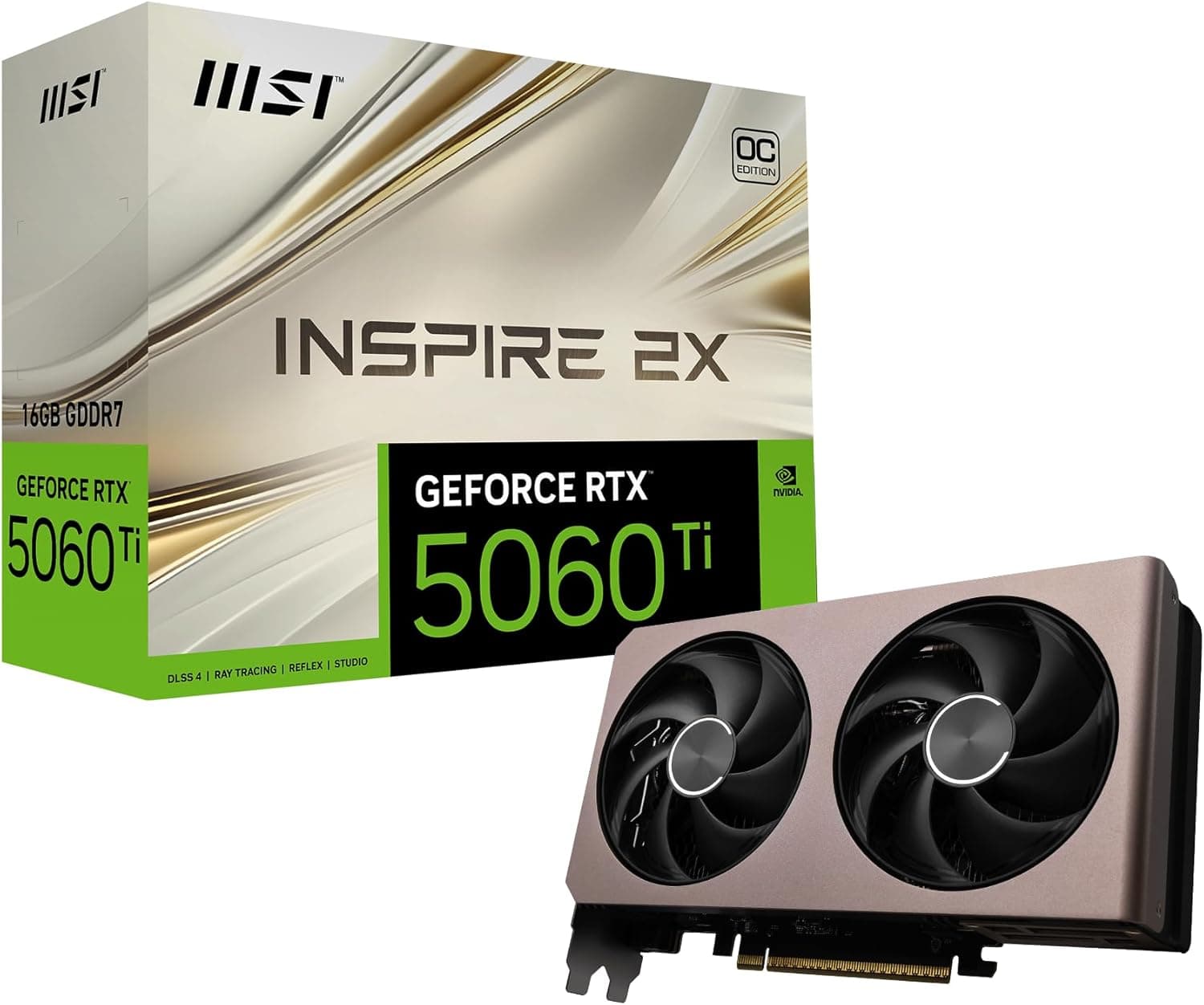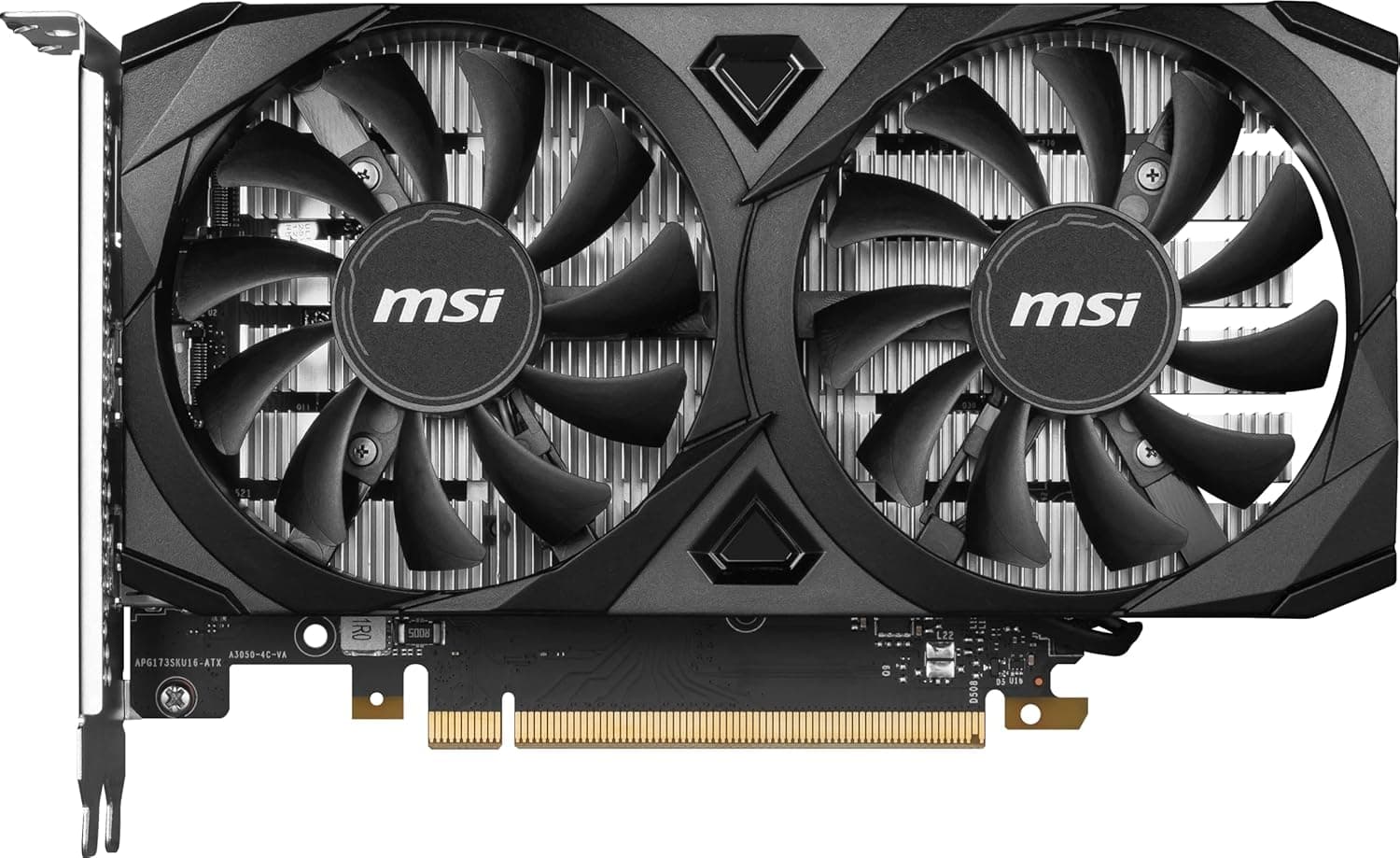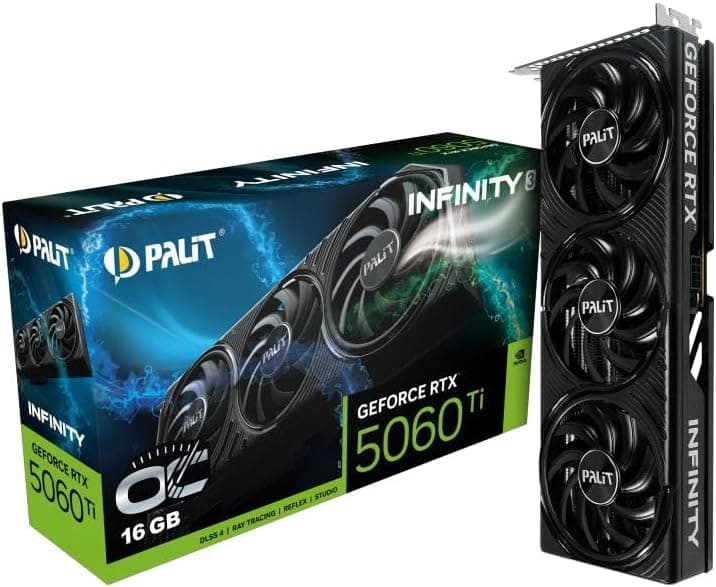
This article covers Palit GeForce RTX 5060 Ti Infinity 3 OC (16GB GDDR7.
Overview
The Palit GeForce RTX 5060 Ti Infinity 3 OC is a mid-range graphics card built on NVIDIA's latest Blackwell architecture. It comes with 16GB of GDDR7 memory and a boost clock of 2662 MHz, along with PCI Express 5.0 support. The compact dual-slot design makes it suitable for a wide range of PC builds. With hardware-accelerated ray tracing and DLSS, this card handles 1440p gaming smoothly and doubles as a capable companion for creative workloads like video editing.
Compatibility Guide
This card uses a PCIe 5.0 x16 interface and is backward compatible with PCIe 4.0 and 3.0 slots. For best performance, pair it with a PCIe 5.0 motherboard. It requires a single 8-pin power connector (6+2 pin) and a recommended PSU of 650W or higher. A balanced system would include a Core i5 or Ryzen 5 CPU; using an older or lower-wattage PSU may cause instability under load.
Product Info
Launched in May 2025, the Palit GeForce RTX 5060 Ti Infinity 3 OC positions itself as a mid-range GPU that emphasizes VRAM capacity (16GB GDDR7) at a competitive price. It features a triple-fan cooler with reliable thermal performance and decent noise levels. The standard warranty period is three years (varies by retailer).
Best Use Cases
Gamers targeting 1440p with high refresh rates will appreciate the card's ability to leverage DLSS and frame generation for smooth gameplay in demanding titles. Content creators working with large textures, video editing, or 3D modeling benefit from the 16GB VRAM. Additionally, users building compact systems will find the dual-slot length and reasonable power requirements a good fit. ## Alternatives
The AMD Radeon RX 9070 (16GB) is a direct competitor at a similar price point. While the RTX 5060 Ti offers superior ray tracing and DLSS capabilities, the RX 9070 can match or exceed raw rasterization performance. Stepping up to an RTX 5070 adds significant cost, making the 5060 Ti a strong value choice for those who don't need flagship performance.
Things to Consider
The overclocked boost clock of 2662 MHz increases power draw slightly compared to the reference model. PCIe 5.0 bandwidth is typically underutilized in current games, so the real-world benefit over PCIe 4.0 is negligible. If your motherboard is limited to PCIe 3.0, the card may experience a minor performance penalty. Also, consider the RX 9070 if you don't rely on NVIDIA-specific features like CUDA or DLSS, as it offers similar raw performance for the same price.