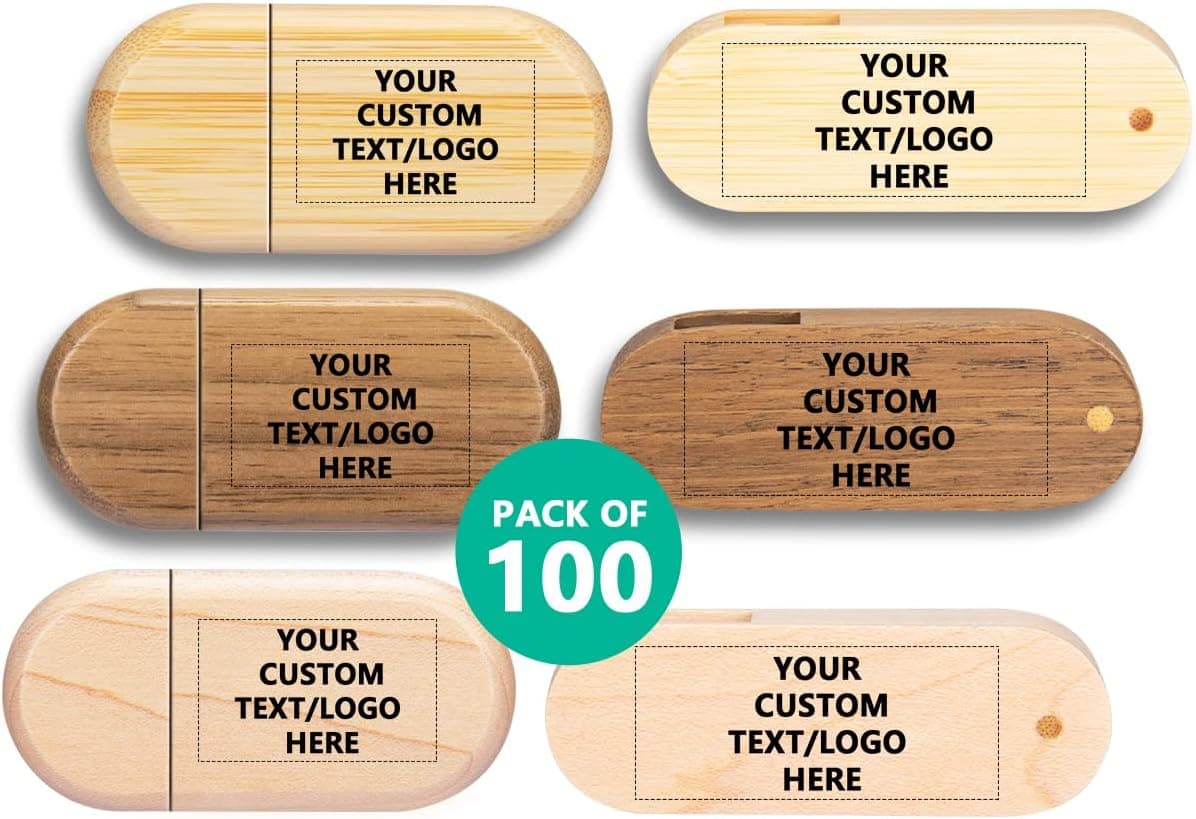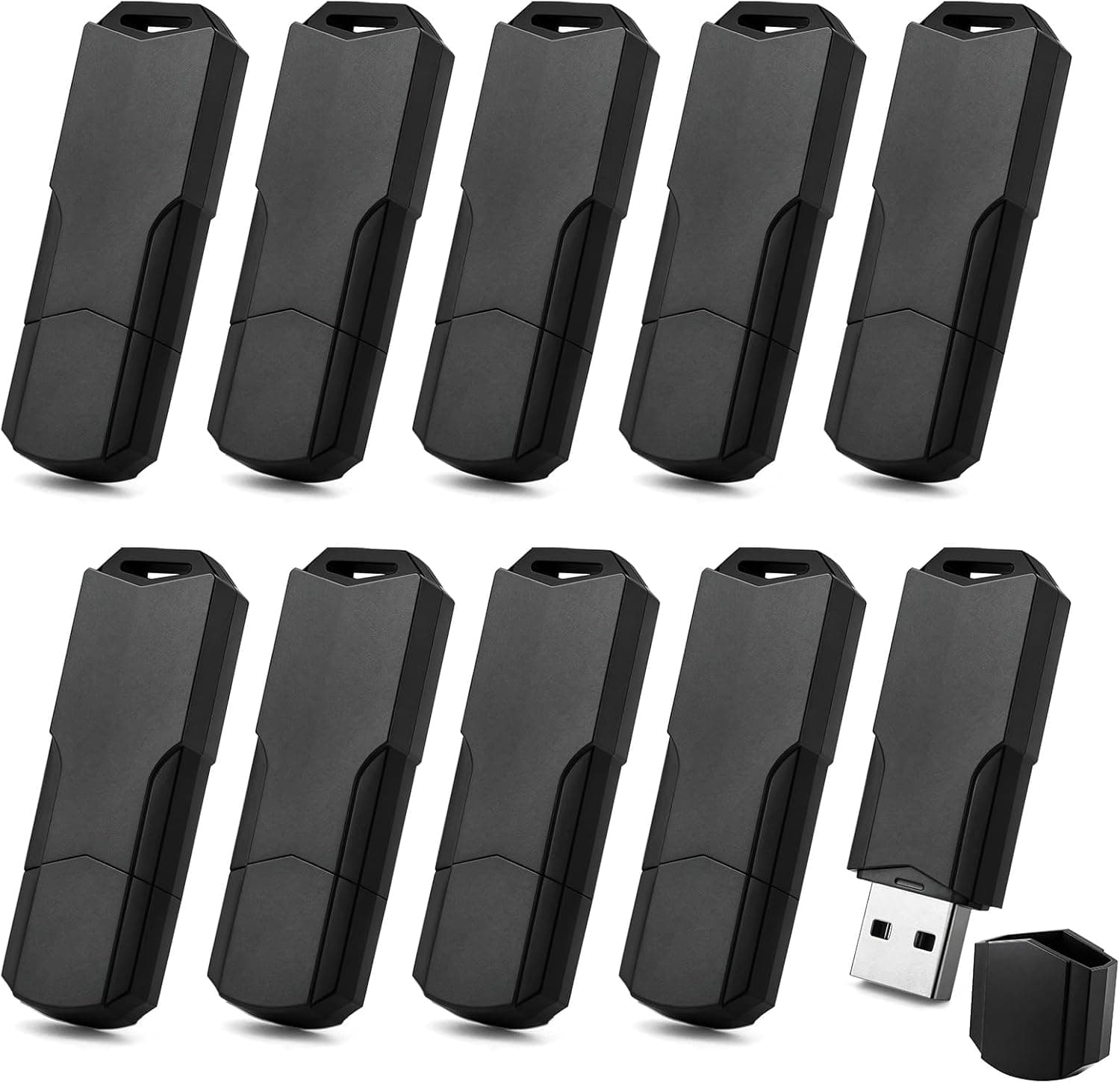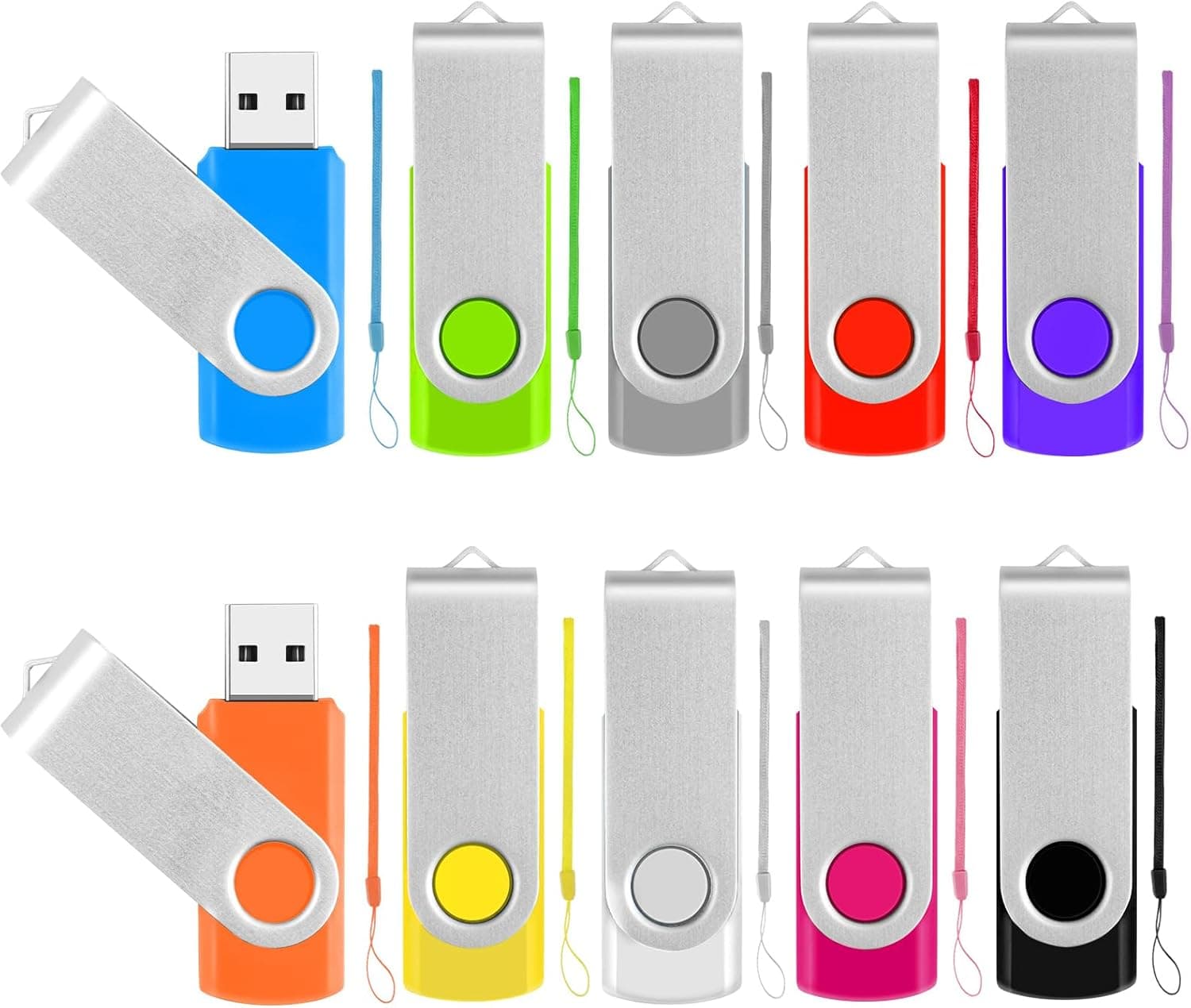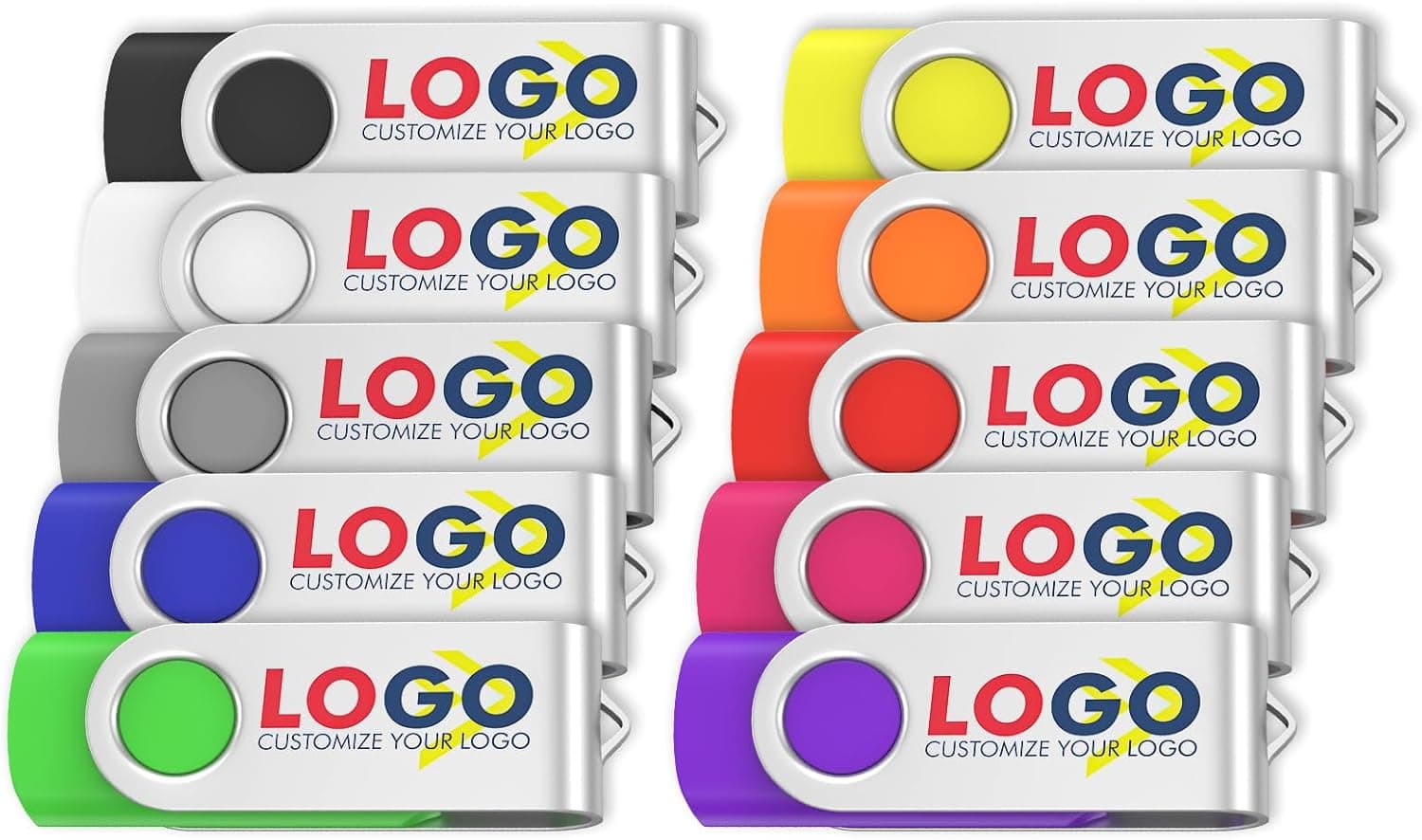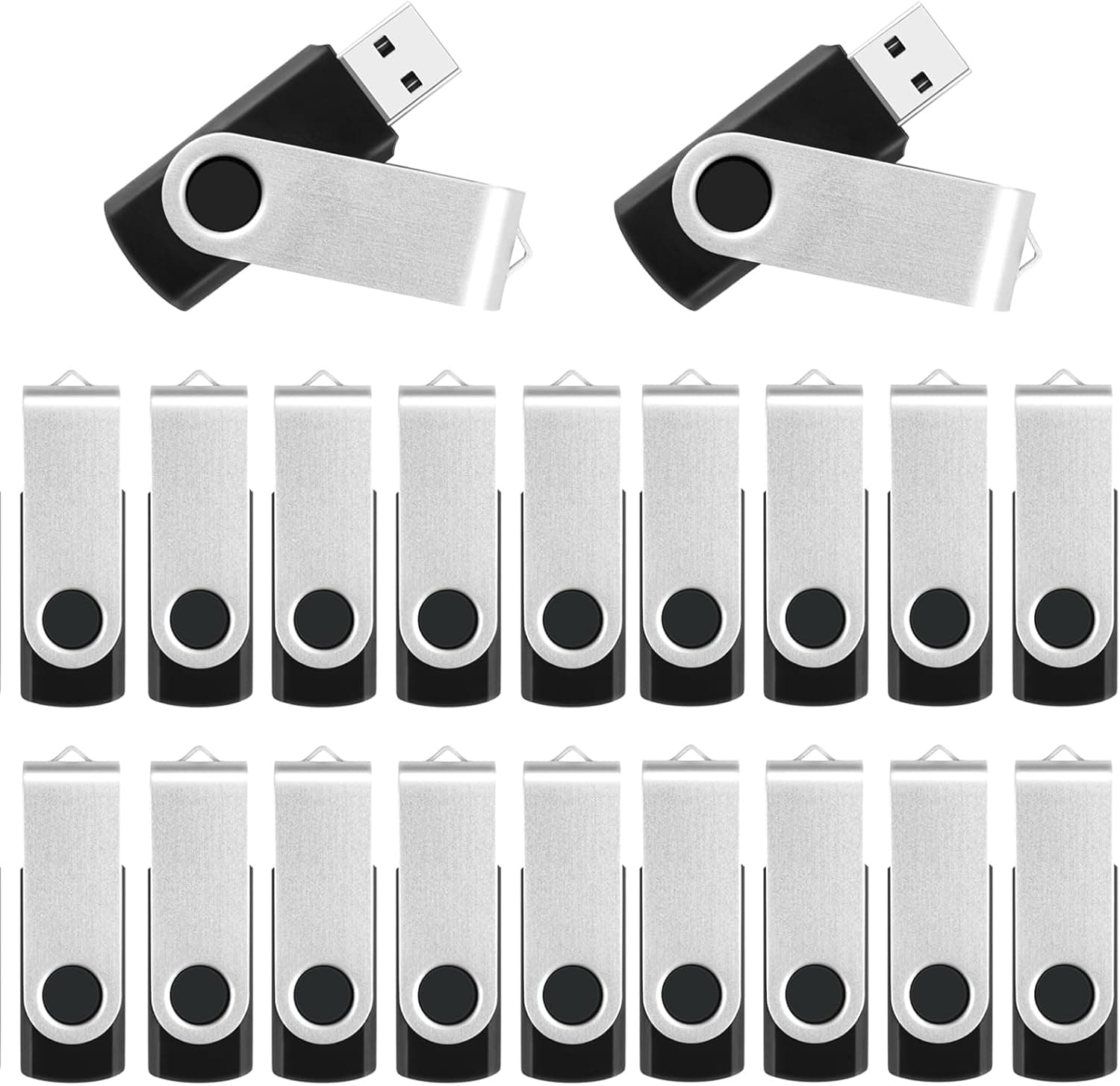
Overview
Paintechz カスタムクレジットカード USBフラッシュドライブ 200個パックパーソナライズロゴテキストバルク - 法人向けギフト販促品 - カスタマイズ可能 2GB — the Paintechz Custom Credit Card USB Flash Drive 200-Pack — is a bulk promotional item: 200 flat, wallet-sized USB drives you can print your own logo and text on. Each drive holds 2GB over USB 2.0 with a stated read speed of 20MB/s.
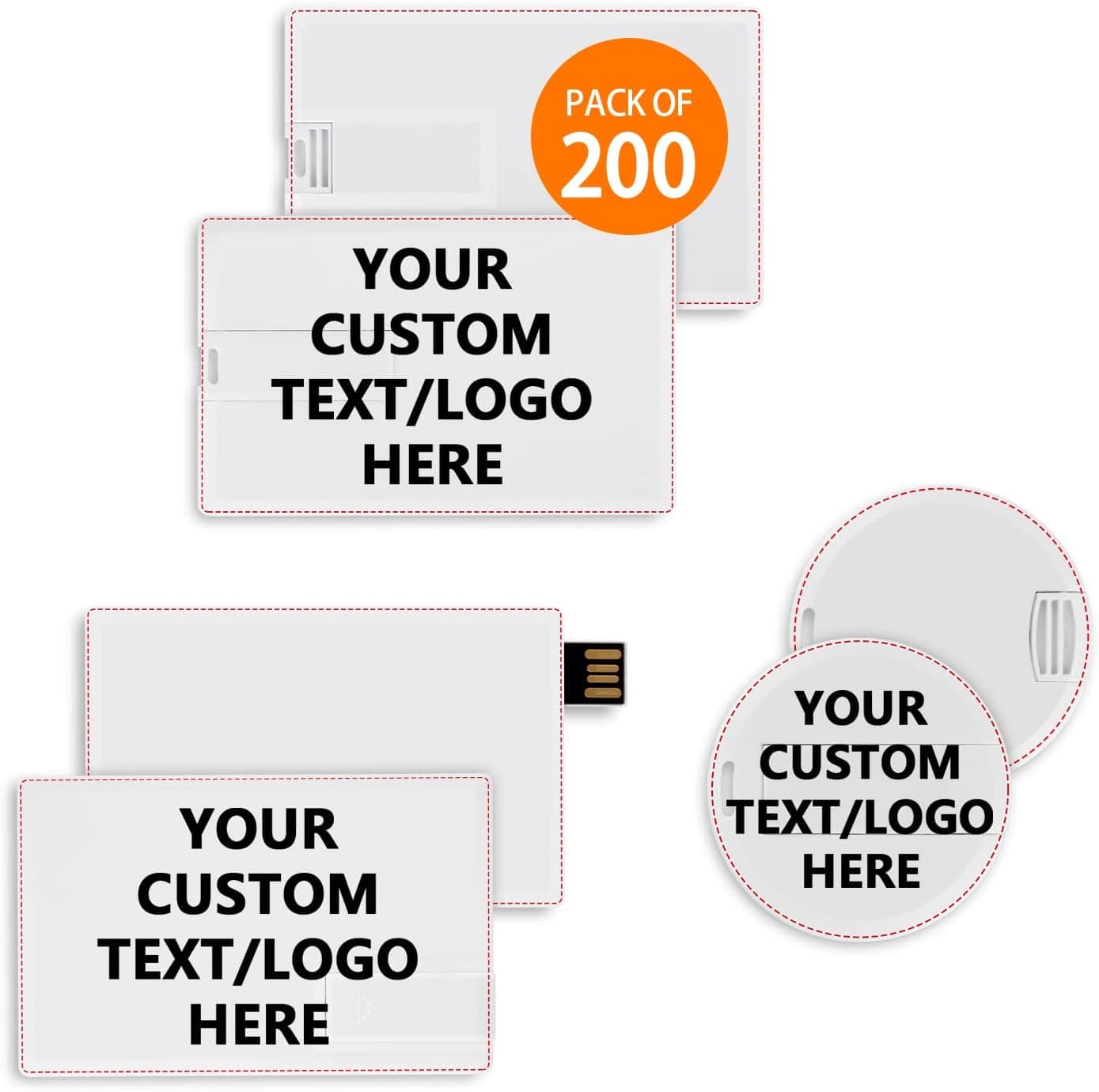
Card styles are Flip, Slide, or Round, and decoration can be screen print, UV print, or full color.
Here is the conclusion up front: judge this as a printed item, not as storage. In 2026, 2GB over USB 2.0 is plainly dated, and nobody should choose it to move files around.
It still makes sense when you want light files — a PDF catalog, floor plans, contact details — to sit in someone's wallet or card case with your brand on them. If your audience is smaller than 200 people, or if video is the payload, read the Before You Buy section and consider another route.
Compatibility Guide
The stated compatibility is: works with any device that has a USB-A port; USB 2.0 only, so speeds will not increase on USB 3.0 or newer ports.
No driver installation is needed — Windows, macOS, and Linux all mount it on insertion. USB 2.0 tops out at 480Mbps in theory, and the published 20MB/s read figure is the realistic guide.
Write speed is not published; in this price class, USB 2.0 drives are typically far slower to write than to read, so budget extra hours if you plan to load 200 drives yourself.
What actually goes wrong is physical, not about speed:
- Devices with only USB-C cannot use it directly. Many recent thin laptops and tablets have no USB-A, so the recipient needs an adapter or hub. For a giveaway, a recipient who cannot open it on the spot is a failure.
- The card body blocks neighbouring ports. A flat card sticks out sideways, so tightly spaced ports, recessed front-panel sockets, and in-car or rear-of-monitor ports can foul. Test a pre-production sample in the kind of hardware your audience actually uses.
- Phones need an extra step. Android reads it on USB OTG-capable handsets; iPhone and iPad need a USB-C or Lightning adapter and go through the Files app.
- Autorun will not fire. Since Windows 7, autorun from USB storage is disabled. You cannot make the catalog open by itself. Put one clearly named file in the root instead.
- Some recipients' employers block USB storage. Security policy and endpoint controls that cut off USB mass storage are common in government and large enterprises. Pair the drive with another route to the same content, such as a printed one-pager or a QR code.
On filesystems, drives of this capacity typically ship as FAT32, which every desktop OS reads and writes — keep FAT32 if you reformat. Note that 2GB shows up as roughly 1.86GiB, so usable space looks smaller than the label.
Also, writing from a Mac leaves .DS_Store and ._ hidden files that appear as clutter on Windows; clean them before the run goes out.
Product Info
| Item | Value |
|---|---|
| Capacity | 2 GB |
| Interface | USB 2.0 |
| Read speed | 20 MB/s |
| Card style | Flip / Slide / Round |
| Printing | Screen print / UV print / Full color |
| Pack quantity | 200 units |
The listed price was ¥142,151 as captured on 26 August 2026, which works out to about ¥711 per unit across 200 drives. That is a fair per-unit figure once printing and card tooling are included, but promotional pricing moves with quantity, decoration method, and exchange rates — check the product page for the current price before ordering.
The overseas marketplace entry has no concrete figure captured; only a listings search is available.
Reviews stood at 44 with a 5.0 average (100%) as of 18 June 2026.
Because the listing metadata is inconsistent (see below), it is not possible to tell whether those reviews describe this exact product or another configuration on the same page. Treat the count as background and base your decision on the spec sheet and a physical sample.
Warranty, lead time, artwork submission format, and whether the 200-unit minimum can be reduced are not disclosed. Custom-printed goods rarely complete through a shopping cart alone, so contact the seller before ordering.
What Fits in 2GB
Capacity is decided by what you hand over. Rough arithmetic:
- 2MB PDF catalogs: around 900 of them — you will only load a few, so there is room to spare
- 5MB high-resolution JPEGs: around 370 shots, enough for property photos or project galleries
- Video at roughly 8Mbps: about 30 minutes maximum; 4K or long-form company films will not fit
So document distribution is comfortable. Video is not: capacity runs out and a 20MB/s read makes copying feel slow.
If video is the point, pick a larger, faster drive, or keep the USB for documents and deliver the film another way.
How It Compares
Among other 200-piece packs, unbranded bulk drives usually win on cost per gigabyte — a 16GB bulk pack offers eight times the capacity and often a lower unit price. What the roughly ¥711 per unit buys here is not capacity but two-sided printing, the card form factor, and a digital proof step before mass production.
If that has no value to you, stickers on plain bulk drives are cheaper.
Against a single modern USB 3.2 drive, this product loses on both speed and capacity.
But those are bought one at a time with no decoration process. The real axis is not faster or bigger — it is whether you can field 200 units carrying your name.
Only on that axis does this pack belong on the shortlist.
Ordering and Rollout
- Prepare artwork. Vector logos are safest.
Printing is CMYK, so on-screen RGB colors will shift. Fine lines and small type clog in screen printing — confirm the minimum legible size on the proof.
- Check the digital proof. Have more than one person verify spelling, color, placement, and orientation.
200 units is not a quantity you can reprint casually. 3.
Freeze the preload set. Free preloading is advertised; verify the copyright status of what you supply and make sure no internal-only material is mixed in.
Spot-check the delivery. Insert several drives, confirm reported capacity, read the files, and check the preloaded contents.
Design the handout around it. Provide a QR code or printed sheet that reaches the same content for people who cannot plug it in.
Who It's For
- Exhibitors at trade shows and events expecting more than 200 visitors who should leave with a catalog or whitepaper. The card shape fits a card case and does not get buried in the swag pile.
- Real estate and automotive sales floors handing over listings, floor plans, or model brochures. PDF-centric payloads fit 2GB easily and your name stays in physical form.
- Corporate buyers who want branded novelty items, with a choice of decoration and card style plus proof approval before the run.
- Campaigns that need the drive usable on arrival, thanks to preloading — onboarding kits or event packs where inserting the drive already shows content.
It is a poor fit for runs of a few dozen, for real working storage, and for audiences in tightly controlled IT environments.
Before You Buy
The listing metadata is inconsistent. The collected listing data names AMD as the manufacturer, and AMD does not make custom-printed promotional USB drives.
The ASIN in that data also differs from the ASIN of the page being referenced. This article drops the manufacturer claim rather than repeat it.
You will meet the same mismatch on the product page, so confirm the actual item from the photos, the title, and a direct answer from the seller. Treat the price as volatile for the same reason.
You cannot update the contents after handing them out. If your material is revised after 200 drives are printed and loaded, the old version stays in recipients' hands.
When revisions are likely, make a route to the current version (a QR code or contact line on the printed face) the centrepiece rather than the PDF itself. Avoid printing years or event names if you want leftovers to carry over.
Some people will not plug in an unknown USB drive. Awareness of rogue USB devices is widespread, and the better trained your audience, the fewer will insert it — on top of the corporate blocks noted above.
Pieces handed out and pieces actually read are different numbers; size the order accordingly.
Assume you cannot write-protect them. There is no indication of a physical write-protect switch, so recipients can overwrite or reformat.
Deleted test files can also be recoverable — fully erase any drive you used for testing before it joins the distribution batch.
Accept the durability of a card. A flat plastic body flexes and the flip or slide mechanism loosens with repeated use.
It is shaped for a wallet, not for archival storage; say so when you hand it over rather than let anyone treat it as backup media.
The 200-unit minimum is the real cost. A low unit price still means a six-figure yen payment in one go at the captured price.
If your expected attendance is lower than 200, decide where leftovers live and what they get used for before you order.
FAQ
Q. What is the write speed? A.
Only the 20MB/s read figure is published; write speed is undisclosed and is typically much slower in this class. Allow generous time if loading 200 drives yourself, or use the preload service.
Q. Will it work on a laptop with only USB-C? A.
Not directly — the connector is USB-A, so an adapter or hub is required. Assume recipients with recent thin laptops or tablets do not carry one.
Q. Is 2GB enough? A.
Yes for PDFs, drawings, and photos. For video, roughly 30 minutes at 8Mbps is the ceiling; long-form or 4K will not fit.
Q. Can I order fewer than 200? A.
Only the 200-unit pack is confirmed in published information. Ask the seller about smaller runs, artwork formats, and lead time.
Q. Can the catalog open automatically on insertion? A.
No. Windows disables autorun from USB storage for security reasons.
A clearly named file in the root directory is the practical alternative.