Game Overview
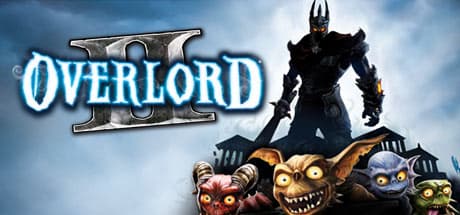
Overlord II: Unleash Your Minions in a Destructive RPG is a third-person action RPG that puts you in control of an evil ruler and his unruly followers. Released on June 22, 2009, it reverses the usual heroic premise: instead of saving the world, the new Dark Master works to restore the Netherworld and conquer the forces of the Glorious Empire.
The core loop combines direct combat with real-time squad commands. The Overlord can fight personally, but Minions can swarm enemies, carry objects, operate mechanisms, and clear obstacles that their master cannot handle alone.
Progress therefore depends on deciding whether to enter danger yourself or send the right followers ahead.
What Makes Minion Command Different
Overlord II is not built around the protagonist's reflexes alone. Sending the entire group at every target is easy, but poor positioning can cost a large part of the force.
A safer approach is to draw attention with the Overlord, identify hazards, and then direct selected Minions toward exposed enemies or useful objects.
Different Minion types fill distinct combat and support roles. They specialize in areas such as close-range fighting, ranged attacks, surviving fire, and handling magical threats or recovery.
Choosing a group for the obstacle in front of you matters more than relying on one favorite type in every encounter.
Individual followers can become more valuable as they collect equipment, which makes careless losses meaningful. War Machines and Minion mounts also expand the scale of some encounters and change how the army moves or attacks.
Because every order is issued in real time, the game feels busier than a turn-based strategy title even when the important decision is tactical rather than mechanical.
Playing the Villain
The campaign centers on conflict with the Glorious Empire and the restoration of the Netherworld. Villainy is not limited to indiscriminate destruction: the game also lets the Overlord pursue control and domination.
That distinction gives the role-playing side more substance than simply breaking every object and attacking every character in sight.
Dark comedy is equally important. Minions are noisy, greedy creatures rather than disciplined, anonymous soldiers, and their behavior turns conquest into slapstick chaos.
Players looking for solemn dark fantasy may find the tone too playful, but those who enjoy satire and exaggerated evil will find a style that few action RPGs attempt.
System Requirements
The listed minimum specification calls for Windows XP SP2 or later, a Pentium 4 3.0GHz or Athlon 64bit 3000+ processor, and 1GB of RAM.
The minimum GPU is a GeForce 6800 or ATI X1600 with 256MB of video memory. It also requires 5GB of storage and DirectX 9.0c.
Those requirements reflect PC hardware from the game's original era, so raw performance should be modest by current gaming-PC standards. No recommended specification was supplied in the available data, however, so the minimum list does not guarantee a particular resolution or frame rate.
With older PC games, modern operating-system, display, and controller compatibility may matter more than processing power; check the current Steam information and recent user reports for your setup.
Reception and Common Feedback
Overlord II has maintained a broadly positive reputation over time. Supporters commonly value its unusual combination of direct action and creature command, its villain-led campaign, and its black comedy.
There are still few games in which watching a disorderly army execute an order is as important as fighting with the main character.
Common reservations concern the age of its controls and presentation. Guiding many followers through narrow spaces can make pathfinding, targeting, and camera behavior feel awkward, and a mistaken command can lead to avoidable losses.
It is best approached as a distinctive older game whose control quirks are part of the experience, not as a modern action RPG with extensive convenience features.
Who Should Play It
This is a strong fit for players who want to manage a small army without giving up direct control of a combatant. It also suits anyone tired of conventional heroic stories and interested in treating conquest, destruction, and domination as comedy.
Players who enjoy preserving useful units and adapting their squad to each obstacle will get more from the system than those who treat every Minion as disposable.
Cautions and Who May Not Enjoy It
Players seeking a pure combo-driven action game may find the repeated need to organize and redirect followers distracting. The real-time command layer also demands attention: repeatedly sending every unit forward without checking hazards can create unnecessary losses.
If squad control initially feels chaotic, moving smaller role-based groups is easier than commanding the entire force at once.
The minimum requirements still reference an old version of Windows and DirectX. That indicates low hardware demands, but it does not by itself confirm flawless behavior on every current PC.
The supplied data does not confirm language support, so players who require a particular interface or subtitle language should verify the current language listing on Steam before buying.