Game Overview
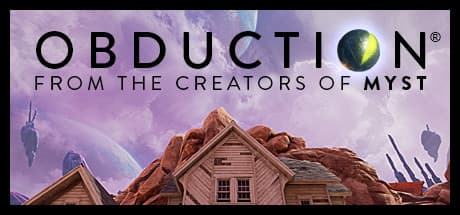
Obduction: A Mind-Bending Sci-Fi Adventure from Myst Creators is a first-person science-fiction puzzle adventure from Cyan, the studio known for the Myst series. Released on August 24, 2016, it casts the player as a person suddenly taken from Earth and left to investigate an unfamiliar world.
The core loop is to explore, inspect machinery and architecture, and connect clues found in different locations. Familiar buildings and objects from Earth appear amid alien landscapes, so asking why each fragment is present becomes part of understanding the story.
Features and Systems
Puzzles are not usually presented as isolated questions with visible answer choices. Players must study machines, symbols, sounds, terrain, and object placement to determine what can be operated and where previously discovered information belongs.
Keeping notes or screenshots of significant displays can make later backtracking much easier to manage.
Rather than offering a simple chain of puzzle rooms, Obduction treats much of its world as one interconnected mechanism. Activating something in one area may open a route or alter what can be seen elsewhere, making spatial awareness important.
When progress stalls, checking unexplored side paths and revisiting locations after a change is often more productive than repeating the same input.
The narrative is also delivered through scattered information and environmental context instead of constant exposition. This favors players who enjoy forming and revising theories over those who want the next objective to remain explicitly marked.
System Requirements in Practice
The minimum specification lists 64-bit Windows 7 SP1 or newer, an Intel Core i5-2500 equivalent or better, a GeForce GTX 660 with 1GB or an equivalent AMD 7700-series GPU, 8GB RAM, and 20GB of available storage. The recommended specification calls for 64-bit Windows 10, an Intel Core i5-4590 equivalent or better, a GTX 970 4GB or AMD R9 290 4GB equivalent, 16GB RAM, and the same 20GB storage allowance.
Treating the minimum specification as an entry point is sensible; players seeking steadier performance and better image quality should use the recommended tier as their reference. The jump from 8GB to 16GB RAM and from 1GB-class to 4GB-class graphics memory indicates that extra memory and GPU headroom can matter when rendering the game's broad environments.
For VR, the minimum note specifies a GTX 970 or AMD RX 480 equivalent or greater. The recommended VR note raises that target to a GTX 980, GTX 1060, or AMD Fury equivalent or greater.
Because consistent rendering matters more in a headset, check both GPU capability and current headset compatibility before relying on VR support. It is also prudent to leave additional free storage beyond the listed 20GB for installation and updates.
Reception and Common Reactions
Players who enjoy environmental storytelling, unusual world design, and demanding observation-based puzzles tend to respond well to Obduction. Its refusal to reveal solutions directly is a major strength for anyone seeking the deliberate style associated with Myst-like adventures.
The same design can frustrate players who dislike revisiting locations or being unsure what to do next. Progress may feel slow when a clue has been overlooked, and insisting on solving everything without limited guidance can turn one missed detail into a long pause.
A Better Way to Approach the Opening
Instead of testing every object at random, sort discoveries into readable clues, usable mechanisms, and routes that remain inaccessible. Record symbols and numbers together with their locations, and after operating a major device, check both the immediate area and places visited earlier.
If outside help becomes necessary, look for a directional hint rather than a complete solution. Preserving the final deduction retains more of the satisfaction that drives the game.
A short break can also be useful when repeated attempts have narrowed your attention too much.
Who Should Play It
Obduction is a strong match for players who enjoy studying a minimally explained world and discovering its rules for themselves. It suits those who prefer spatial reasoning, logical inference, and clue comparison to combat or reflex challenges.
Patient explorers who like interpreting the history behind strange landscapes are especially likely to appreciate it.
Caveats and Who Should Skip It
It is a poor fit for anyone who expects objective markers, rapid progression, frequent combat, or action-led spectacle. Clues can span several locations, and returning after a long break without notes may make it difficult to remember what each machine does or which problem remains unresolved.
VR support adds another way to experience the environments, but it requires more graphics performance than ordinary screen play. Testing controls and performance in standard mode first is a sensible precaution, followed by confirming support for the headset and current setup you intend to use.
The key buying question is whether slow exploration and time spent being genuinely stuck sound rewarding rather than irritating.