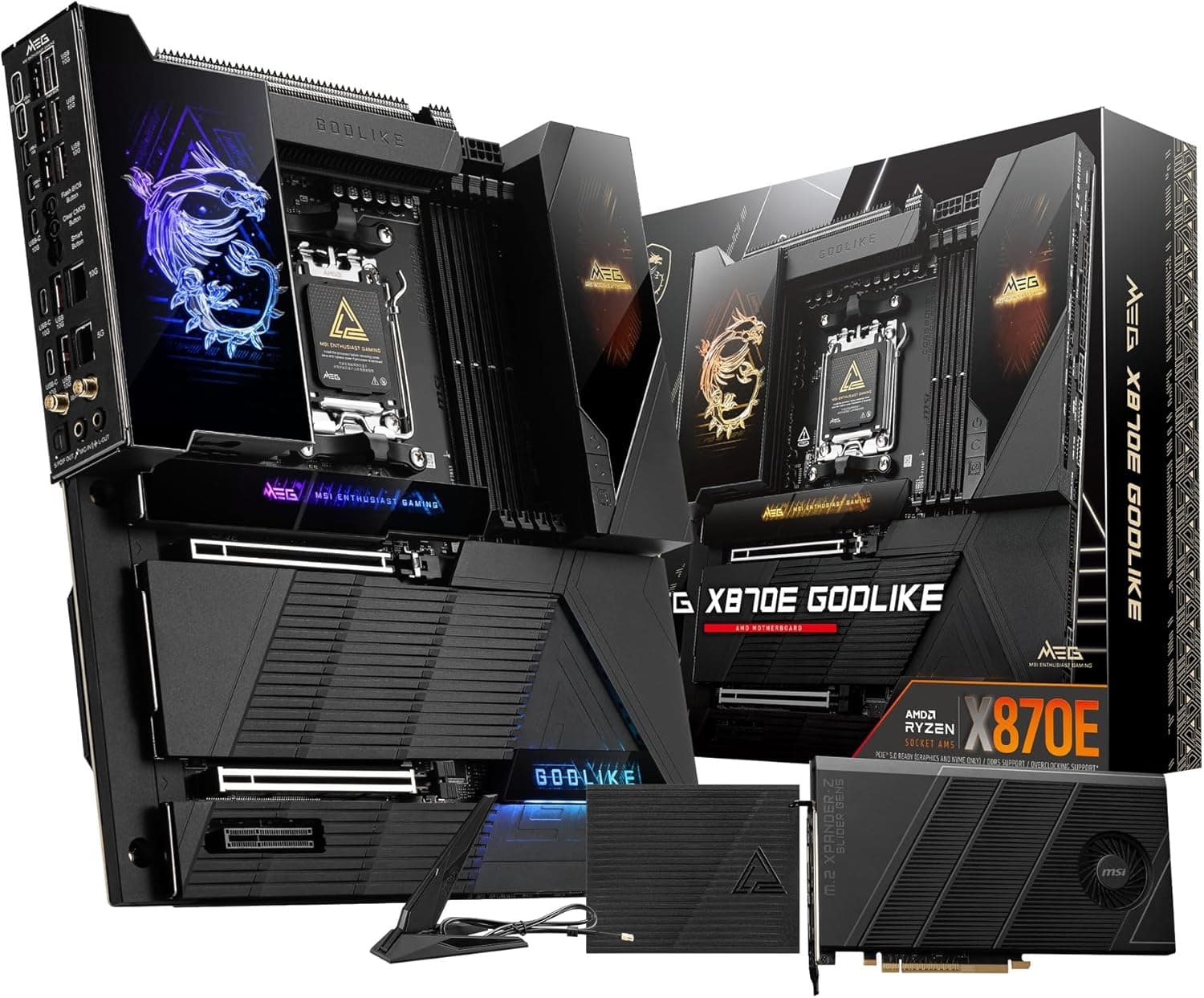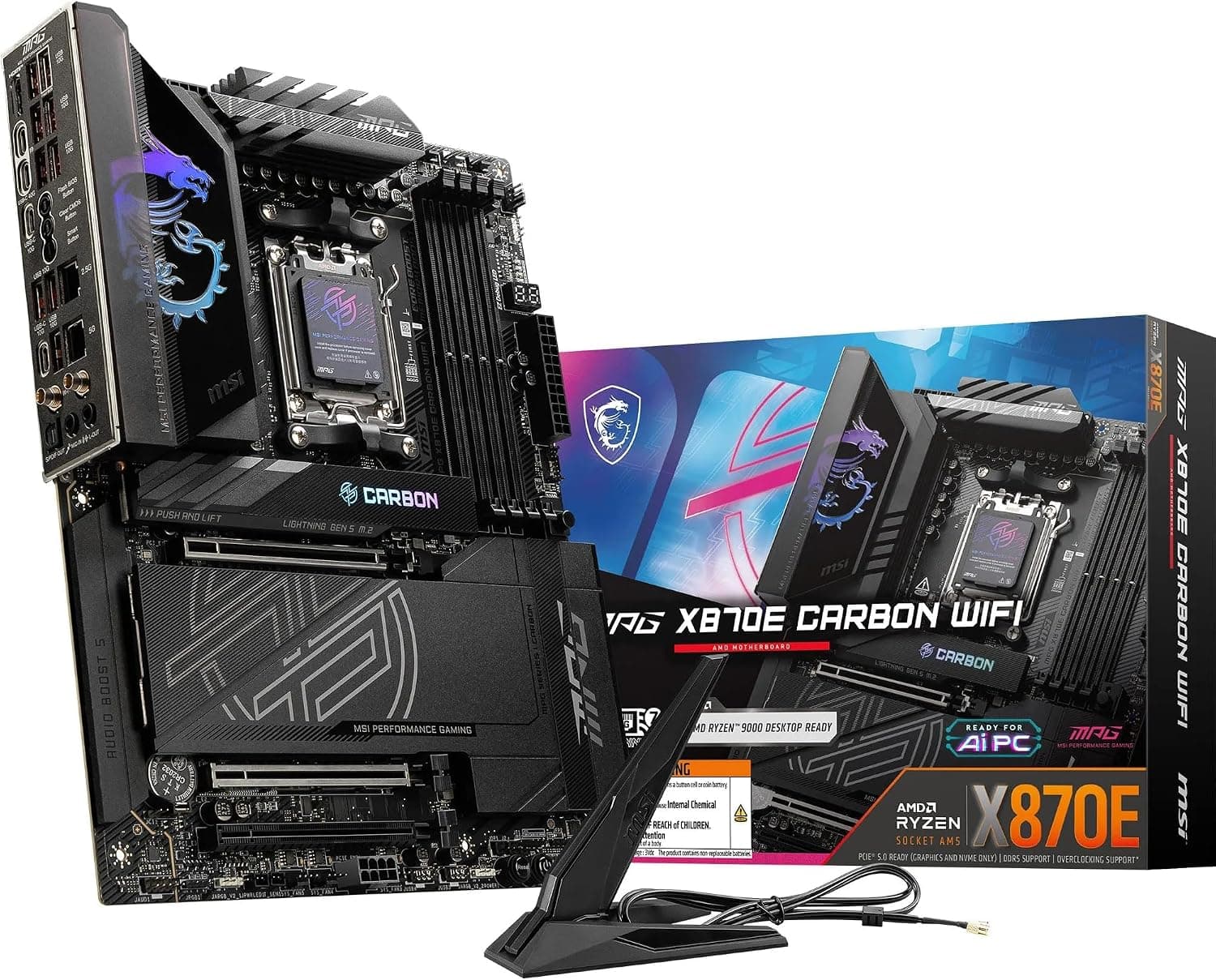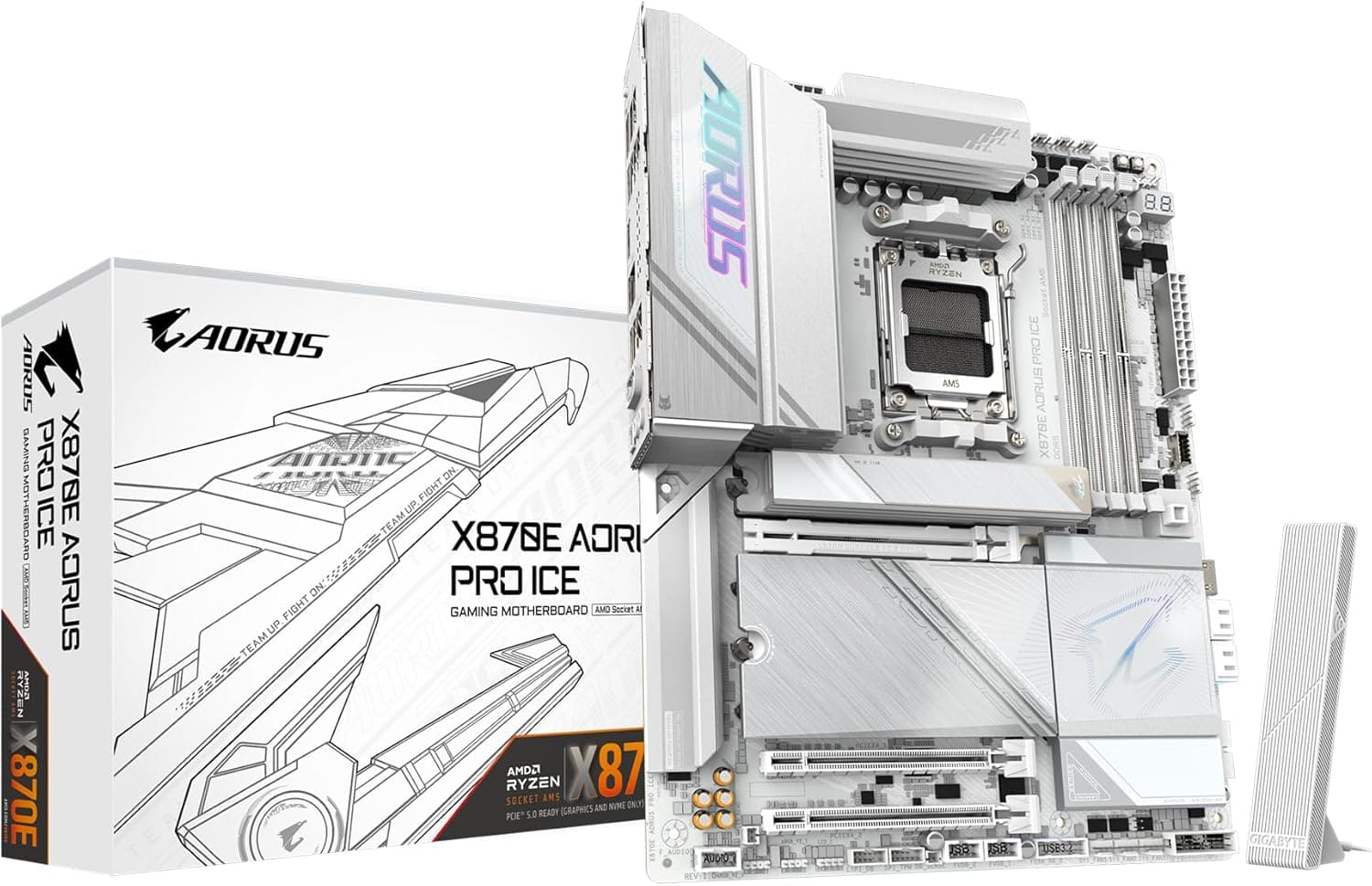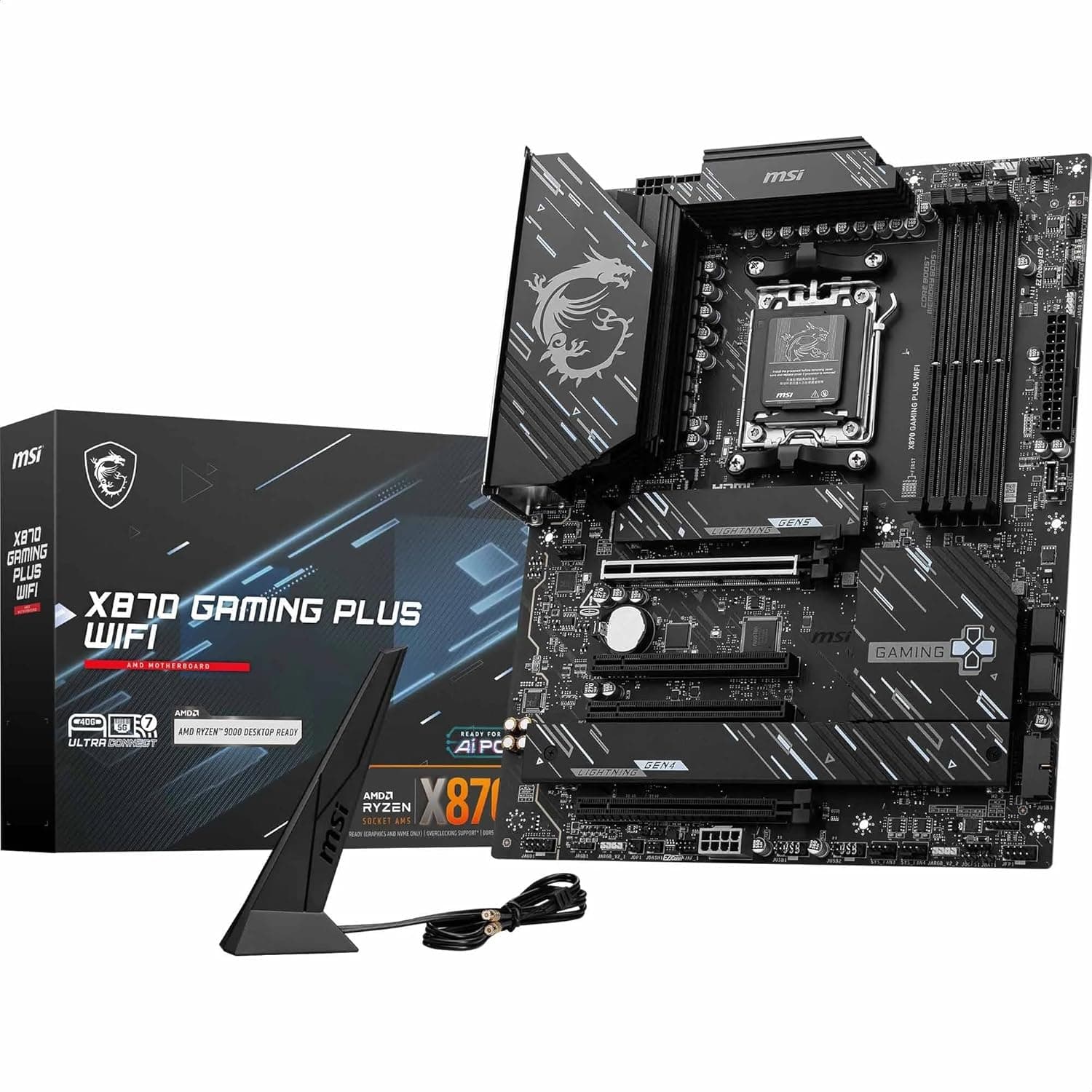
This article covers MSI X870 Gaming Plus WiFi V1マザーボード.
Overview
MSI's X870 Gaming Plus WiFi V1 is an ATX motherboard designed for AMD's latest Ryzen 9000 series processors, built on the AM5 socket. It supports high-speed DDR5 memory (overclocked up to 8200+ MT/s), a PCIe 5.0 x16 slot, and a Gen5 M.2 slot, making it a solid foundation for high-end gaming or content creation workstations. Power delivery is handled by a 14+2+1 Duet Rail power system with 60A SPS VRM, ensuring stable voltage even under heavy load with a Ryzen 9 CPU. Connectivity is future-proof: Wi-Fi 7, Bluetooth 5.4, and a Realtek 5G LAN port are all onboard. The rear I/O includes a USB4 Type-C port running at 40Gbps, perfect for high-speed external storage or displays. Positioned as a mid-high-range offering, the X870 Gaming Plus WiFi V1 strikes a balance between feature set and price, sitting below the flagship X870E boards while still delivering excellent overclocking headroom and expansion potential.
Compatibility Guide
CPU Socket: AM5 (Ryzen 7000/8000/9000 series ready) Memory: 4× DDR5 DIMM slots, dual-channel, supports up to 8200+ MT/s (OC) Form Factor: ATX (305×244mm) PCIe Slots: 1× PCIe 5.0 x16 (with Steel Armor), 1× PCIe 4.0 x16 (max x4 electrical) Storage: 1× M.2 Gen5 x4 (CPU), 1× M.2 Gen4 x4, 1× M.2 Gen4 x2, 4× SATA 6Gb/s (estimated) Networking: Wi-Fi 7 (including Bluetooth 5.4), Realtek 5G LAN USB: 1× USB4 Type-C (40Gbps, DP output), 2× USB 3.2 Gen2, 4× USB 3.2 Gen1, 4× USB 2.0 (estimated) Power Connectors: 24-pin ATX, 2× 8-pin CPU EPS Real-world pairing examples: a Ryzen 9 9950X with DDR5-6000 CL30 memory and an RTX 5090 will run perfectly. If you're building a more modest system now (e.g., Ryzen 5 7600), this board still makes sense if you plan to upgrade to a future AM5 high-end CPU later.
Product Info
Released alongside AMD's Ryzen 9000 series in the latter half of 2025, the MSI X870 Gaming Plus WiFi V1 typically retails for around ¥42,000 in Japan ( price). It sits in the mid-high segment of the X870 lineup; while it lacks the dual PCIe 5.0 x16 of the X870E flagship, it offers robust VRM, Wi-Fi 7, and DDR5-8200+ support that satisfy most gamers and creators. The warranty is assumed to be the standard 3 years (not officially confirmed). Sales channels include , major electronics retailers, and specialty PC parts stores.
Best Use Cases
High-End Gamers: If you're building a top-tier gaming rig with a Ryzen 9 9950X and an RTX 5090, the 14-phase VRM provides the clean power needed for stable overclocks and high-fps gaming at 1440p or 4K. However, if your budget is tighter, a B650 board could suffice. Content Creators: The PCIe 5.0 M.2 slot enables blazing-fast sequential reads/writes for large video files, and the USB4 port offers convenient high-bandwidth external storage. Creators who rely on heavy rendering or 4K/8K editing will benefit from the fast memory support (up to DDR5-8000+). Note that GPU VRAM remains critical for 3D work. * Future-Proof Builders: Users who want to start with a mid-range AM5 CPU now but plan to drop in a top-tier Ryzen 9000 or future AM5 CPU later will appreciate the X870's PCIe 5.0 support and robust VRM. If you don't need Wi-Fi 7 or 5G LAN immediately, a less expensive B650E board might be a better value.
Things to Consider
The chipset is X870 (not X870E), meaning only one PCIe 5.0 x16 slot is available. Multi-GPU setups are not well supported. The third M.2 slot is only Gen4 x2 (32 Gbps), which may bottleneck high-end Gen4 SSDs. Use the Gen4 x4 slot for your primary storage. USB4 Type-C is 40Gbps but not officially Thunderbolt 4 certified; some TB4 peripherals may have limited compatibility. The Realtek 5G LAN controller has occasionally faced driver stability issues. If rock-solid wired networking is critical, consider an Intel 2.5G-based board. ## FAQ
Q: Will the Ryzen 7 7800X3D work fine with this board? A: Yes, absolutely. The 7800X3D has a 120W TDP, well within the VRM's capacity. However, overclocking is limited on X3D CPUs, so if you enjoy memory tuning or PBO tweaking, a non-X3D Ryzen 9 might be more fun. Q: What memory speed should I aim for? A: The board officially supports up to 8200+ MT/s (1DPC 1R). In practice, DDR5-6000 CL30 offers the best balance of stability and performance. Higher speeds like DDR5-7200+ can work but may require manual tuning. Avoid four-DIMM kits for high-frequency operation. Q: What are the main advantages of Wi-Fi 7 over Wi-Fi 6? A: Wi-Fi 7 offers theoretical peak speeds up to 5.8 Gbps (versus ~2.4 Gbps for Wi-Fi 6), lower latency, and improved performance in congested environments. It's especially beneficial for high-bandwidth gaming or streaming if you have a compatible router.
Product Disclosure (Amazon)
- Manufacturer: MSI
- Seller: Amazon US
- Fulfilled by: Amazon US
- ASIN: B0FDY8H2BB
- Note: This article covers a manufacturer-made product based on Amazon listing details.