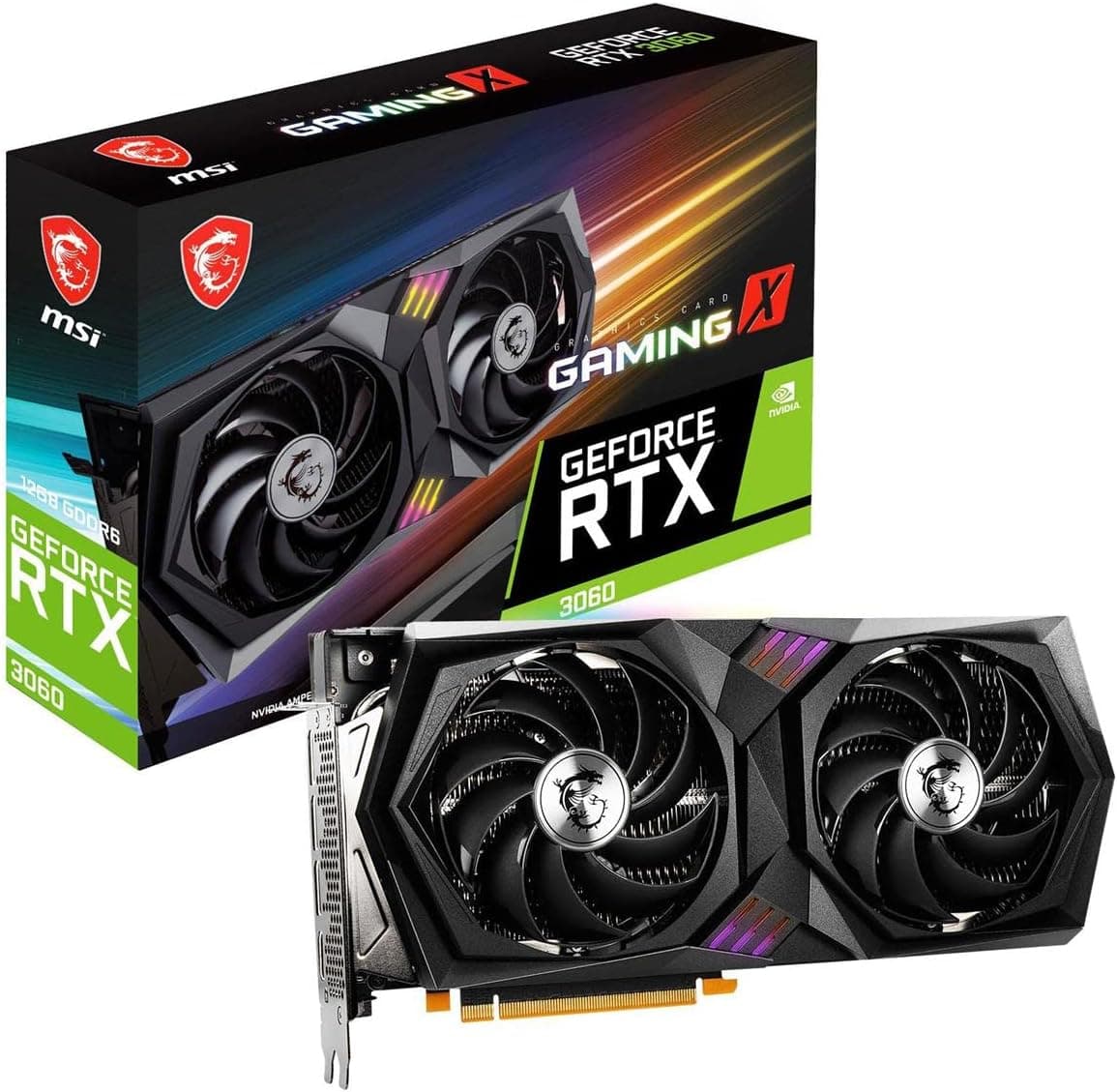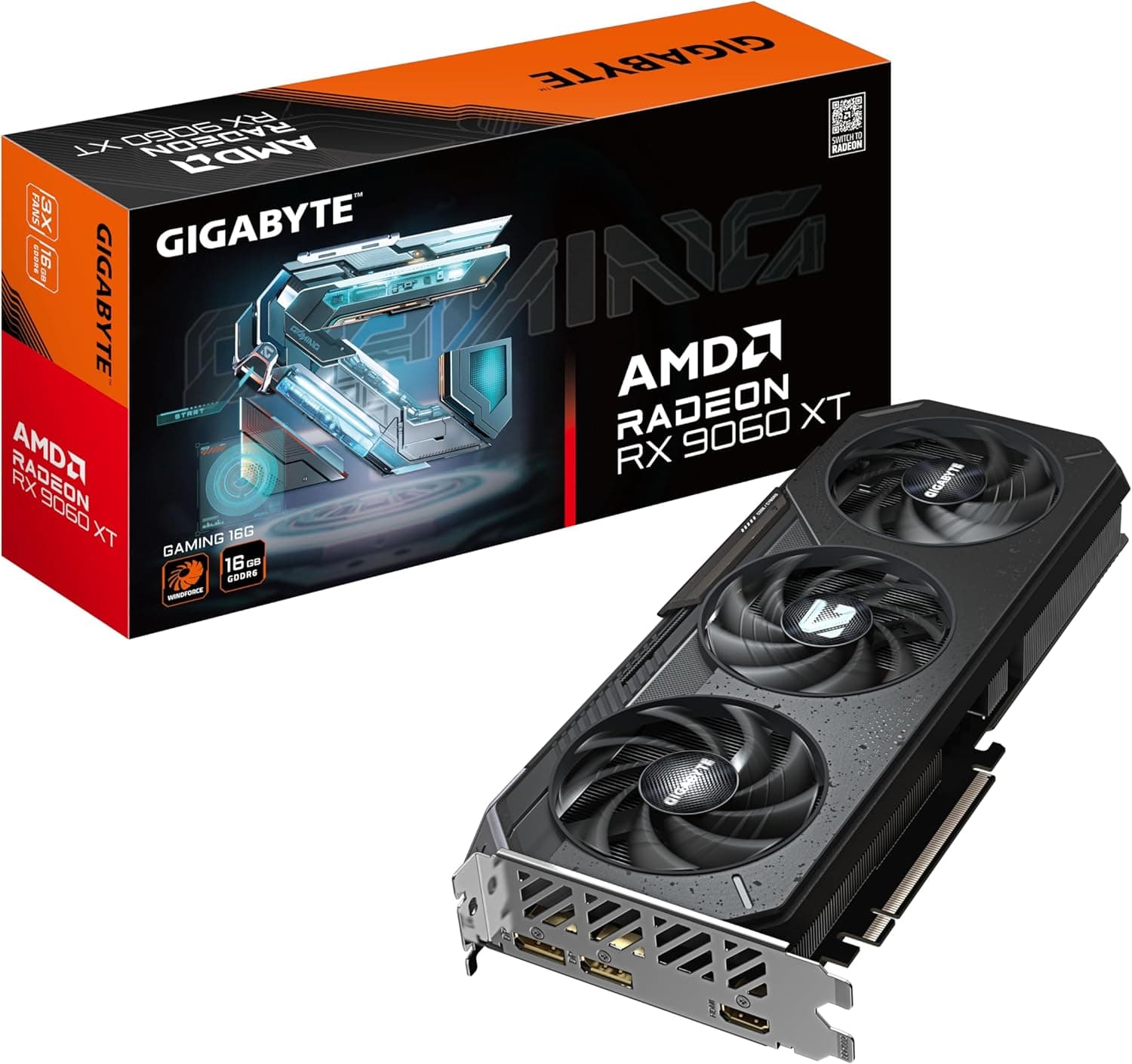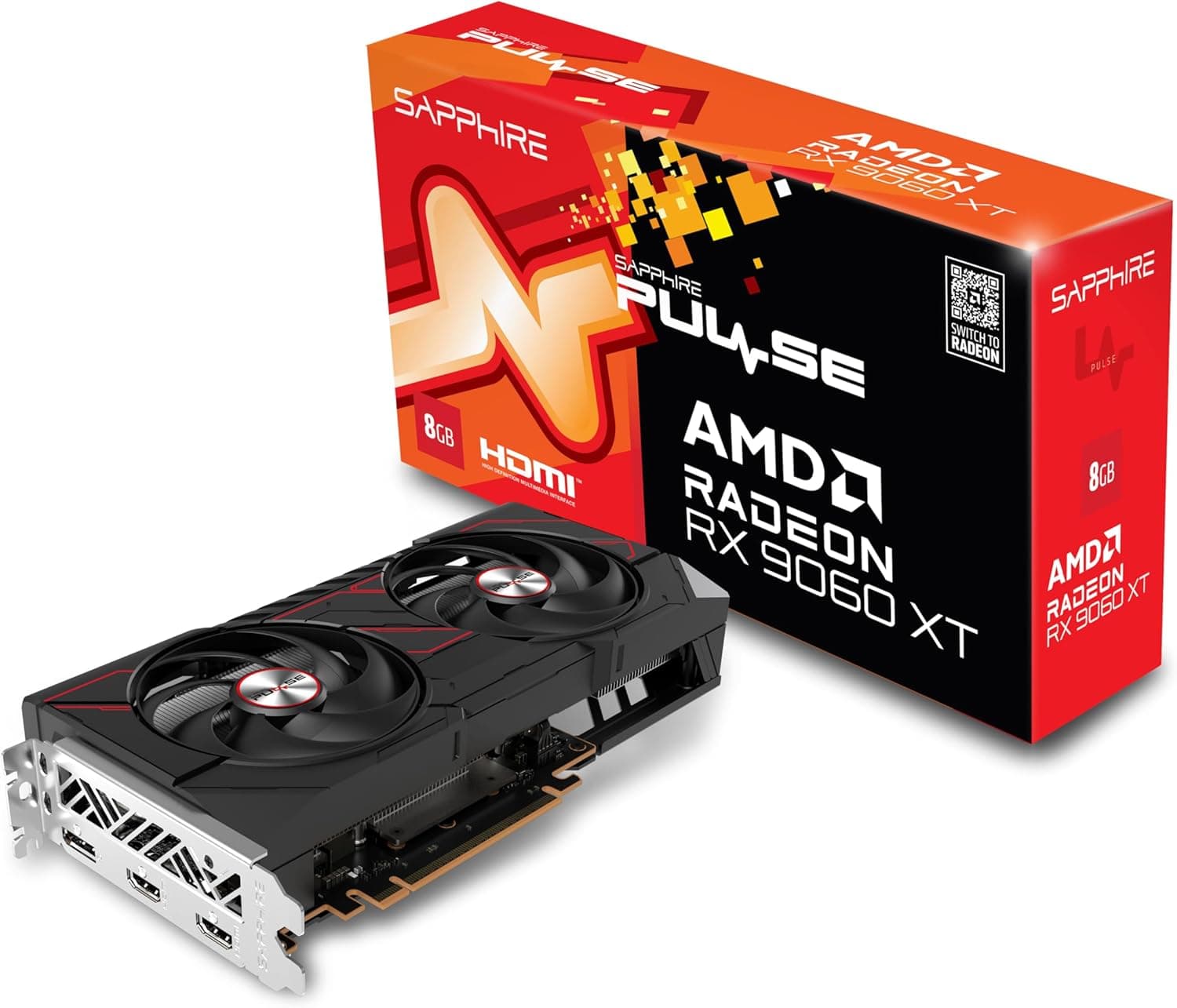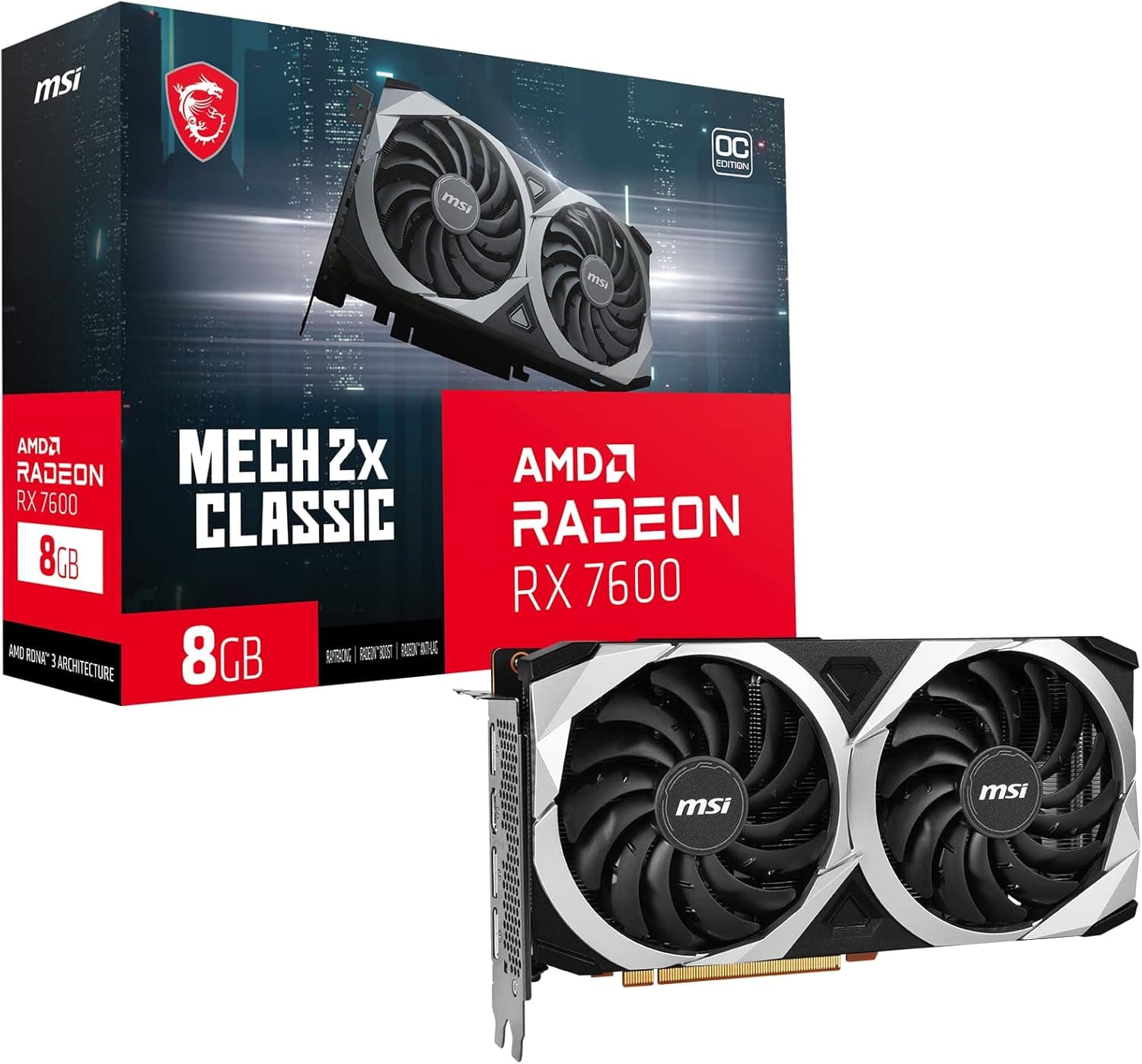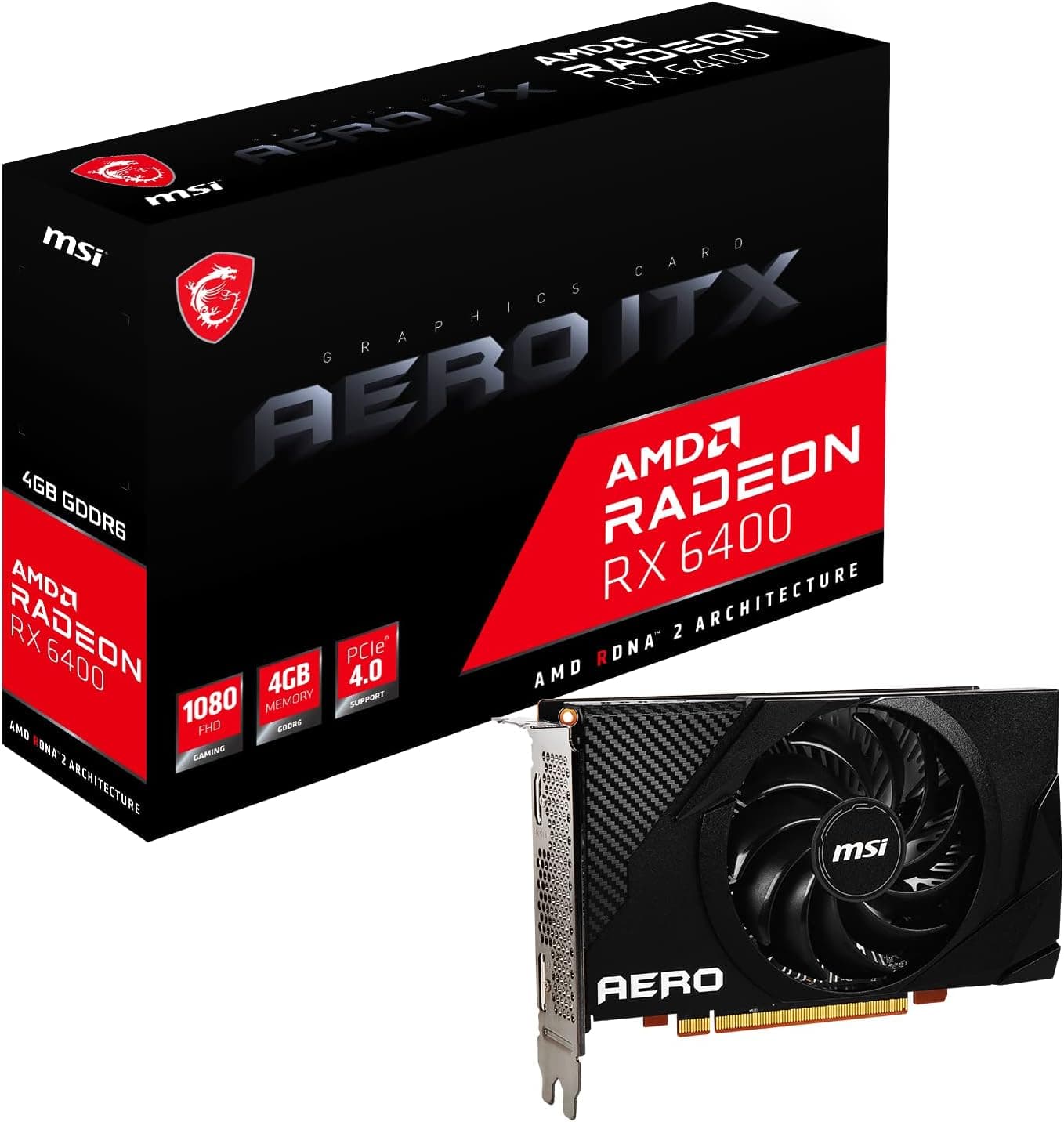
This article covers MSI Radeon RX 6400 AERO ITX 4G グラフィックスボード VD8096 ブラック.
Overview
MSI's Radeon RX 6400 AERO ITX 4G (model VD8096) is an entry-level gaming graphics card built around AMD's Radeon RX 6400 GPU. Fabricated on a 6nm process using the RDNA 2 architecture, it features 4GB of GDDR6 memory on a 64-bit interface. With a TDP of just 53W, it requires no auxiliary power connectors, making it one of the most power-efficient discrete GPUs on the market. The card adopts a compact single-fan ITX design, measuring roughly 170mm in length, which fits easily into small-form-factor cases. It provides one DisplayPort 1.4a and one HDMI 2.1 output, supporting resolutions up to 7680×4320. This combination of low power draw and small size positions it as a budget-friendly option for light gaming, media centers, or secondary PCs. Market positioning is firmly entry-level. It is not intended for demanding AAA gaming at high settings, but rather for eSports titles, casual gaming, and basic productivity tasks where a discrete GPU is preferred over integrated graphics.
Compatibility Guide
The card uses a PCI-Express x16 physical slot, but electrically it operates at PCIe 4.0 x4. On PCIe 3.0 motherboards, bandwidth is halved, which can noticeably impact performance in memory-sensitive scenarios. Pairing with a PCIe 4.0 board (e.g., B550, X570, Intel 600-series) is recommended. Form factor is ITX (approx. 170mm length). It fits in most Mini-ITX and compact Micro-ATX cases without issue. No auxiliary power connectors are needed; all power is drawn from the PCIe slot (max 75W). A 300W PSU is sufficient, but 400W is recommended for headroom. Memory is 4GB GDDR6 with 128GB/s bandwidth. This limited VRAM capacity means high-resolution textures or heavy mods may cause stuttering or crashes.
Product Info
Release date: January 2022 Price tier: Entry-level (actual street price varies) Warranty: Standard MSI warranty (check official site for details) Availability: , major electronics retailers, PC specialty stores TDP: 53W (no auxiliary power) Core clocks: Base 1923MHz, Boost 2321MHz Shader processors: 768 RT cores: 12 FP32 performance: 3.57 TFLOPS Market position: Entry-level. Ideal for light gaming, eSports, and low-power builds where size and efficiency matter more than raw performance.
Best Use Cases
Light Gamers / eSports Enthusiasts: Perfect for titles like Fortnite, VALORANT, and Apex Legends at 1080p medium-high settings. Not suitable for heavy AAA games like Cyberpunk 2077. Small Form Factor Builders: Its short length and lack of power cables make it a breeze to install in ITX cases. Great for compact gaming rigs or HTPCs. Media Center / Secondary PC: Excellent for 4K video playback, light photo editing, or as a display output for a secondary machine where low power consumption and quiet operation are priorities. Budget-Conscious Builders: If you need a discrete GPU but have a tight budget, this card offers a clear step up from integrated graphics without breaking the bank.
Things to Consider
This is an entry-level card. Do not expect smooth performance in modern AAA titles at high settings. The 4GB VRAM is a hard limit for texture quality and resolution. The PCIe 4.0 x4 interface is a bottleneck on older PCIe 3.0 systems. If you have a PCIe 3.0 motherboard, consider whether the performance loss is acceptable for your use case. Competitors like the NVIDIA GTX 1650 or GTX 1630 offer similar performance, but the RX 6400 often edges ahead in raw rasterization. However, driver stability and feature set (e.g., NVENC for streaming) may sway some users toward NVIDIA. In the used market, you may find cards like the GTX 1660 Super at a similar price, which offers significantly better performance. If you are open to buying used, that could be a better value. ## FAQ
Q: Can this card handle 4K gaming? A: No. 4GB VRAM and 128GB/s bandwidth are insufficient for 4K gaming. While the card can output 4K resolution, frame rates will be very low in games. It is fine for 4K video playback or desktop use. Q: What power supply do I need? A: The card itself draws only 53W and requires no PCIe power cables. A 300W PSU is technically enough, but a 400W unit is recommended to accommodate the rest of the system. Q: Will it work on a PCIe 3.0 motherboard? A: Yes, physically it will fit and function. However, because the card uses PCIe 4.0 x4, running on PCIe 3.0 halves the available bandwidth, which can reduce performance in memory-intensive scenarios. A PCIe 4.0 motherboard is strongly recommended for optimal performance.
Product Disclosure (Amazon)
- Manufacturer: MSI
- Seller: Hizuki
- Fulfilled by: Hizuki
- ASIN: B09XSG9H94
- Note: This article covers a manufacturer-made product based on Amazon listing details.