Game Overview
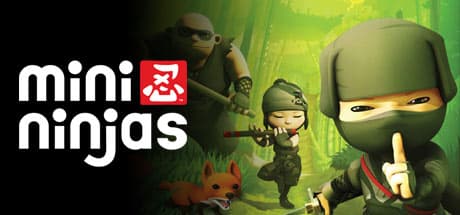
Mini Ninjas: Unleash Your Inner Warrior in a World of Action and Stealth is a third-person action-adventure centered on Hiro and his fellow ninjas as they confront an army of evil samurai. It was released on September 8, 2009, developed by IO Interactive, and published by Square Enix.
The core loop involves exploring layered stages, observing enemy positions, and choosing how to proceed with weapons, stealth, or Kuji magic. Players can enter direct combat, approach enemies from behind, or use the environment to avoid an unnecessary fight.
This flexibility matters most when several enemies occupy the same area.
Exploration is more than a path between battles. Optional routes and hidden spaces reward players who investigate their surroundings instead of rushing toward the next objective.
The game is stage-based rather than a seamless open world, however, so its freedom comes from routes and tactics within each area.
Combat, Stealth, and Magic
Combat uses approachable controls and places more emphasis on positioning than on memorizing elaborate inputs. Repeatedly attacking while surrounded can leave Hiro vulnerable, so dodging and separating enemies is safer.
Reducing a group through stealth before starting a fight can make an encounter much easier.
Hiro's Kuji magic expands the available solutions beyond ordinary sword attacks. Its uses connect combat, infiltration, and exploration, making magic a practical tool rather than a cosmetic effect.
Because magical abilities consume resources, saving them for difficult groups or awkward situations is usually wiser than spending everything immediately.
Multiple playable ninjas have different strengths. Switching characters according to the enemy formation, target distance, or terrain reveals more of the game's tactical variety.
Relying on one familiar character remains possible, but it can make certain encounters less efficient and the overall experience more repetitive.
Getting More from Exploration
Check side paths, elevation changes, and spaces behind structures instead of following only the obvious route. Useful discoveries may sit outside the direct line to an objective, and careful exploration can support both survival and progression.
Enemy placement can also function as navigation information. A guarded route may lead toward an objective or optional discovery, so studying the area before attacking helps identify safer approaches.
This small amount of reconnaissance often saves more time than charging into every visible group.
PC Requirements and Compatibility
The minimum requirements list Windows XP or Vista, a Pentium 4 or Athlon 3.2GHz processor, and 512MB of system RAM.
Vista requires 1GB of RAM. Graphics support starts at an ATI Radeon X1300 or NVIDIA GeForce 6600 with Shader Model 3, while the installation requires 5.85GB of free storage.
The recommended specification calls for an Intel or Athlon dual-core processor and 1GB of RAM, rising to 2GB on Vista. The listed GPU families remain the same, but the recommended configuration specifies 512MB of video memory.
These demands are modest by modern hardware standards, though excess performance does not guarantee compatibility with an older game.
The more important concern is that the published operating-system requirements name Windows XP and Vista. On a current version of Windows, startup, display, or controller issues may depend on software compatibility rather than CPU or GPU power.
Check the current Steam notices before buying, and be prepared to test compatibility settings or update relevant drivers if problems occur.
Reception and Common Impressions
Players frequently appreciate the colorful presentation, accessible controls, and the ease of moving between exploration, stealth, and direct combat. Its friendly tone is paired with enough mechanical variety to keep encounters from depending on sword attacks alone.
The game has maintained a strong user reception over time.
Potential drawbacks are equally important. Combat and enemy behavior can feel simple beside modern action games, while the stealth systems are lighter than those in dedicated infiltration titles.
Compatibility and input problems associated with an older PC release may also shape the experience on current hardware.
Who Should Play It
Mini Ninjas suits players who prefer relaxed exploration and readable action over punishing difficulty. Its ninja theme comes without the relentlessly grim tone or graphic violence found in many combat-focused games, making it approachable for a broad audience.
It is also a good fit for players who enjoy alternating between direct attacks, stealth, magic, and character switching. Anyone who likes checking side routes for hidden rewards will get more from the stages than someone focused only on reaching each objective quickly.
Limitations and Who May Not Enjoy It
Players seeking a demanding stealth simulation or highly technical sword combat may find the systems too forgiving and straightforward. Stealth is a useful option, but the overall design remains an accessible action-adventure.
Those expecting one uninterrupted open world should also note the stage-based structure.
Low system requirements should not be confused with guaranteed operation on every modern PC. The legacy operating-system listing makes compatibility the main purchasing concern.
Reviewing current store notices and recent reports from players using similar hardware is sensible before committing.