Game Overview
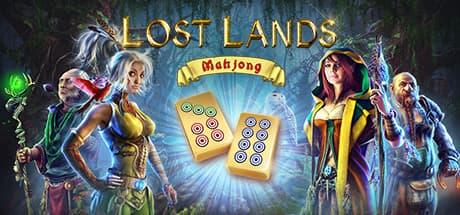
Lost Lands: Mahjong - An Epic Puzzle Adventure combines single-player mahjong solitaire with quests, exploration, collecting, and a continuing story. On a lost island, the player clears tile layouts while helping an elven community survive and advancing through the adventure.
The central loop is straightforward: solve a layout, complete objectives, and move toward new scenes and collections. This is not competitive four-player mahjong, so players do not need to learn hands, scoring, or table strategy.
It suits anyone who wants self-contained puzzles connected by longer-term goals.
Developed and published by FIVE-BN GAMES, the game was released on March 14, 2016. It supports single-player play and Steam Achievements and includes in-app purchases.
Features and Structure
The game offers hundreds of tile layouts and more than 200 quests. Mini-games, other puzzles, and collections break up the mahjong-solitaire progression.
The result is closer to a casual puzzle campaign than a bare collection of unrelated boards.
Its main strength is the balance between short sessions and persistent progress. A player can clear one layout during a brief break or spend longer following quests and filling collections.
That same structure may feel slow to someone who wants to consume the story without repeatedly returning to the core tile-matching activity.
Collections and achievements provide goals beyond simply reaching the end of the narrative. Players who enjoy steadily completing checklists are likely to get more from the large amount of content than those seeking constant mechanical change.
System Requirements
The listed minimum requirements are Windows XP, Vista, 7, 8, or 10, a 1.6GHz processor, 512MB RAM, and 250MB of available storage.
These are modest requirements by modern PC standards, and no dedicated graphics card is specified. Lost Lands: Mahjong - An Epic Puzzle Adventure therefore does not call for a gaming-class PC based on the supplied minimum specification.
The OS list is dated and does not explicitly mention Windows 11. Meeting the numerical requirements does not guarantee flawless behavior on every current system, so checking recent Steam information and player reports is sensible.
No recommended specification is provided in the source data, so performance beyond the minimum cannot be assessed precisely.
Review Tendencies
The game has maintained a favorable reception over time. Its appeal comes from giving familiar mahjong-solitaire boards a broader purpose through quests, story progression, collections, and achievements.
Players who like completing many small objectives have more to pursue than they would in a simple board pack.
The potential drawback is repetition. The core action remains matching and removing tiles across a large number of layouts, so players expecting frequent rule changes may find the pacing monotonous.
The presence of in-app purchases is also worth noting for anyone who prefers games without optional spending; current purchase details should be checked in the game.
Who Should Play It
This is a good fit for mahjong-solitaire fans who want narrative context around each puzzle session. It also suits players who enjoy quests, collectible sets, and achievement progress.
The low storage requirement makes it a practical option for PCs where space is limited.
Because the play is observation-focused rather than reflex-driven, it can work well for relaxed sessions. It is especially appealing to players who want to finish one board at a time while retaining a sense of progress across a much longer campaign.
Caveats and Who Should Skip It
This is tile-pairing mahjong solitaire, not a competitive mahjong simulation. Anyone seeking multiplayer tables, hand building, scoring systems, or strategic play against opponents should look elsewhere.
Its hundreds of layouts can also become repetitive for players who want a short story or rapidly changing mechanics.
The supplied language list includes English, German, Dutch, Russian, French, Italian, Spanish, Portuguese, and Ukrainian, but not Japanese. That matters because the game uses quests and narrative as motivation rather than treating the boards as entirely context-free.
Language availability can change, so verify the current Steam listing before installing.


