Overview
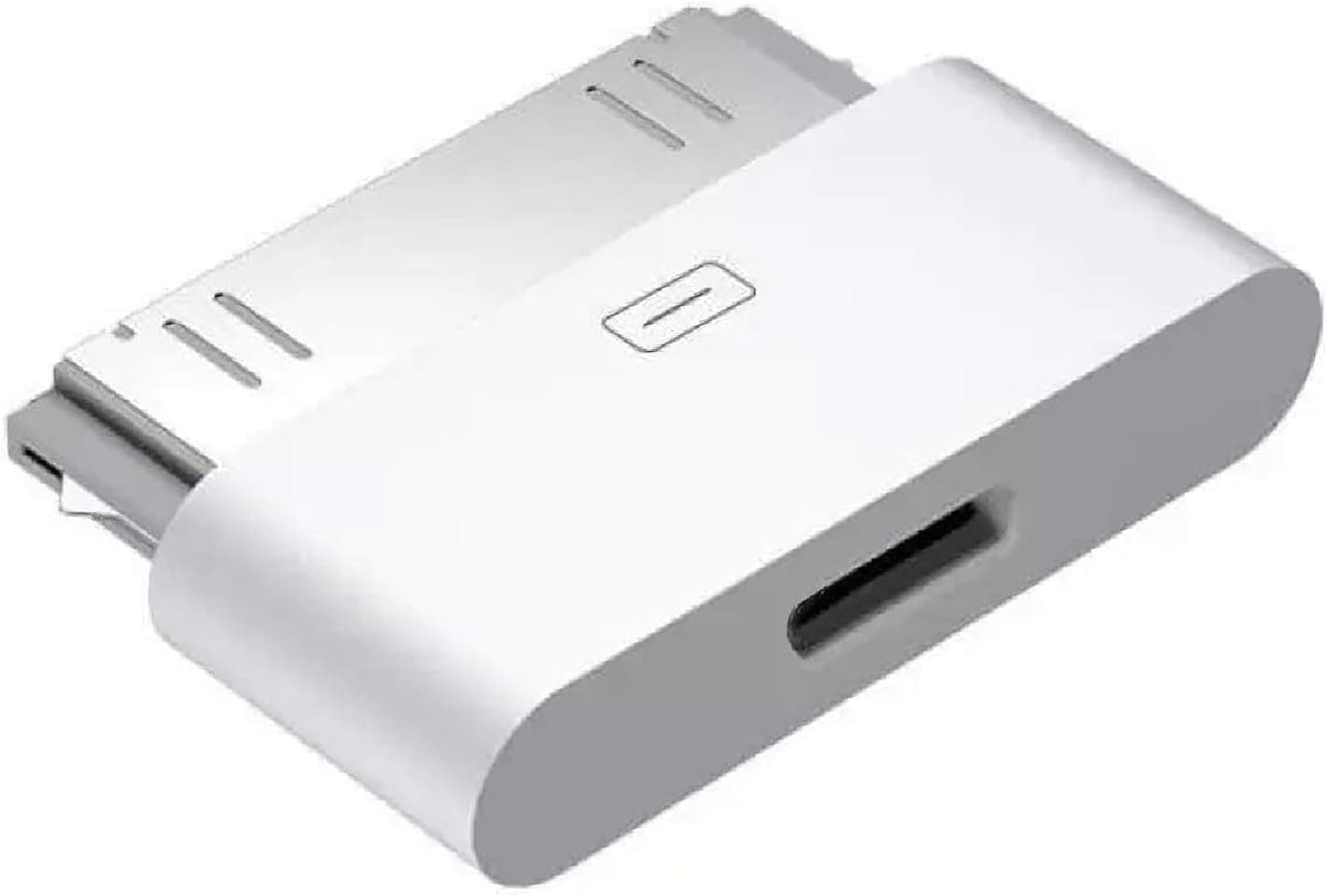
The Belcompany Lightningメスから30ピンアダプター (Lightning female to 30-pin male adapter) is an MFi-certified converter. It accepts the male plug of a Lightning cable on one end and presents a 30-pin male plug on the other, so you push the 30-pin side into the 30-pin female port of a dock, charging stand, or car head unit.
The honest summary: this adapter reliably does charging and data sync for legacy 30-pin gear. Getting audio out of a 30-pin speaker dock is a different question, and the answer depends on your dock (details below).
On Amazon.co.jp it holds 4.1 out of 5 stars across 75 reviews — roughly an 82% favorable score as captured in June 2026 — which is a typical spread for adapters of this kind.
Supported devices are Lightning-equipped models: iPhone 5 and later, iPad 4th generation and later, and iPod Touch 5th generation and later. Recent USB-C devices such as iPhone 15 have no Lightning port at all, so they would need an extra USB-C to Lightning step, and each added conversion increases the chance of handshake failures.
Compatibility Guide
Think about compatibility in three layers: orientation, electrical function, and physical fit.
| Item | Value |
|---|---|
| Connector | Lightning female (8-pin) to 30-pin male |
| Ports | 1 |
| Certification | Apple MFi |
| Functions | Charging, data sync (USB 2.0) |
| Devices | iPhone 5+, iPad 4th gen+, iPod Touch 5th gen+ |
| In the box | Adapter unit x1 |
1. Orientation — the most common mistake. The 30-pin side is male, so it goes into an accessory's 30-pin female port.
It cannot be used the other way around: connecting an old 30-pin iPod to a Lightning cable requires the opposite part, a Lightning male to 30-pin female adapter. Trace the words "female" and "male" in the listing title before ordering.
2. Electrical function. Charging and data sync are both supported, at USB 2.0 speeds (480 Mbps theoretical).
That ceiling comes from the 30-pin standard itself, not from this adapter. The 30-pin interface also has no USB Power Delivery equivalent, so expect conventional 5V-class charging rather than fast charging.
3. Audio from 30-pin docks — check this first. The original 30-pin connector carried analog audio output pins, and most speaker docks and clock radios of that era pull sound from those analog pins.
Lightning is a digital interface and does not reproduce those analog audio lines; even Apple's own 30-pin adapter was documented as not supporting analog audio out or iPod Out. The practical result is that a dock may charge your phone while its speakers stay silent.
Docks and car systems that accept USB digital audio have a better chance of working. Check your specific dock's spec before buying, and if music playback is the whole point, a Bluetooth receiver or an AUX input is the safer route.
4. Physical fit. Docks with recessed connectors or a molded cradle shaped for an old iPhone may not let the adapter seat fully.
Look for roughly a centimeter of clearance around the 30-pin port. In cars, the port is often buried in a tight glovebox or console recess, which is exactly where interference happens.
Product Info
The brand is Belcompany and the Amazon ASIN is B0CWL5D4MX. The model number shown on the listing is identical to the ASIN, which suggests the field holds Amazon's identifier rather than a real manufacturer part number — so searching other shops by "model number" will not work.
Pricing on Amazon.co.jp was ¥3,173 as captured on 25 June 2026 and ¥2,307 as captured on 26 August 2026.
A swing of over ¥800 in two months shows how volatile this category is, so always confirm the current price on the product page. The eBay entry is a search results page, so no individual price is quoted.
The amounts are in a plausible range for an adapter, with no sign of another product's price being scraped in.
Reviews stand at 75 with a 4.1-star average (captured June 2026).
With the count still under three digits, the rating can still move. A 4.1 typically means "works for most buyers, surprised a few" — which matches the audio caveat above.
Positioning is entry to mid-tier. Apple's own adapter is hard to buy new today, so getting MFi certification in the ¥2,000–¥3,000 range (as captured) is this product's practical appeal.
Best Use Cases
- Charging and power delivery for 30-pin gear — charging stands, battery chargers, and sync docks, where no audio path is involved, are where this adapter behaves most predictably.
- Testing before you throw legacy accessories out — at a few thousand yen (as captured), it is a cheap way to find out whether a dock is still usable.
- Buyers who require MFi — uncertified adapters often die after an iOS update with an "accessory not supported" warning; certified parts carry less of that risk.
- Rotating one adapter across several devices — only one adapter is included, so it suits being moved around rather than left installed.
Things to Consider
Wrong orientation means zero usability. This is Lightning female (cable side) to 30-pin male (accessory side).
It will not connect an old iPod or a 30-pin male cable to a Lightning device. Verify from the product photos that the recessed end is Lightning and the protruding end is 30-pin.
Treat speaker-dock audio as unguaranteed. Docks that rely on analog audio pins will likely stay silent.
That is a standards mismatch, not a defective unit, and it is hard to tell apart from a fault — some of the lower review scores probably come from this exact disappointment.
Car feature loss. On early-2010s 30-pin head units, steering-wheel controls, track and album-art display, and playlist browsing may stop working, because those rely on legacy iPod control protocols an adapter cannot recreate.
Sync is slow. At USB 2.0 speeds, large photo libraries and videos take a long time.
For routine large transfers, plug the Lightning cable straight into a PC.
Do not leave it permanently attached. Moving a device while stacked on an adapter puts leverage on both the Lightning and 30-pin contacts, which leads to intermittent connections and bent pins.
Unplug when not in use.
Do not trust listing metadata blindly. The model field repeats the ASIN, and seller or fulfillment labels can disagree with actual distribution.
Reverse-orientation adapters also appear in the same search results, so make your final decision from the product images and the male/female wording in the title.
FAQ
Q. Can I charge an old 30-pin iPod with this? A.
No. The 30-pin side is male and goes into an accessory.
Charging an iPod requires the opposite part, Lightning male to 30-pin female.
Q. Will a 30-pin speaker dock play sound? A.
It depends on the dock. Analog-audio docks will likely stay silent; docks supporting USB digital audio may work.
Check the dock's spec first.
Q. Does it work with iPhone 15 or recent iPads? A.
Those use USB-C, so you would need a USB-C to Lightning conversion first. Stacking conversions invites recognition failures, so it is not recommended.
Q. How fast does it charge? A.
The 30-pin standard has no USB Power Delivery equivalent, so expect conventional 5V-class charging. Not a fast-charging solution.
Q. What does MFi certification change? A.
It lowers the risk of the accessory being rejected after an iOS update and generally means a more stable connection.
Q. What does it cost? A.
¥3,173 as captured 25 June 2026 and ¥2,307 as captured 26 August 2026 on Amazon.co.jp.
Prices move quickly, so check the current listing.
Product Disclosure (Amazon)
- Manufacturer: Belcompany
- Seller: Amazon US
- Fulfilled by: Amazon US
- ASIN: B0CWL5D4MX
- Note: This article covers a manufacturer-made product based on Amazon listing details.