Game Overview
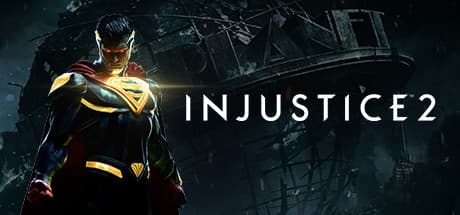
Injustice 2: Build Your Ultimate DC Legend is a fighting game built around heroes and villains such as Batman and Superman. Released on November 30, 2017, it was developed by NetherRealm Studios and QLOC and published by WB Games.
The core loop is straightforward: select a character, control space, open the opponent's defense, and convert successful hits into combos or special attacks. Each fighter has a character-specific ability inspired by DC lore, so ranged specialists and close-range attackers approach a match differently.
The story follows a divided Earth still dealing with Superman's regime while a new threat forces former enemies into shifting alliances.
Combat and Decision-Making
Although the game uses a side-on fighting format, success depends on more than executing special moves. Players gradually learn attack ranges, safe pressure, punish opportunities, anti-air options, and wake-up situations.
Choosing when to advance is especially important when fighting a character who can control the screen from a distance.
Interactive stage objects can be used for attacks, movement, or repositioning. They are not merely visual effects: their value changes with positioning and character type.
Super moves and enhanced attacks can turn a round around, but spending meter aggressively may leave fewer defensive or combo options later.
Gear, Progression, and Customization
Battles award gear that can change a character's appearance and, in relevant modes, adjust attributes. This gives players a reason to continue using favorite heroes and villains after finishing the story.
For anyone who enjoys building a personal version of a character, the gear system provides a clearer long-term goal than a conventional costume list.
Gear progression is separate from learning matchups and execution, however. Players seeking skill-only competition should distinguish modes that use equipment attributes from rules designed for balanced play.
Specific pieces may also take time to obtain, so targeting one exact appearance or build can feel repetitive.
Enjoying the Single-Player Content
Knowledge of DC lore makes the rivalries, alliances, and character pairings more rewarding, but the central conflict is understandable without extensive comic-book background. A practical starting route is to play the story, sample several fighters, and then choose one whose movement and attack range feel comfortable.
There is no need to enter competitive play immediately. CPU matches can be used to test normal-attack ranges and practice a short, dependable combo.
Learning blocking, anti-air responses, and simple punish attacks is generally more useful at first than memorizing a long combo that only works from one opening.
System Requirements
The minimum specification lists 64-bit Windows 7 or Windows 10, an Intel Core i5-750, AMD Phenom II X4 965, or AMD Ryzen 3 1200, and 4 GB RAM. Listed graphics options include a GeForce GTX 670 or GTX 1050 and a Radeon HD 7950 or R9 270.
DirectX 11 and 52 GB of available storage are required.
The recommended specification lists an Intel Core i3-2100, AMD FX-6300, or AMD Ryzen 5 1400 with 8 GB RAM. Recommended graphics hardware includes a GeForce GTX 780 or GTX 1060 6GB and a Radeon R9 290 or RX 570.
The storage requirement rises to 60 GB.
In a fighting game, stable frame delivery matters directly to timing and input consistency. Reducing visual settings to maintain smooth play is usually a better compromise than prioritizing image quality.
Keep additional disk space available for updates and temporary files, and check current operating-system and driver compatibility because the listed Windows versions are old.
Reception and Common Discussion Points
Injustice 2 has maintained a strong long-term user reception. Its cinematic DC story, distinct fighter identities, and combination of combat with gear progression are natural strengths.
The amount of solo-oriented progression also gives players something to pursue without making competitive multiplayer their only objective.
The gear system is also the feature most likely to divide players. Collectors may appreciate the ongoing rewards, while those who want immediate access to a precise build may view the process as a detour.
The elaborate combat presentation suits the comic-book setting, though players focused on rapid rematches may find some sequences lengthy.
Who Should Play It
The game is a strong fit for DC fans who want direct control of familiar heroes and villains. It also suits players looking for both a cinematic campaign and a fighting system they can study over time.
Character progression and visual customization give collection-focused players an additional reason to stay with a favorite fighter.
It is particularly approachable for someone who wants to move gradually from story content to local or online competition. Players can alternate among narrative play, practice, CPU battles, and gear collection instead of committing immediately to ranked matches.
Caveats and Who May Not Enjoy It
Players interested only in equal-condition competitive matches should check the rules of each mode before investing time in gear. Chasing one particular item as efficiently as possible can turn progression into repetitive grinding.
The system works better when treated as a secondary reward for playing a favorite character.
The recommended installation requires 60 GB of available space. Systems near the minimum CPU or GPU level may need reduced resolution and graphics settings to maintain consistency.
Language support, online activity, and available add-on content can change, so verify the current Steam listing before purchasing.