Game Overview
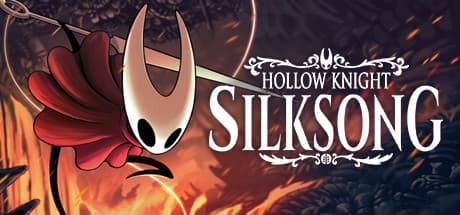
Hollow Knight: Silksong — Ascend as the Princess Knight is an exploration-driven action adventure starring Hornet, a major character from Hollow Knight. After being captured and taken to Pharloom, she begins a pilgrimage toward the citadel at the kingdom's summit.
The core loop combines combat, navigation, quests for local inhabitants, and returning to blocked routes after acquiring new tools or movement abilities.
Where the first game emphasized a descent into a ruined underground kingdom, this journey is framed as an ascent. Mossy caverns, settlements, and gilded districts form an interconnected world with routes that gradually become accessible.
The supplied release timestamp corresponds to September 3, 2025 in UTC and September 4 in Japan.
Features and Systems
Hornet is taller and faster than the original game's protagonist, so movement, aerial positioning, and rapid changes of direction play a larger role. Success in combat still depends on reading an enemy's preparation, controlling distance, and attacking during a safe opening.
Her mobility creates more options, but it can also carry an impatient player directly into danger.
Tools expand both combat and traversal choices. Different setups can encourage different approaches to the same encounter rather than reducing every fight to repeated basic attacks.
Quests also give a reason to investigate side routes and learn about Pharloom's inhabitants instead of treating the summit as the only worthwhile destination.
How It Differs from Hollow Knight
The clearest change is the tempo created by Hornet's speed and reach. Experience with Hollow Knight helps with map reading and patient boss observation, but its exact defensive and recovery habits may not transfer.
Players should expect to learn a new protagonist rather than control a faster copy of the Knight.
The familiar metroidvania rhythm remains: gain an ability, recognize where it can be used, and revisit earlier areas to uncover routes or secrets. The story focuses on Pharloom, its inhabitants, faith, and pilgrimage, so it has its own immediate conflict.
Playing Hollow Knight first is still worthwhile for readers who want more context for Hornet and the wider world.
System Requirements
The minimum specification lists Windows 10 version 21H1 or newer, an Intel Core i3-3240 or AMD FX-4300, a GeForce GTX 560 Ti 1GB or Radeon HD 7750 1GB, and 4GB of RAM. The recommended level moves to an Intel Core i5-3470, a GeForce GTX 1050 2GB or Radeon R9 380 2GB, and 8GB of RAM.
Both tiers require DirectX 10 and 8GB of available storage.
These requirements are modest compared with modern high-end PC games, and a current flagship gaming system is not necessary. Still, the minimum tier is best treated as the lower boundary for operation rather than a promise of ideal responsiveness in every scene.
Owners of older laptops should check the exact graphics processor and Windows build, since the CPU name alone does not establish compatibility.
Controls and Platform Features
The game is designed as a single-player experience and supports controllers as well as keyboard play. Because combat asks for quick direction changes and precise aerial corrections, the best input device is the one that allows comfortable simultaneous movement, jumping, and attacking.
Players who dislike an analog stick's feel should test a directional pad or keyboard layout before assuming the combat itself is the problem.
Steam Achievements and Trading Cards are supported. Multiple languages, including Japanese, are listed, but interface, subtitle, and voice coverage should not be assumed to match.
Check the current language table before playing if a particular form of localization is essential.
Player Reception
Players commonly praise the detailed environments, the satisfaction of locating hidden routes, and the faster style built around Hornet. Learning a difficult encounter and finally executing a clean response provides much of the appeal.
The variation between regions also helps exploration feel like more than a sequence of combat rooms.
Criticism tends to focus on the same qualities that attract dedicated action players. Repeated attempts may be required before an enemy's timing becomes clear, and navigation does not always provide an immediate objective marker.
Players who want a relaxed, continuously directed story may find that structure frustrating.
Who It Suits
It is a strong fit for players who enjoy demanding 2D action, interconnected maps, ability-gated exploration, and stories assembled from environmental details. It also suits Hollow Knight fans who wanted to experience Hornet's agile fighting style directly.
The best match is someone who sees an unexplored passage or optional opponent as an invitation rather than a distraction.
Caveats and Who Should Skip It
Progress is not built around clearing every difficult section immediately. Boss patterns, positioning, and tool choices may need to be reconsidered after a defeat.
Players who strongly dislike repetition, maze-like areas, or deliberately indirect storytelling should approach with caution.
Even returning players need time to adjust to Hornet's speed and attack trajectories. Expecting identical controls and rhythms to Hollow Knight can make the opening hours feel more awkward than necessary.
Language and input-support listings can also change, so verify the current store information if either is critical to your setup.


