Game Overview
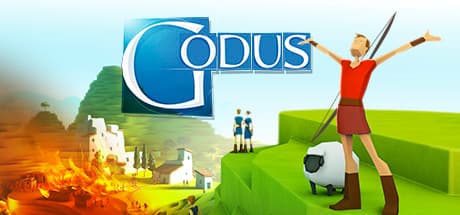
“Godus — Shape Your Own Divine World” is a god-game simulation built around sculpting terrain and preparing land where followers can settle. You reshape hills and slopes, expand habitable ground, encourage population growth, and gain divine power from the belief generated by your people.
Unlike a conventional city builder focused on placing roads or zoning districts, Godus makes the landscape itself your main tool. Terrain editing is not merely cosmetic: accessible land determines where civilization can spread.
This connects sandbox creation directly to progression and population management.
Features and Systems
The central loop is straightforward: reshape land, create room for settlement, grow the population, and build belief. As the community expands, the player gains more power, which supports further intervention in the world.
The appeal comes from watching small manual changes gradually alter an entire landscape and civilization.
This approach feels different from management games driven by dense production chains or constant strategic crises. Godus emphasizes repeated, hands-on terrain shaping and indirect guidance.
Players act less like commanders issuing precise orders and more like deities creating favorable conditions for followers.
Followers settle, multiply, and develop a civilization rather than existing only as a resource counter. Their growth gives the player's actions a visible purpose, while the indirect control preserves the distinctive god-game perspective.
Whether this remains satisfying depends heavily on how much you enjoy sculpting land as a repeated activity.
System Requirements
For Windows, the listed minimum requires Windows XP, a 2.0GHz Intel Core processor, a GeForce 210, 1GB of RAM, 1GB of available storage, and DirectX 9.0.
The recommended specification lists Windows 7, a 2.4GHz Intel Core Quad processor, a GeForce GTS 250, 4GB of RAM, 1GB of available storage, and DirectX 10.
These CPU, GPU, memory, and storage requirements are modest by modern standards. However, the operating systems and graphics cards named in the requirements are from much older generations.
On a current PC, compatibility with a newer operating system and graphics driver may matter more than raw performance, so check recent Steam information and user reports before installing.
Godus is also available for Mac OS and mobile devices, but the figures above describe the supplied Windows requirements. Consult the relevant product listing for platform-specific operating-system and device support.
User Feedback
Current user sentiment toward Godus is notably critical. The terrain-sculpting concept and the idea of nurturing followers may still sound appealing, but prospective players should examine the game's present state and development history before deciding whether it meets their expectations.
Specific complaints and improvements can change over time, so relying on an old impression is also risky. Recent user posts are most useful when read for recurring themes: check whether the systems you care about are currently implemented and whether frequently mentioned issues would affect your preferred style of play.
How It Differs from Other Simulations
Compared with a city-management game such as Cities: Skylines, Godus spends less attention on traffic networks and municipal services. Its defining activity is physically reshaping the land so a population can occupy it.
Compared with RimWorld, it places less emphasis on individual colonists, emergent personal stories, and crisis management.
It also differs from daily-life simulations such as Stardew Valley. The focus is not on controlling one character's routine, building relationships, or following a personal story.
Godus instead asks whether you enjoy preparing a world from above and observing civilization respond indirectly to your changes.
Who It Suits
Godus is best suited to players who enjoy gradually transforming terrain and watching settlements spread across previously empty land. It may appeal to fans of god games, sandbox simulations, and lighter strategy who care about the appearance of their world as well as its growth.
Its accessible central loop can also suit players who prefer learning through direct interaction rather than studying many interconnected systems at once. It is a better fit for relaxed, self-directed development than for short sessions built around clear competitive victories.
Cautions and Who Should Skip It
Godus is described as an indie simulation and strategy game in active development, with an experience that continues to evolve. Players who prioritize a finished feature set and long-term stability should inspect the current build, update history, and development status.
Given the critical user sentiment, judge it by what is playable now rather than by possible future improvements.
It may not suit anyone who dislikes repeated terrain-sculpting actions or expects complex economics, elaborate production chains, or tactical combat. Followers are guided indirectly, so players seeking precise control over every citizen may also find the design limiting.
The supplied information lists support for languages including English, French, Italian, German, Spanish, and Russian. Full audio is listed for English and Turkish.
Japanese support cannot be confirmed from the provided data, so Japanese-language players should check the current language section on Steam before purchasing.