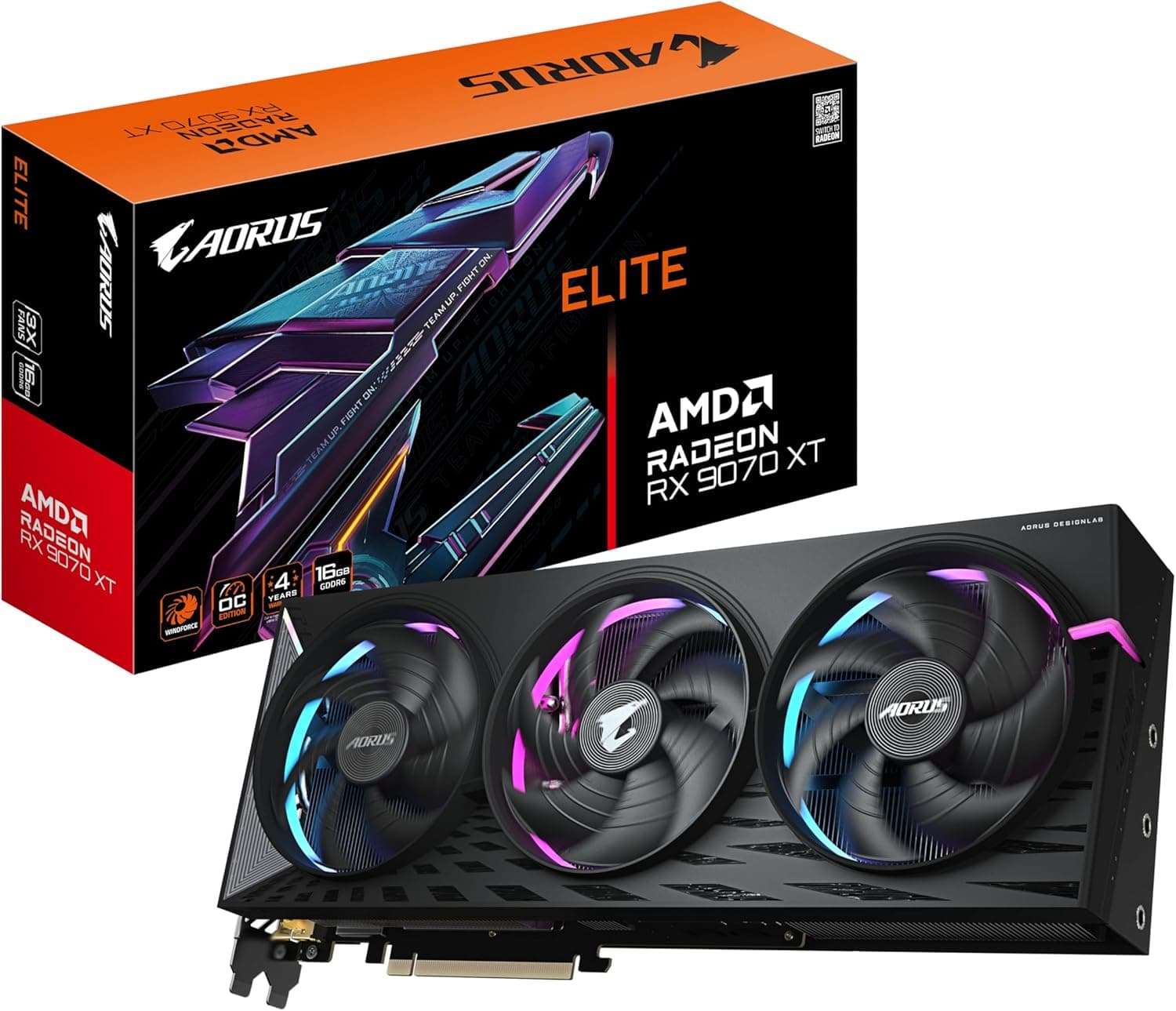
This article covers Gigabyte AORUS Radeon RX 9070 XT ELITE 16G グラフィックスカード.
Overview
GIGABYTE's AORUS Radeon RX 9070 XT ELITE 16G is a high-end graphics card built on AMD's RDNA 4 architecture. It features the Radeon RX 9070 XT GPU with 16GB of GDDR6 memory on a 256-bit bus, and a boost clock of 3100MHz. The card supports PCI-Express 5.0, ensuring maximum bandwidth with compatible motherboards. It's designed for 4K gaming, high-refresh-rate 1440p, and creative workloads.
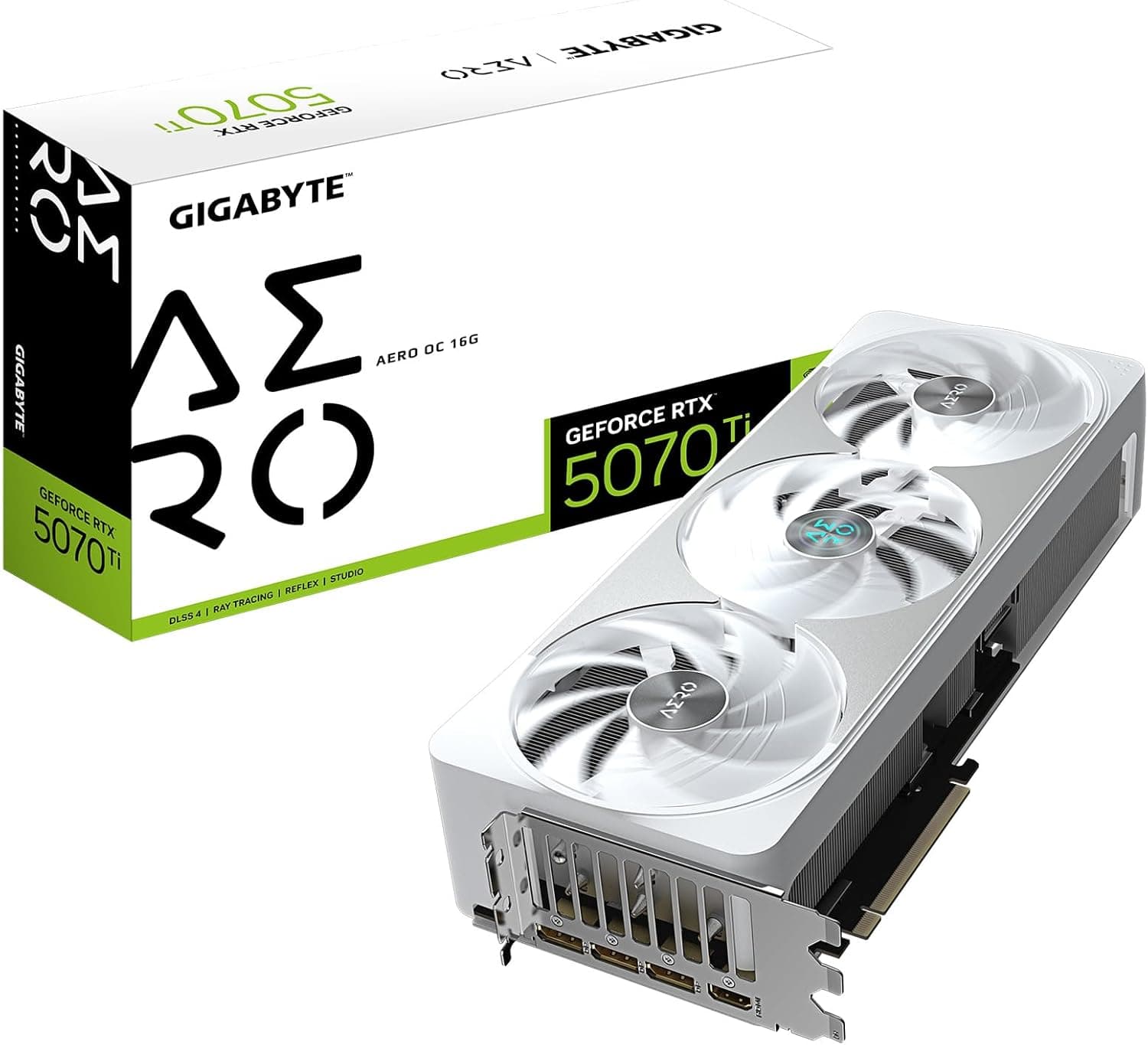
The card comes with GIGABYTE's WINDFORCE cooling system, dual BIOS (performance/silent), RGB Halo lighting, and a reinforced structure with a bundled VGA holder to prevent sag. Online registration extends the warranty to four years. Market positioning places it against the NVIDIA GeForce RTX 5070 Ti, offering competitive rasterization performance and a generous 16GB VRAM buffer.
Compatibility Guide
- PCI-Express Interface: PCI-E 5.0 x16; backward compatible with PCI-E 4.0/3.0, though bandwidth may be slightly limited on older slots.
- Power Requirements: Recommended PSU 550W or higher; for high-end CPUs, 650W-750W is advised. Requires two 8-pin PCIe power connectors (or 12VHPWR adapter).
- Physical Dimensions: Triple-slot design, approximately 330mm+ length. Ensure your case has sufficient GPU clearance. Mid-tower or larger cases are recommended.
- Display Outputs: Two DisplayPort 2.1 and two HDMI 2.1 ports, supporting multi-monitor setups and high refresh rates.
- Memory: 16GB GDDR6, independent from system memory.
Product Info
Released in March 2025, the AORUS RX 9070 XT ELITE 16G carries a street price around ¥225,885 (tax included). It comes with a standard three-year warranty, extendable to four years with online registration. The card is available through major retailers like PC component stores.
Market positioning is high-end. The RX 9070 XT competes directly with the RTX 5070 Ti, offering strong rasterization performance and ample VRAM for 4K textures and AI workloads. The WINDFORCE cooling system with three fans and a large heatsink provides excellent thermal performance with relatively low noise.
Best Use Cases
- 4K Gaming Enthusiasts: With 16GB VRAM and a 3100MHz boost clock, this card handles 4K at high settings in most AAA titles. Ideal for gamers who want to max out graphical fidelity.
- Content Creators (Video Editing, 3D Rendering): The large VRAM and compute performance benefit applications like DaVinci Resolve and Blender. While lacking CUDA, AMD's HIP and OpenCL support is adequate for many workflows.
- 1440p High-Refresh-Rate Gamers: Perfect for 1440p 240Hz+ monitors, delivering high frame rates in both esports and single-player titles.
- VR Users: Stable high frame rates and low latency make this card suitable for virtual reality gaming.
Not recommended for: - Light 1080p 60fps gaming (overkill)
- Small form factor builds (card is large)
- Users who rely on NVIDIA-specific features like CUDA, DLSS, or NVENC (AMD alternatives exist but may have compatibility gaps)
Things to Consider
First, the card's physical size is substantial: triple-slot, over 330mm long. Verify your case's GPU clearance, especially with front fans and PSU cable management. Second, ensure your PSU has sufficient wattage and the correct power connectors (two 8-pin). A 750W unit is recommended for high-end CPU pairings.
Compared to the RTX 5070 Ti, the RX 9070 XT offers competitive rasterization performance but lags in ray tracing and lacks DLSS. AMD's FSR is improving but has fewer supported titles. If you need CUDA for professional work, NVIDIA is the safer choice.
PCI-E 5.0 support is future-proof but currently offers minimal real-world benefit over PCI-E 4.0. The card's dual BIOS feature allows switching between performance and silent modes, which is useful for noise-sensitive users.
FAQ
Q: Can this card handle 4K 60fps gaming?
A: Yes, most AAA titles can achieve 60fps or higher at 4K max settings. With ray tracing enabled, you may need to use FSR or adjust settings to maintain smooth frame rates.
Q: What power supply wattage is recommended?
A: Official recommendation is 550W, but for a full system with a high-end CPU, 650W-750W is safer. Overclocking further increases power draw.
Q: Should I choose this or the RTX 5070 Ti?
A: Choose the RX 9070 XT if you prioritize raw rasterization performance and value. Choose the RTX 5070 Ti if you need better ray tracing, DLSS, or CUDA support for creative work.
Product Disclosure (Amazon)
- Manufacturer: GIGABYTE
- Seller: Islands Hoppers
- Fulfilled by: Islands Hoppers
- ASIN: B0DT7C5ZC7
- Note: This article covers a manufacturer-made product based on Amazon listing details.