Overview
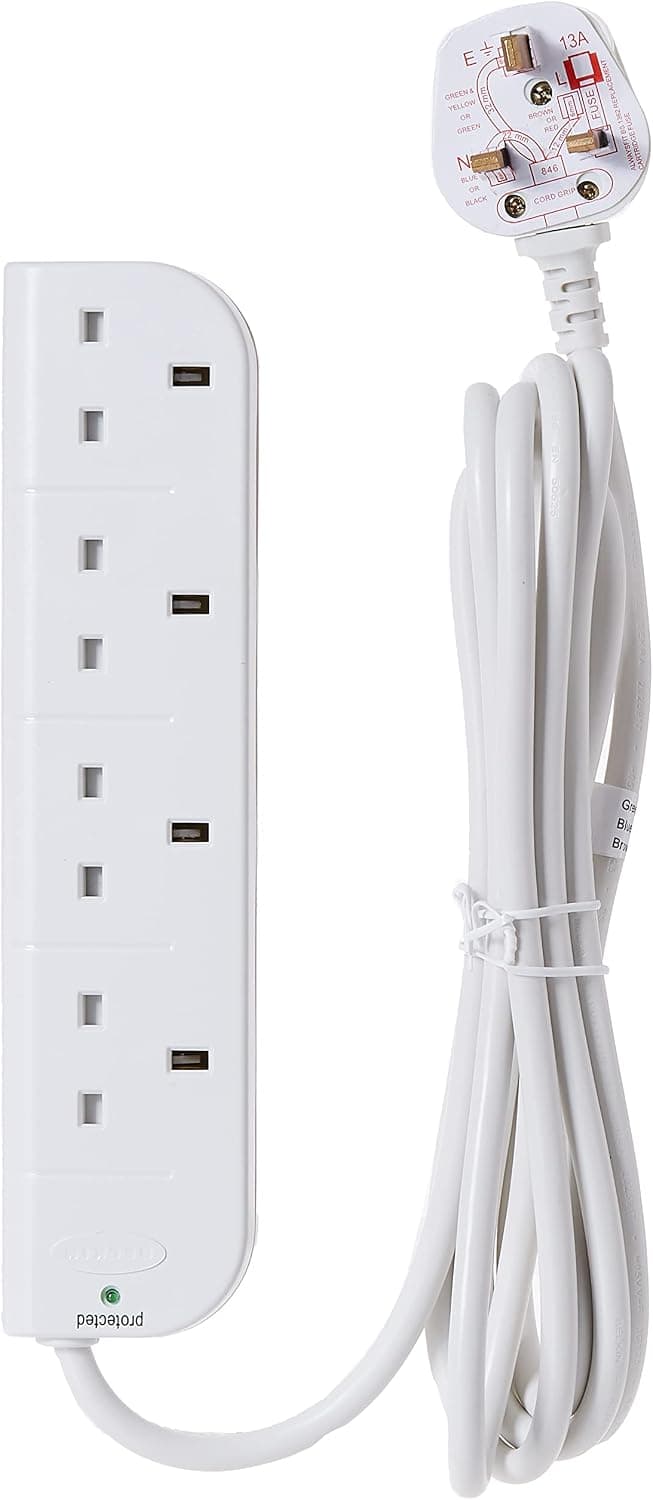
The Generac 7409 SPD Surge Protector is a six-outlet power strip with built-in surge protection. To get to the point: this is not a cheap strip replacement — it targets people who want to protect high-value gear such as PCs and audio equipment from lightning-induced surges and grid-side voltage spikes.
The neutral grey housing suits both a desk and the back of an AV rack, and the 1.8 m cord gives enough reach when the wall outlet is not directly behind the setup.
The headline specs are 1080 J of surge energy absorption, a 1875 W (15 A) maximum load, six outlets, and a 1.8 m cord.
Amazon.co.jp shows 55 reviews averaging 4.9 out of 5 (98% positive) as captured on 2026-09-03.
That is a strong score, but 55 reviews is a small sample compared with bestsellers that carry thousands — treat the rating as encouraging rather than as proof of a long track record.
How to Read the 1080 J Rating
The joule rating is really a lifespan figure. The protective components (MOVs) wear down every time they absorb a surge, and once cumulative absorbed energy approaches the rating, protection is effectively gone.
So 1080 J is better understood as "roughly this much total energy it can swallow over its life" than as a one-shot limit.
In consumer surge protectors, a few hundred joules is entry level, 1000–2000 J is the practical range, and 3000 J and above is high end. 1080 J sits at the entry of the practical range.
That is plenty for one desk's worth of PC, monitor, and router. If you live somewhere with frequent lightning and want to protect an expensive AV chain, consider a higher-joule unit or pairing this with panel-level protection.
Also remember that surge protectors are consumables. The indicator light tells you when the protection circuitry has degraded — which means the intended usage cycle is "trust it while the light is on, replace it when the light goes out," not "keep it forever."
Compatibility Guide
The plug is NEMA 5-15P and the outlets are NEMA 5-15R (3-prong grounded). That shape is the North American standard, and because Japanese wall outlets share the same blade shape, it physically fits.
The practical catch is grounding: many Japanese wall outlets have no round ground hole, so a 3-prong plug will not go in as-is and you will need a 3P-to-2P adapter plus a ground wire connection. Check the outlet you plan to use before ordering.
Capacity deserves the same care. The 1875 W (15 A) figure assumes 125 V North American mains.
On Japan's 100 V, the same 15 A yields roughly 1500 W. Budget against 1500 W in Japan, not 1875 W, or your house breaker may trip before the strip's own limit is reached.
In real numbers: a gaming desktop (500–700 W at peak), two 27-inch monitors (30–50 W each), plus a router and external drives (about 50 W total) lands near 900 W — comfortable headroom. Oil heaters, electric kettles, and laser printer fusers, on the other hand, can exceed 1000 W on their own and should never share this strip with other gear.
There are no USB ports. Charging a phone or controller means giving up one AC outlet to a USB charger, so plan around five usable AC outlets.
Bulky wall-wart adapters can also physically block neighbouring sockets — check the product photos for outlet spacing before buying.
Product Info
| Item | Value |
|---|---|
| Outlets | 6 |
| Surge energy rating | 1080 J |
| Cord length | 1.8 m |
| Max load | 1875 W (15 A) |
| Plug / outlets | NEMA 5-15P / NEMA 5-15R |
| USB ports | None |
The listed price on Amazon.co.jp was ¥24,477 as captured on 2026-09-04.
Prices move with stock and sales, so confirm the current figure on the product page. Marketplace listings exist as well, but for power equipment the safety certification and unit condition matter, so buying through regular retail channels is the safer route.
Protection is specified as all-mode (L-N, L-G, N-G) with a response time under 1 nanosecond, plus an indicator light for degraded protection. The warranty is described as a standard one year from the manufacturer, though coverage handling in Japan and any registration-based extension depend on the sales channel — check the listing.
How It Compares
The six-outlet surge-protected category includes cheaper options such as CyberPower's swivel strip and the Status six-way surge extension socket. Look at Japanese brands and you will find strips with per-outlet switches, dust shutters, and swing plugs — features tuned to Japanese homes — at a far lower price.
Seen that way, the appeal here leans on the Generac name more than on the 1080 J figure itself. If you are optimising purely for value, a domestic surge strip is often the more rational buy.
If you already run Generac power equipment or use NEMA-standard gear in Japan, buying this one by name makes sense.
Before You Buy
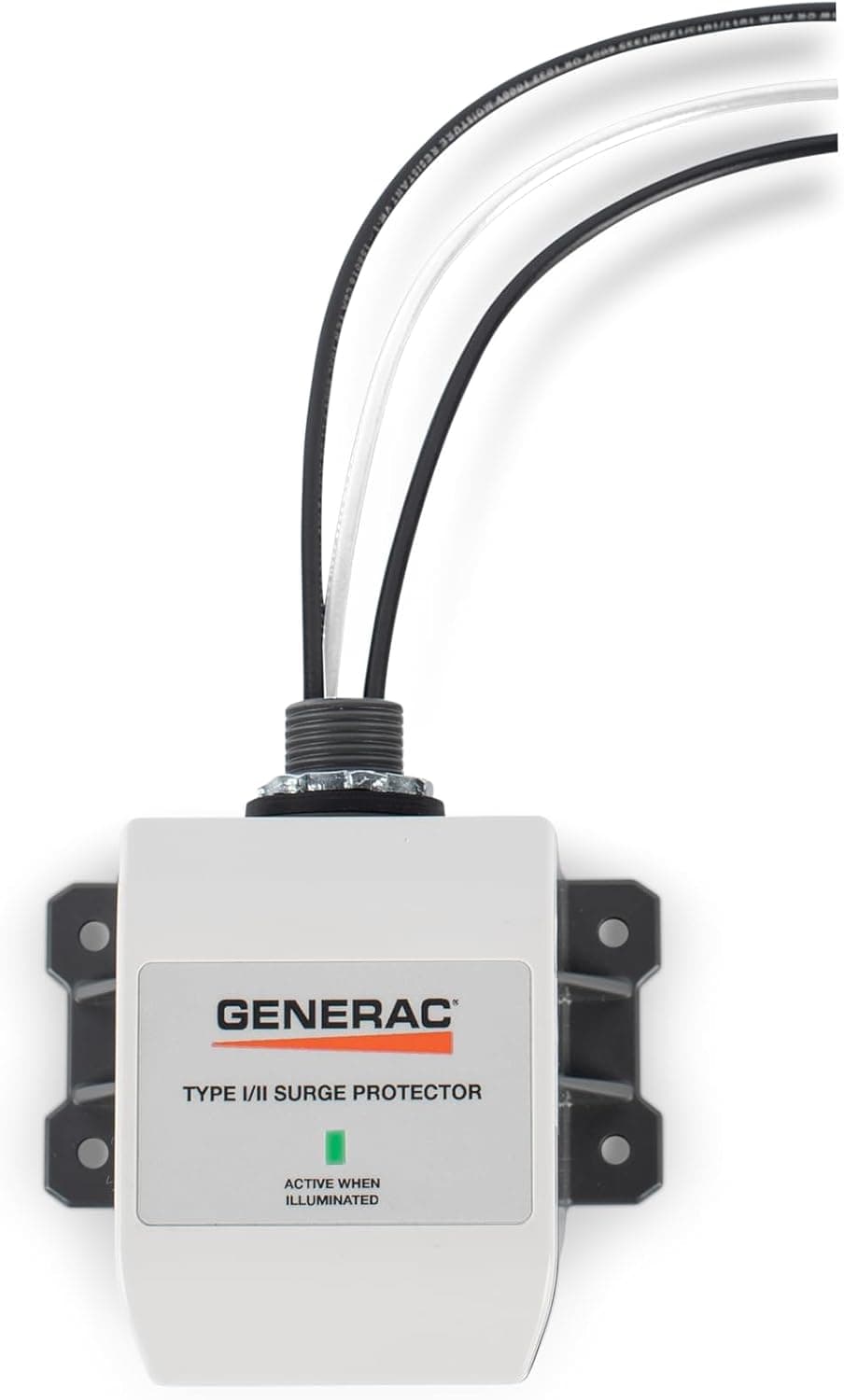
First, verify what you are actually buying on the product page. Generac is best known for generators and whole-home surge protective devices installed at the electrical panel, and ¥24,477 is high for an ordinary desktop power strip.
Listing metadata and category assignments do sometimes disagree with the actual product, so check the images, title, and dimensions yourself and confirm this is the desk-side strip you expect before ordering. That is basic practice for any imported power product bought online.
Second, this is not a UPS. Surge protection covers momentary overvoltage, not outages.
If your goal is shutting a desktop down safely or protecting NAS data during a blackout, you need a battery-backed UPS instead.
Third, grounding matters. All-mode protection (L-G, N-G) only works if ground is actually connected.
Used without a ground connection, you effectively get L-N protection only, well short of the spec sheet. Confirm a ground terminal is available at the install location.
Fourth, count effective outlets, not nominal ones. Two large AC adapters can turn six outlets into four, and the missing USB ports cost you another.
Judge by physical adapter size, not cable count.
Finally, read the reviews rather than the score. 4.9 with 98% positive is excellent, but across only 55 reviews (captured 2026-09-03), long-term failure patterns may not have surfaced yet.
Best Use Cases
Desktop PC owners consolidating one workstation. A PC, monitor, speakers, and external drives fit comfortably within both the outlet count and the power budget.
Worth the investment if you live in a lightning-prone area.
AV rack tidying. A TV, AV receiver, console, and media player fill four of six outlets, and 1.8 m is enough cable to route behind a rack.
Just leave room for future additions.
Users running NEMA-standard gear in Japan. If you can secure a proper ground path, the design works as intended.
It is a poor fit if you mainly want cheap extra outlets, value per-outlet switches and dust shutters, or want integrated USB charging — a domestic surge strip will satisfy those needs better and for less.
FAQ
Q. Can I use it directly on a Japanese 100 V outlet? A.
The blade shape fits, but the 3-prong ground pin means most standard two-hole Japanese outlets need an adapter. Check your outlet first.
Q. Can I really load it to 1875 W? A.
That figure assumes 125 V. On 100 V, 15 A means roughly 1500 W; staying under about 1200 W is safer.
Q. Does it keep devices running during a blackout?
A. No. It is a surge protector, not a UPS — there is no battery backup.
Q. How long does the surge protection last? A.
The protective elements are consumable. Watch the indicator light; once it goes out, treat the unit as due for replacement.
Q. Can it charge USB devices?
A. No USB ports. Plan on five usable AC outlets if one is taken by a USB charger.
Q. Is the price justified? A.
On specs alone, domestic surge strips offer better value (impression based on the ¥24,477 captured 2026-09-04, which will change). This price tier suits buyers with a brand or standards-based reason to choose it.