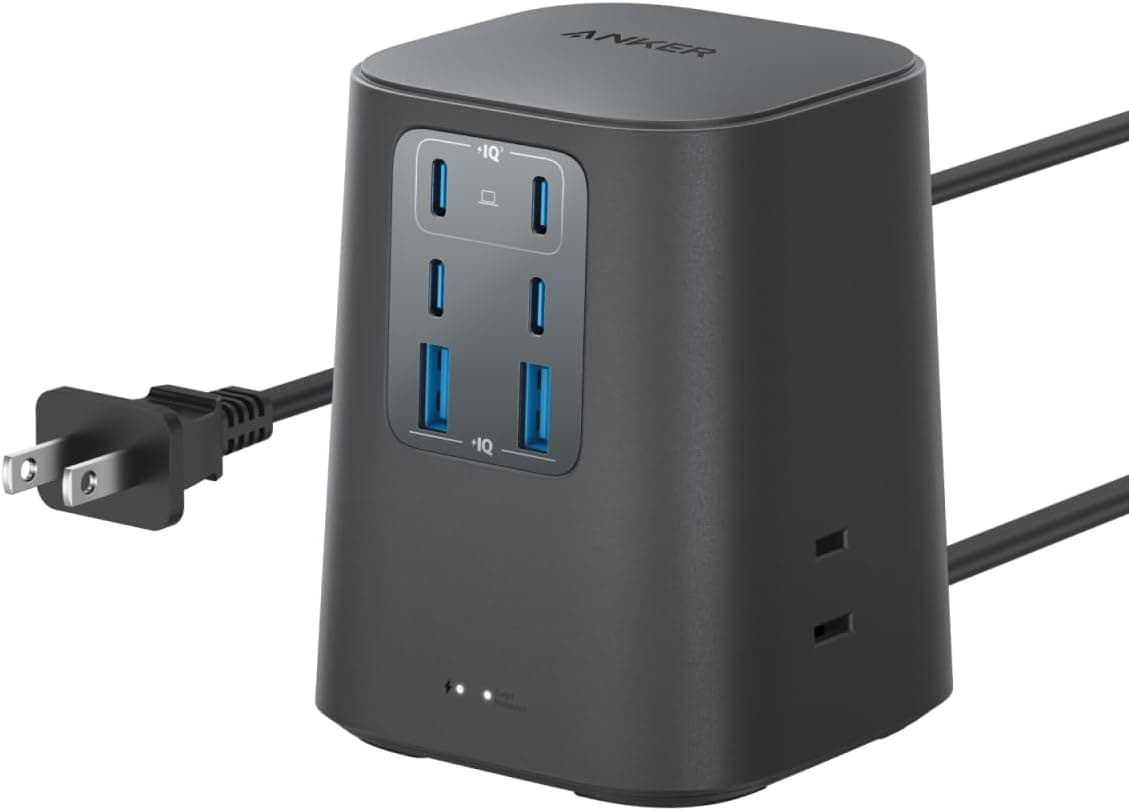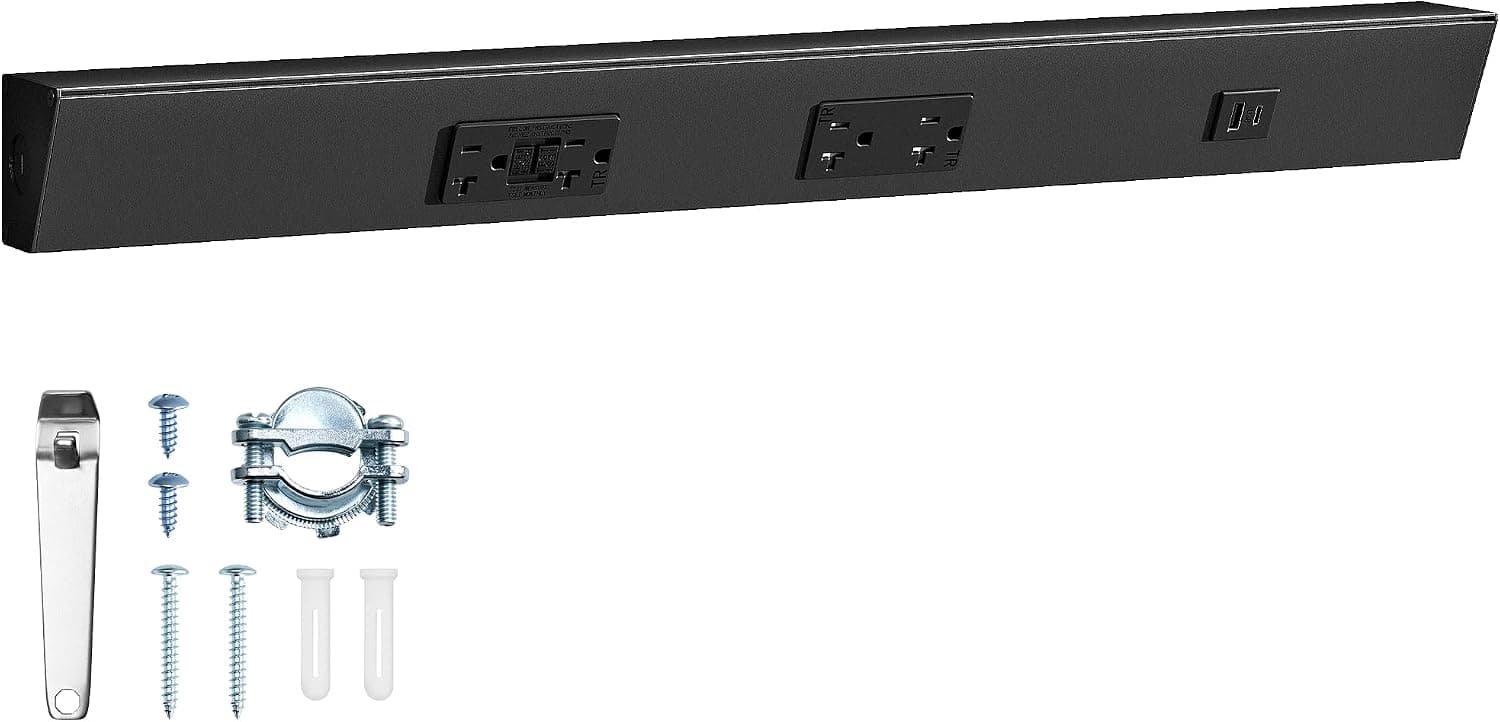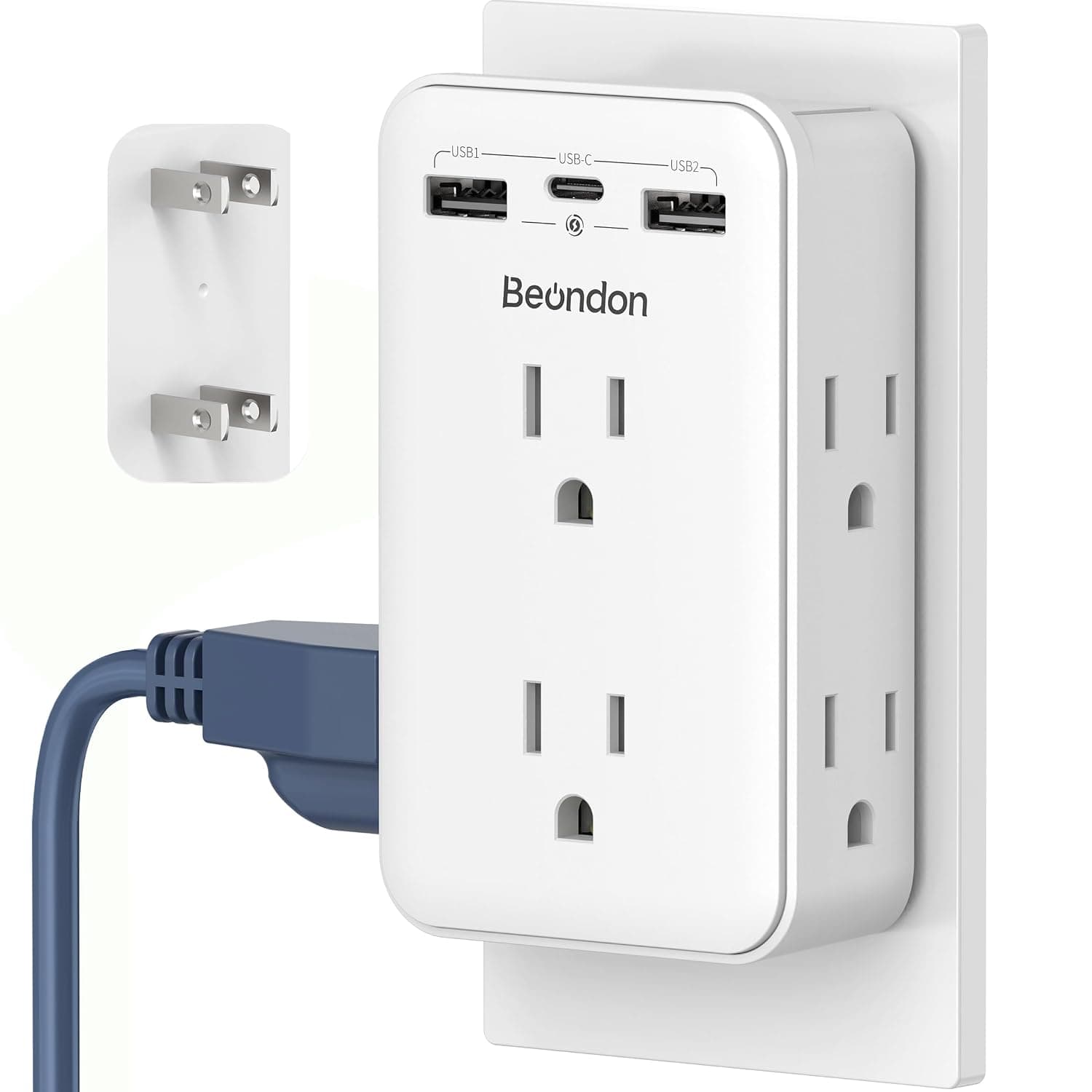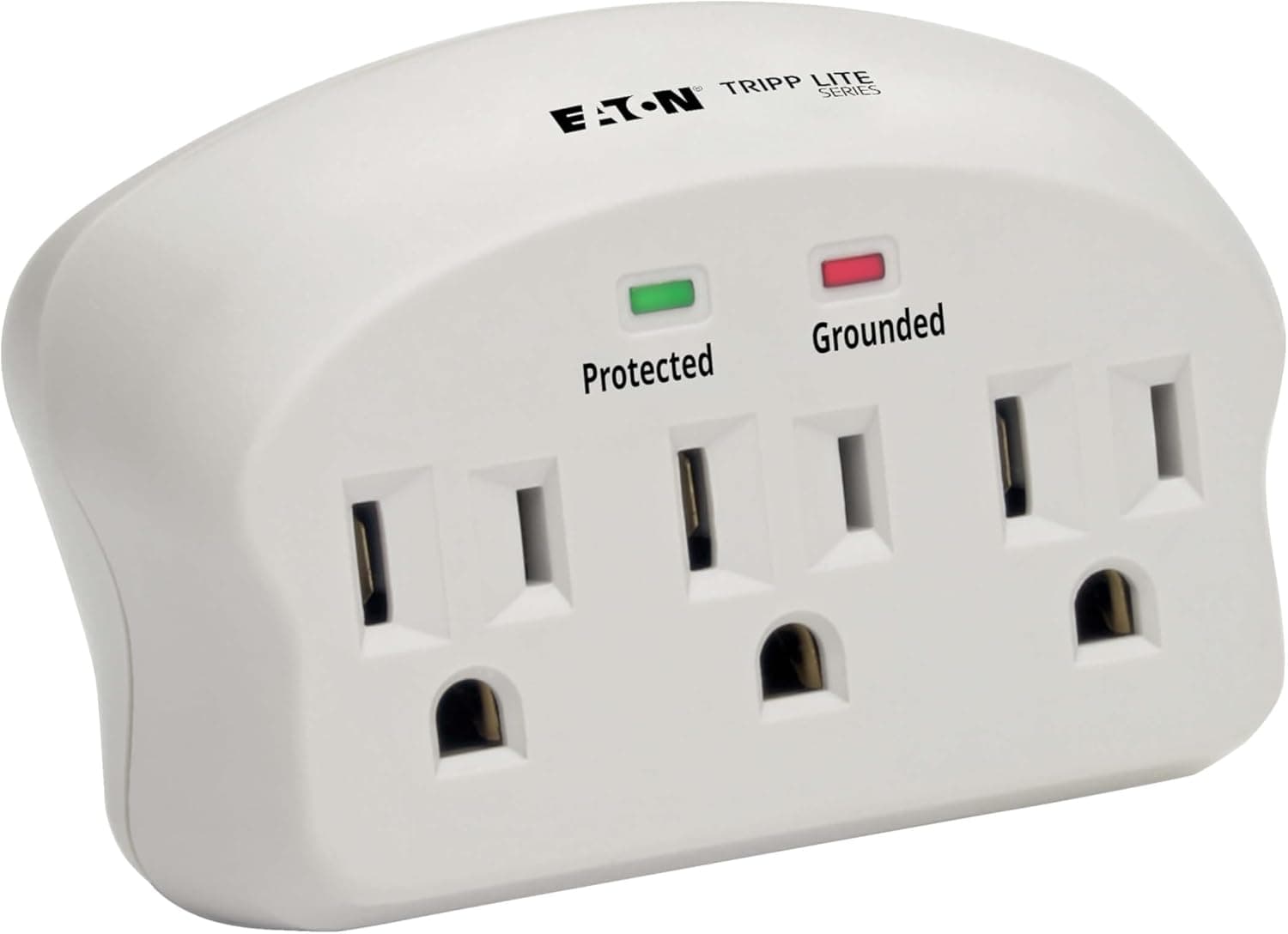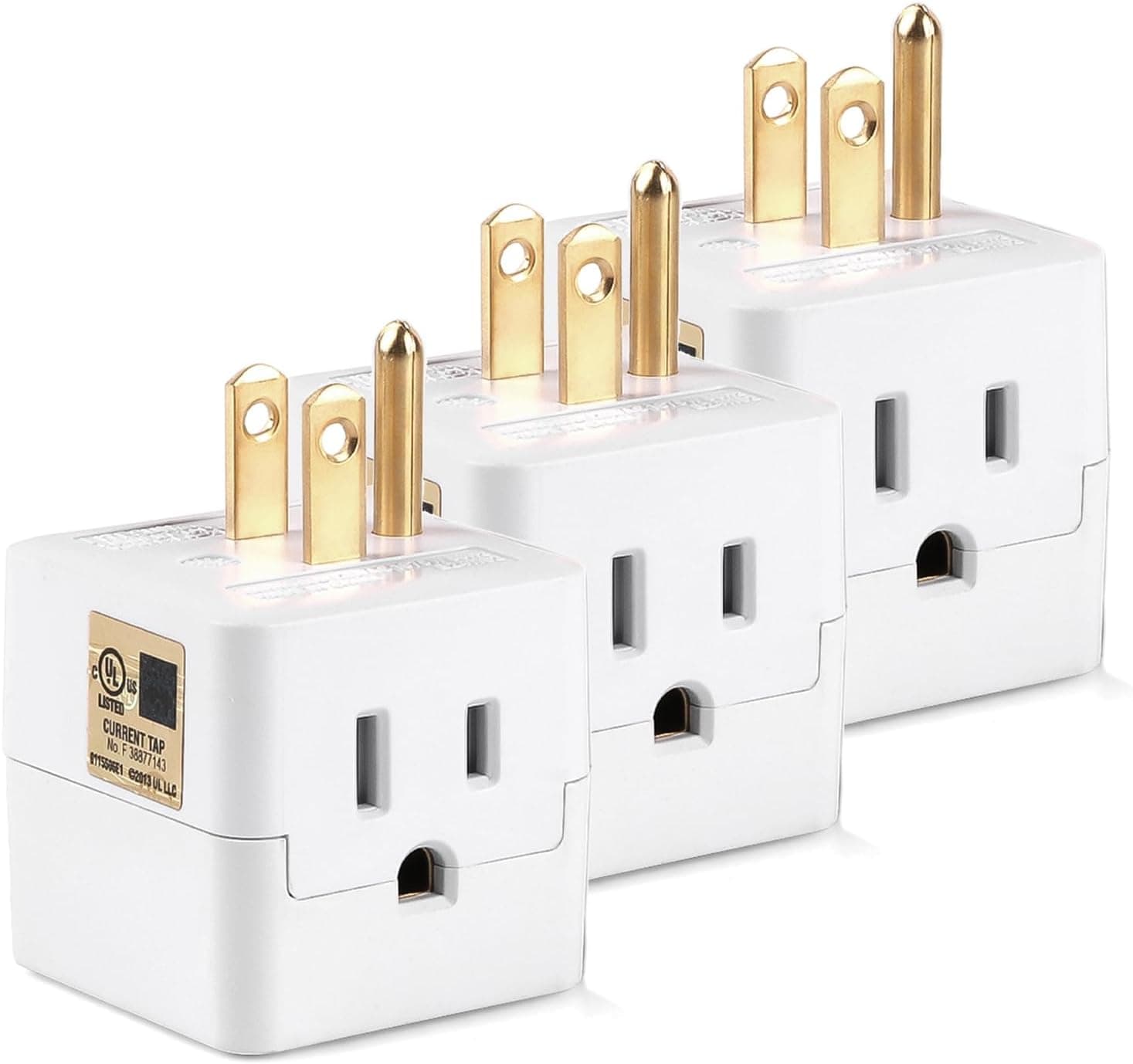
The FiiMan 3-Outlet Wall Adapter is a cube-style tap that turns one wall outlet into three. It plugs directly into the wall with no cord, and ships as a 3-pack.
This article works through what it can actually handle, and where you should stop using it, based on the published specs and review record.
Overview
The unit is rated 125V / 15A / 1875W maximum, with three outlets and a weight of about 54g. Because it mounts flush to the wall instead of trailing a cord, it works in the few centimeters behind a desk or a cabinet where a conventional power strip simply will not fit.
The 3-pack lets you cover a living room, a bedroom and a work desk in one purchase.
The short verdict: this is a product for people who want to split one outlet into three low-to-moderate draw devices in as little space as possible. Phone and tablet chargers, laptop power bricks, desk lamps, routers and monitors all fit that description.
It has no surge protection, no switches and no USB ports. If you wanted a full-featured strip, this is the wrong category.
Compatibility Guide
The plug is a 3-prong NEMA 5-15 type and the form factor is direct wall mount. This is the single most important thing to check before buying.
| Item | Spec | What it means in practice |
|---|---|---|
| Plug type | 3-prong NEMA 5-15 | Needs a grounded 3-slot outlet |
| Rated voltage | 125V | Japan runs at 100V, so no voltage issue |
| Current / power | 15A / 1875W | On 100V mains, treat ~1500W as the ceiling |
| Cable length | 0 (wall mounted) | Body protrudes a few cm from the wall |
| Weight | About 54g | Light enough not to sag out of the socket |
| Environment | Indoor only | Not for outdoors, bathrooms or washrooms |
Most Japanese wall outlets are two-slot Type A sockets with no ground pin. A 3-prong plug will not seat fully in those, so you need either a grounded three-slot outlet or a 3-to-2 prong converter.
Air conditioner and washing machine outlets often have a ground terminal; ordinary living-room outlets usually do not. Look at the outlet you intend to use and check for a round ground hole or a hinged ground terminal cover before ordering.
The power figure also needs translating. 1875W comes from 125V x 15A, which assumes North American mains.
On Japan's 100V supply, the same 15A gives you roughly 1500W. Reading "1875W" literally will lead you to over-budget, so treat 1500W as the practical ceiling in Japan — and note that this is the total across all three outlets, not per outlet.
Budgeting the Load
Once you think in totals, the rules get simple. A phone charger draws a few watts up to around 30W, a laptop brick typically 45-100W, and an LCD monitor roughly 20-50W.
Fill all three outlets with devices in that range and you are still around 200W total, with plenty of headroom.
Heating appliances are where it breaks. Kettles, hair dryers, microwaves, oil heaters and electric foot warmers routinely exceed 1000W on their own, so two of them blow past the limit instantly.
Plug heating appliances straight into the wall, never into this adapter. That is not a criticism of this product; it applies to every branch adapter.
The 90-degree rotating face is more useful than it sounds. If you use a bulky wall-wart style AC adapter, being able to turn it means the difference between blocking the neighbouring outlet and not blocking it.
Product Info
The price was ¥3,306 for the 3-pack as captured on 31 August 2026. That works out to roughly ¥1,100 per unit, which is normal for this class of adapter.
Amazon pricing moves frequently with sales and stock, so check the product page for the current figure — the number here is a snapshot, not a standing price.
The shell is ABS plastic, and the product is listed as UL certified. UL is the North American safety mark, indicating the product passed fire and shock hazard testing.
What matters here is that UL is a different scheme from Japan's PSE (Electrical Appliance and Material Safety Act). Power taps sold domestically in Japan are expected to carry a PSE mark, and a UL mark does not substitute for it.
Check the listing yourself for PSE information if you plan to use it as a permanent fixture in Japan.
The headline specs: 125V rated voltage, 15A rated current, 1875W maximum power, three outlets, about 54g, zero cable length, UL certification. Simple numbers, with the one caveat that the 1875W figure is a 125V-basis value.
Real-World Feedback
The Amazon rating is 4.7 out of 5 stars across 103 reviews, a 94% positive score (captured 30 August 2026).
A hundred reviews is a moderate sample — not statistically bulletproof, but enough that a product with widespread early failures would show visible one-star clusters. A 4.7 puts it near the top of its price band.
Ratings in this category usually hinge on two things: how firmly the plug seats, and whether the body blocks the adjacent outlet. A loose fit causes heat and intermittent contact; an overly tight fit damages the wall socket over time.
At 54g, there is little weight pulling it out of the socket. Unit-to-unit variation cannot be judged from the published data, so I will not claim either way.
Compared to the Alternatives
The wall-mounted outlet-splitter category also includes 2-outlet models, 6-outlet models, and versions with surge protection. Three axes decide the choice.
- Outlet count — 2-outlet units are the thinnest and protrude least. Three is the sweet spot for lining up chargers. Six-outlet units are convenient but bulky, and heavy adapters make them tilt.
- Surge protection — this model has none. If you are connecting a PC, NAS or console where a voltage spike means real damage, buy a surge protector instead. For phone charging and a desk lamp, it is overkill.
- Switches and USB ports — neither is present here. If you want to cut standby power or charge over USB-C directly, look at a different product class.
The 3-pack format is clearly better value than buying singles. These adapters have a way of spreading through a house once you start using one.
Best Use Cases
- Anyone flattening the cable mess behind a desk — a conventional strip costs you the depth of the body plus the cord. Wall mounting gets you three outlets with the desk still pushed against the wall.
- Charging a phone, tablet and laptop together — three low-wattage devices is exactly what this product is designed around.
- Adding outlets in several rooms at once — the 3-pack covers a living room, bedroom and study, and drops the per-unit cost.
- Anyone with grounded outlets — 3-prong support means you keep the ground connection, which 2-prong-only adapters cannot do.
It is not for people who need surge protection, want individual switches to cut standby draw, or intend to run multiple heating appliances.
Before You Buy
1. The ground pin is the main obstacle. A 3-prong plug physically will not fit an ordinary two-slot Japanese outlet.
Buying without checking and finding it does not fit is the most common failure with this shape of product.
2. 1875W assumes 125V. On 100V mains, roughly 1500W is the real ceiling, and it is a total across three outlets.
Running a dryer and a kettle together is well outside the design envelope, and exceeding the rating risks overheating.
3. There is no surge protection. Plenty of buyers assume any power tap protects against lightning surges.
This one is a splitter. If surge protection is the goal, buy a product explicitly labelled as a surge protector.
4. Indoor use only. No waterproofing spec is given, so keep it away from balconies, bathrooms, washrooms and anywhere prone to condensation.
5. UL is not PSE. UL certification is the North American scheme; Japan's domestic requirement is PSE.
If you plan to use it permanently in Japan, verify the listing's PSE information, and if you cannot tell, choose a domestically sold product with a clear PSE mark.
6. Listing metadata can disagree with the actual item. Amazon listings auto-populate seller, fulfiller, manufacturer and model number fields, and occasionally another product's data slips in.
At the time of writing, the seller and fulfiller are both listed as Amazon US, which may mean import handling and longer delivery times when ordering from Japan. Confirm the product images, the title and the seller line match your expectations before ordering.
FAQ
Q. Will it fit a standard Japanese wall outlet? A.
Not a two-slot outlet without a ground hole — the third prong blocks it. You need a grounded three-slot outlet or a 3-to-2 prong converter, and note that a converter leaves the ground unconnected.
Q. How many watts can I run across all three outlets? A.
The spec says 1875W at 125V, but on 100V mains treat about 1500W as the guide, and that is the total for all three. Chargers and laptop bricks leave plenty of margin; heating appliances should be avoided entirely.
Q. Does it protect against lightning surges? A.
No. There is no surge protection.
Use a dedicated surge protector for PCs, consoles and NAS units.
Q. Can I stack several of the three units on one outlet? A.
Don't. Daisy-chaining branch adapters makes the total current impossible to track and raises the heat risk at the contacts.
Use the three units in three separate locations.
Q. When was the price captured? A.
The ¥3,306 figure for the 3-pack is from 31 August 2026. Amazon prices move with sales and stock, so check the listing before buying.
Q. Can I use it outdoors or in a shed? A.
Indoor use only. It is not weather sealed, so avoid rain exposure and condensing environments.
Product Disclosure (Amazon)
- Manufacturer: FiiMan
- Seller: Amazon US
- Fulfilled by: Amazon US
- ASIN: B0CQC9T1XF
- Note: This article covers a manufacturer-made product based on Amazon listing details.