Game Overview
F.E.A.R.
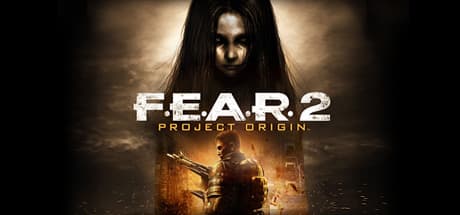
2: Project Origin – Survive Alma's Terrifying Wrath follows Special Forces Sgt. Michael Becket through a crisis involving armed enemies and an escalating supernatural threat.
His deployment begins shortly before the catastrophic blast caused by the first F.E.A.R.
team, turning an ordinary operation into a struggle to survive Alma Wade's influence. Developed by Monolith and published by Warner Bros.
Games and Warner Bros. Interactive Entertainment, the game was released on February 12, 2009.
The campaign moves between dark interior spaces and devastated outdoor areas. Players explore, fight hostile forces, and search for clues about Alma and the unfolding disaster.
This is not a horror game built mainly around hiding: frequent first-person combat drives the experience, while supernatural interruptions make even quiet exploration feel unsafe.
Combat and Slow Time
The central combat tool is an enhanced-reflex ability that slows the player's perception of time. It gives you room to read enemy movement, steady your aim, and deal with several threats before they can overwhelm your position.
Rather than treating it as a visual gimmick, use it to simplify encounters that would be difficult to control at normal speed.
Positioning still matters. Indoor fights can force enemies and the player into close quarters, so entrances, corners, cover, and escape routes deserve attention before a firefight develops.
A dependable approach is to identify cover first, activate slow time when enemies expose themselves, and remove the opponents controlling the most dangerous lines of fire.
F.E.A.R.
2 has the atmosphere of a horror game, but its mechanical core is a fast shooter. Saving every resource for a later emergency can make current battles unnecessarily difficult, while careless use can leave fewer options in the next encounter.
Much of the satisfaction comes from deciding when an ability or weapon will have the greatest effect.
Horror and Storytelling
Alma is more than a conventional enemy placed in front of the player. Her presence distorts what Becket sees and turns otherwise ordinary spaces into sources of uncertainty.
This approach suits players who enjoy psychological horror delivered through fragments, sudden changes, and unsettling implications rather than immediate explanations.
The story continues events associated with the earlier F.E.A.R.
team, so familiarity with the series can make its characters and references easier to understand. However, Becket provides a different point of view, allowing players to follow his immediate predicament even if they do not know every previous detail.
Players interested in the setting should slow down after battles and pay attention to environmental information instead of rushing toward the next objective.
System Requirements in Context
The minimum CPU is a Pentium 4 at 2.8GHz or an Athlon 64 3000+.
For Windows Vista, the listed equivalents rise to a Pentium 4 at 3.2GHz or an Athlon 64 3200+.
Minimum memory is 1GB, or 1.5GB on Vista.
The graphics requirement is a fully DirectX 9-compliant card with 256MB of video memory and Shader Model 2.0b support, represented by the GeForce 6800 and Radeon X700.
The recommended specification lists a 2.2GHz Core 2 Duo family processor or an Athlon 64 X2 4400+, plus 1.5GB of memory.
Its GPU target is a DirectX 9 card with 512MB of video memory and Shader Model 3.0 support, such as a GeForce 8600 GTS or Radeon HD 2900 XT.
Both tiers require 12GB of available storage and DirectX 9.0c.
These requirements were written for hardware contemporary with the game's release, so the raw performance demand is modest by current gaming-PC standards. Compatibility can matter more than processing power with an older DirectX title, however.
If a modern system has launch or display trouble, check operating-system compatibility options, graphics settings, and the availability of required legacy runtime components.
The recommended CPU entry also notes that it is required for hosting multiplayer. That distinction matters when comparing the needs of the single-player campaign with those of a machine acting as a host.
It is also sensible to leave more than exactly 12GB free so installation and related system operations have working space.
Reception and Lasting Appeal
The game has maintained a broadly favorable reception over time. Its most recognizable strengths are slow-motion firefights, the alternation between aggressive action and supernatural tension, and the disturbing identity created around Alma.
It is particularly suitable for players who want horror atmosphere without spending most of the game powerless or hidden.
Its age is also part of the purchasing decision. Visual presentation, control conventions, and convenience features may feel different from those in current releases.
The campaign is directed and story-led, so players expecting an open map, extensive build crafting, or a highly replayable sandbox may find the structure restrictive.
Practical Tips for Starting
New players should not reserve slow time exclusively for emergencies. Activating it as a group of enemies enters the fight can prevent the situation from becoming unmanageable.
Focus first on enemies in dangerous positions, return to cover as normal speed resumes, and then handle the remaining threats.
Before entering a room, note where you could retreat and which surfaces can break enemy sightlines. For the intended horror atmosphere, avoid raising brightness so far that every dark space becomes flat, but keep geometry readable enough for combat.
Directional audio is useful because gunfire, movement, and environmental sounds all contribute to situational awareness.
Who Should Play It
F.E.A.R.
2: Project Origin is a strong fit for players who want to continue the series, combine psychological horror with responsive gunplay, or use slow time to make rapid tactical decisions. It also suits anyone who enjoys following a contained supernatural incident through ruined outdoor spaces and dark facilities.
The solo campaign allows the story and atmosphere to remain the focus.
Players who prefer a continuous, authored FPS campaign may appreciate its direct structure. It is less about repeating short competitive matches and more about advancing through a sequence of connected events.
That focus makes it easy to understand what the game is trying to deliver.
Limitations and Who Should Skip It
Players seeking a survival-horror game centered on hiding, helplessness, or avoiding weapons should expect a different balance here. Combat occupies a substantial part of the experience.
The game is also a poor match for anyone uncomfortable with startling supernatural imagery or explicit violence and gore.
As a 2009 release, it may not provide the display options, input conveniences, or effortless modern compatibility some players expect. A PC can greatly exceed the listed requirements and still encounter an issue related to old software rather than insufficient performance.
Check current reports for your operating system and preferred input setup if compatibility is a deciding factor.
The main attraction is a directed campaign. Players primarily seeking open-world exploration, persistent character development, or a modern cooperative-horror loop may be better served elsewhere.
Enjoyment depends largely on accepting its older, focused horror-FPS design.