Game Overview
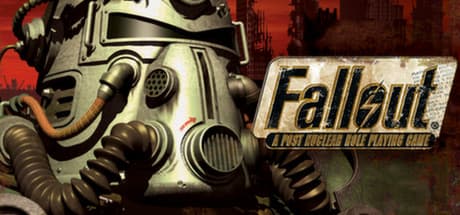
Fallout: A Post Nuclear Role Playing Game - Explore the Wasteland is a single-player, isometric RPG set after nuclear devastation. You leave the safety of a Vault, travel between settlements and ruins, and search for the information and equipment needed to complete your mission.
Progress comes from exploration, conversation, and combat, but also from deciding whom to trust and which local problems deserve your attention.
This first Fallout is closer to a traditional computer RPG than its later open-world successors. Objectives are not always presented with modern markers or exhaustive instructions, so dialogue, names, inventory items, and environmental clues matter.
Steam lists November 1, 2015 as its release date, while the game itself retains the interface conventions and deliberate pacing of a title originally created in the 1990s.
SPECIAL and Character Building
The SPECIAL system is built around Strength, Perception, Endurance, Charisma, Intelligence, Agility, and Luck. These attributes, together with selected skills, influence combat accuracy, available dialogue approaches, and the kinds of solutions your character can use.
A focused build based on firearms, persuasion, or stealth generally creates a clearer identity than attempting to excel at everything.
Character creation does more than adjust combat effectiveness. Problems may be solved by defeating an enemy, persuading someone, gathering information, or passing through an area without being noticed.
Your build therefore shapes how quests unfold. New players may not immediately understand every attribute's consequences, so extreme allocations can produce a difficult first playthrough.
Exploration, Dialogue, and Combat
Travel takes place on a world map, while individual locations are explored directly. Conversations and searches provide names, destinations, and items that point toward the next step.
Reading carefully is important because following interface markers alone will not carry you through the adventure.
Combat is turn-based and governed by action points. Movement, attacks, and other actions compete for a limited allowance, making distance and positioning as important as weapon choice.
Charging into every encounter is rarely the only answer; avoiding a fight can be a valid expression of the character you built.
Choices can affect more than an immediate reward. Decisions influence people, factions, and the future of communities, so the game often asks what your character values rather than presenting an obviously correct moral button.
These consequences give later playthroughs room for different builds and decisions.
System Requirements in Practice
The Steam minimum specification lists Windows, a Pentium 90MHz or faster processor, SVGA graphics, 16MB of RAM, 565MB of storage, and any DirectX version. These requirements are extremely light by current PC standards.
Hardware performance is less likely to be the limiting factor than compatibility between an older game and a modern operating system.
Meeting the listed requirements does not guarantee ideal presentation on a current display. Text and interface elements may feel small at high resolutions, and compatibility or resolution adjustments may be useful if display issues occur.
Steam Cloud support is listed, providing a convenient option for synchronizing saves where supported.
Reception and Common Impressions
The game has maintained a strong reputation because its character system and quest design reinforce each other. Dialogue, stealth, and combat feel like parts of the same role-playing framework rather than isolated features.
Players who enjoy committing to a character concept are likely to appreciate how decisions shape both individual encounters and broader outcomes.
Common reservations concern the dated interface, limited guidance, small text, and measured pace of turn-based battles. Some rules and controls are harder to learn through the interface than they would be in a modern RPG.
When checking current user feedback, pay particular attention to recent reports about startup behavior and usability on present-day PCs.
Who Should Play It
Fallout suits players who enjoy reading dialogue, connecting clues, and solving problems without relying exclusively on combat. It is also valuable for anyone interested in the origins of the series, its SPECIAL system, and its distinctive mixture of wasteland tragedy and dark humor.
Players willing to keep separate saves and treat mistakes as part of the story will get the most from it.
Caveats and Who Should Skip It
The listed supported languages are English, French, German, and Spanish; Japanese is not included. Because dialogue and written clues carry essential information, limited reading ability in the supported languages can be a major barrier.
Check the current Steam language listing and any accessibility options you require before purchasing.
This is a poor match for players seeking fast real-time combat, a modern streamlined interface, or constant objective markers. It also expects patience while learning systems whose effects are not always explained immediately.
The key buying question is whether you can accept old-fashioned friction as part of a choice-driven CRPG rather than expecting the conveniences of a recent Fallout title.