Game Overview
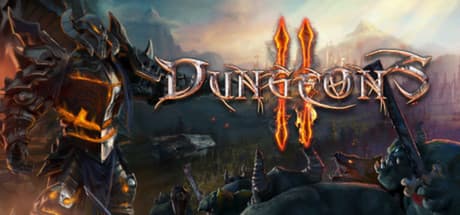
Dungeons 2 — The Dungeon Lord's Revenge is a dark-fantasy strategy simulation that combines dungeon management with attacks on the overworld. You serve the vengeful Dungeon Lord, recruit creatures from the underworld, and expand a defensible base.
The campaign is not limited to waiting for human intruders: your forces must also leave the dungeon and assault their cities.
The core loop moves between preparing the underground domain and commanding the army built there. That makes the game broader than a management title focused entirely on room placement, but less narrowly combat-driven than a dedicated RTS.
Its villain-led perspective and comic tone also distinguish it from conventional heroic fantasy.
Dungeon Management and Overworld Warfare
Underground play centers on constructing the dungeon, recruiting creatures, and maintaining enough strength to repel threats. Expansion is not automatically useful; every commitment has to support either present defense or the next offensive.
Attacking too early can leave the dungeon exposed, while investing everything below ground delays conquest above it.
The overworld changes the emphasis from preparation to direct military action against human forces and cities. In practical terms, the dungeon acts as the foundation for production and defense, while the surface gives that preparation a purpose.
The need to manage both layers is the defining difference between Dungeons 2 and simulations that reward endless optimization of a single base.
Early-Game Priorities
A manageable opening is usually more valuable than immediately trying to support a large army. Establish a reliable defense first, then create enough spare capacity to send units to the surface without stripping the dungeon of protection.
Because the two areas demand attention, learning to switch views and check the base during an offensive is part of learning the game.
Creatures are not merely a number to increase. You must decide which forces remain behind, which join an attack, and when an advance should pause for rebuilding.
Players who enjoy adjusting a plan after setbacks will get more from this structure than those looking for a fixed build order that solves every situation.
System Requirements in Context
The listed minimum calls for an AMD or Intel 3GHz dual-core CPU, or a 2.6GHz quad-core CPU, with 3GB RAM.
Supported GPU examples include Intel HD 4400, GeForce GT 440 or GT 650M, and Radeon HD 7750 or R5 255M. It also requires 5GB of available storage, while the minimum OS listing is 32-bit Windows Vista SP2.
The recommended specification rises to a 3.8GHz AMD quad-core or 3.2GHz Intel quad-core CPU, 4GB RAM, and either a Radeon R7 265 or GeForce GTX 650.
Storage remains 5GB, and the recommended OS is Windows 7 x64 SP1. These components are modest by current standards, but older games can encounter operating-system or driver compatibility issues unrelated to raw performance.
Treat the minimum specification as a floor rather than a promise of ideal play during busy battles. The recommended tier is the more sensible reference if you want headroom when many units are active.
On a modern Windows system, checking current launch and compatibility reports may matter more than comparing a new GPU against these older examples.
Reception and Common Points of Appeal
The game has maintained a broadly positive reception over time. Its strongest hook is the ability to build an evil domain and then use the resulting army in a distinct surface campaign.
The humorous villain perspective also keeps the dark-fantasy setting from becoming relentlessly serious.
The same hybrid design can divide players. Someone interested only in detailed construction may find the surface battles disruptive, while an RTS-focused player may consider the management layer an interruption.
Before choosing it, make sure both dungeon preparation and overworld conquest sound appealing, since neither is merely a decorative side activity.
Who It Suits
Dungeons 2 is a good fit for players who enjoy defending a base, assembling an army, and changing priorities as threats develop. It is especially suited to those who want to play the fantasy villain rather than another heroic commander.
The combination also works for players who find passive defense too limiting and want a reason to take their forces beyond the base.
Realmforge Studios developed the game, and Kalypso Media Digital published it on April 24, 2015. It supports several languages, including English and Japanese.
Its appeal now lies more in the interaction between management and warfare than in cutting-edge presentation.
Cautions and Who May Not Enjoy It
Players seeking a pure dungeon-layout sandbox or uninterrupted tactical combat may not enjoy moving between the two modes. The game expects attention to both home defense and an active army, so it is not an idle management experience that can simply be watched.
It also suits experimentation better than players who dislike revising a failed plan.
The listed Windows versions are old, which makes present-day compatibility worth checking before installation. Meeting the CPU, GPU, and memory requirements does not by itself guarantee that every modern operating-system configuration will behave identically.
Consult the current Steam compatibility information and reports from hardware similar to yours if launch reliability is a concern.