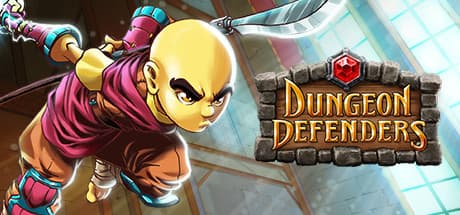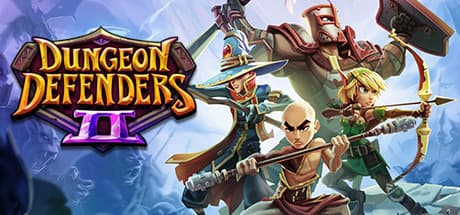
Game Overview
Dungeon Defenders II – Build, Battle, and Defend Etheria! combines lane-based tower defense with direct action-RPG combat.
Developed and published by Chromatic Games, it was released on June 20, 2017.
A typical mission begins with inspecting enemy routes and spending resources on defenses. Once a wave starts, the player controls a hero in real time, moving between lanes to attack priority targets, repair weak points, and stop enemies that escape the defensive setup.
Success therefore depends on both preparation and quick intervention rather than on tower placement alone.
Cleared battles feed into equipment and character progression, which then support harder defenses. The main loop is built around completing stages, collecting loot, improving heroes, and revising layouts.
Players who enjoy repeating encounters to refine a build will find more to engage with than those seeking a strictly linear campaign.
Features and Systems
Defenses and heroes are designed to cover each other's limitations. Choke points can hold enemies in an attack zone, area damage can punish clustered groups, and the active hero can respond when a lane begins to fail.
Reading the map and extending the time enemies remain under fire is often more effective than simply filling every available space.
Heroes differ not only in their attacks and abilities but also in the defenses they contribute. The roster includes magical, mechanical, and mobility-oriented approaches, and heroes can be swapped during play.
Treating several heroes as a shared tactical toolkit gives the player more answers than relying on one favorite character for every situation.
Direct combat cannot efficiently cover every lane at once, while unattended defenses may struggle against unexpected breakthroughs or tougher targets. A reliable approach is to let towers provide sustained control and damage, then use the hero to reinforce whichever location has become dangerous.
Learning that division of labor is central to the game.
Solo and Cooperative Play
The game supports solo play as well as online cooperation for up to four players. Solo play gives one person full control over placement, resources, and strategy, making it useful for experimenting with layouts.
It can also become hectic when several entrances need attention at the same time.
In co-op, players can divide lanes and combat roles while combining different hero tools. More builders do not automatically produce a better defense, however.
If everyone spends resources without a shared plan, important choke points can remain weak, so even a brief agreement about lanes and building responsibilities can make a major difference.
Early-Game Priorities
Instead of reinforcing every entrance equally, begin with places where routes narrow or merge. Pair control effects with damaging defenses so enemies remain exposed for longer.
After a failed wave, inspect the route that collapsed and determine whether the problem was placement, coverage, or insufficient direct intervention.
Equipment should be considered in relation to the hero and defensive style being used, not only as a sequence of larger values. Maintaining more than one useful hero also prevents the available strategy from becoming too narrow.
Enjoyment of loot upgrades and repeated improvement is an important test of whether the long-term loop will suit you.
System Requirements
The minimum specification lists 64-bit Windows 7 SP1, a 2.0GHz dual-core CPU, and 3GB RAM.
Graphics requirements are an ATI Radeon HD 2600 or NVIDIA GeForce 8600 or better, with 512MB of video memory and Shader Model 3 support. The listing also calls for 20GB of available storage and DirectX 9.0.
The recommended specification raises the processor target to an Intel Core i5 or an AMD quad-core CPU and memory to 4GB RAM. It lists an NVIDIA GeForce GTX 260 or AMD Radeon HD 4770 or better with 1GB VRAM.
These are modest requirements by current gaming-PC standards, but integrated graphics are specifically not recommended, so an older office computer should not be judged by CPU and RAM alone.
An internet connection is required at both specification levels. An unstable connection may therefore affect the experience even when the computer has enough rendering performance.
Because some listed operating systems are now old, check the current Steam compatibility information before installing on a modern or unusual configuration.
Reception and Common Impressions
The game tends to appeal through the interaction between tactical placement and hands-on hero combat. Character growth and loot feed back into later defenses, giving repeated runs a purpose beyond simply replaying the same map.
Cooperative role division also fits the multi-lane structure particularly well.
The same progression loop can be divisive. Players seeking pure tower defense may find the action and equipment management distracting, while those wanting a conventional action RPG may consider the building phase an interruption.
As a long-running game, it may also differ from older guides, so current in-game behavior should take priority over outdated build advice.
Who Should Play It
Dungeon Defenders II is a good fit for players who want to plan defenses and personally fight beside them. It particularly suits people who enjoy developing several characters, collecting gear, and correcting weaknesses in a failed layout.
Groups that like assigning lanes and coordinating roles can make strong use of the four-player online co-op.
It is also better suited to players interested in continued progression than to those looking for a short, one-and-done story. The core appeal comes from moving repeatedly between placement, combat, and character improvement.
Enjoying all three parts matters more than liking only one of them.
Caveats and Who May Not Enjoy It
This is not a suitable choice for anyone requiring a fully offline game, because an internet connection is explicitly required even in the published minimum and recommended notes. The supplied language information lists English, so players who require Japanese text should verify the current language section before starting.
Players who dislike repeating content for equipment upgrades should also approach cautiously. The growing selection of heroes, gear, and defenses creates depth, but it can feel busy when learned all at once.
Starting with a small hero pool and fixing one defensive problem at a time is a more manageable way to understand the systems.